
How long is military boot camp? It lasts from 7.5 weeks in the Air Force and Space Force to 13 weeks in the Marine Corps, with the Army at 10 weeks, the Navy at 9 and the Coast Guard at 8. Those are training weeks, and in some branches the in-processing days come on top, so the calendar from arrival to graduation can run a little longer.
- Marine Corps: 13 weeks at Parris Island, South Carolina, or San Diego, California
- Army: 10 weeks of Basic Combat Training at Fort Benning, Fort Jackson, Fort Leonard Wood or Fort Sill
- Navy: 9 weeks at Recruit Training Command Great Lakes, Illinois
- Coast Guard: 8 weeks at Training Center Cape May, New Jersey
- Air Force: 7.5 weeks at Joint Base San Antonio-Lackland, Texas
- Space Force: about 7.5 weeks, also at Joint Base San Antonio-Lackland
This guide compares the six programs side by side and then covers what all of them share: the fitness test, the daily schedule and what happens when a recruit falls short. Each branch also has its own full guide, linked in the [branch summaries](#boot-camp-in-each-branch-summaries-and-full-guides) further down.
In This Article
- What Is Military Boot Camp?
- How Long Does Military Boot Camp Last By Branch?
- Boot Camp in Each Branch: Summaries and Full Guides
- Physical Requirements And Readiness Outcomes
- Daily Schedule, Living Conditions, And Training Gear
- What Happens If You Don’t Meet Standards?
- Frequently Asked Questions
- Choosing A Branch, Knowing What’s Ahead
What Is Military Boot Camp?
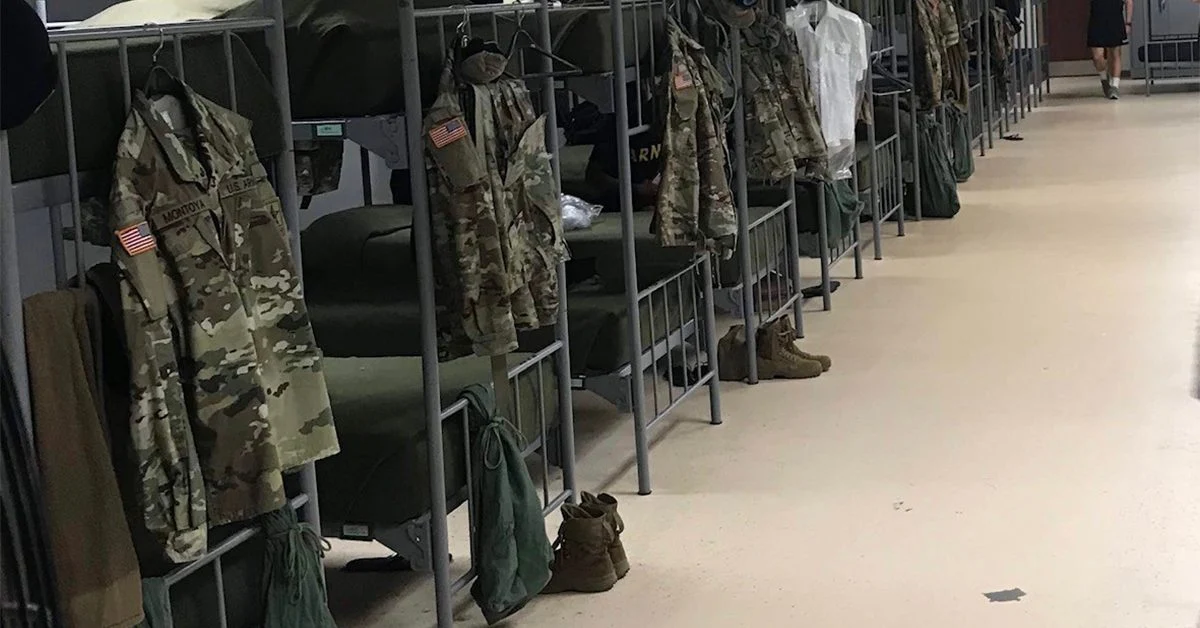
What is boot camp, officially? It’s basic training or recruit training depending on the branch, the program that turns civilian volunteers into service members through physical conditioning, classroom instruction, weapons familiarization, and constant evaluation. The goal across all six branches is the same: someone who follows orders, holds up under stress, and works as part of a team.
But here’s the thing. What is a boot camp actually testing?
Not push-ups and marching, mostly. It’s whether a recruit can absorb correction without falling apart, and whether they’ll put the group ahead of their own comfort.
The honest answer is simple: a closed environment, a packed schedule, and very little patience for excuses.
Why Recruit Training Exists
Recruit training exists to filter and shape, not just to punish, and what boot camp is meant to certify by the time training ends is fairly specific: physical capability, rule-following, and whether a recruit can be trusted with a weapon. This kind of training isn’t designed to be fair in a civilian sense: it’s designed to be consistent, so every graduate from every cycle meets the same baseline.
How Long Does Military Boot Camp Last By Branch?
The shortest programs run 7.5 weeks, the longest run 13, and here’s how all six stack up.
| # | Branch | Duration | Final Test / Capstone | Graduation Fitness Threshold | PT Test Events | Training Location |
|---|---|---|---|---|---|---|
| 1 | Marine Corps | 13 weeks | The Crucible (54-hour endurance test) | Min 40 pts/event | Pull-ups or push-ups, plank, 3-mile run | Parris Island, San Diego |
| 2 | Army | 10 weeks | The Forge (multiple-day field exercise) | Min 60 pts per AFT event | AFT (5 events) | Fort Benning, Jackson, Leonard Wood, Sill |
| 3 | Navy | 9 weeks | Battle Stations 21 (12-hour shipboard sim) | ~50 pt avg ("Satisfactory Medium") | Plank, push-ups, 1.5-mile run | Great Lakes |
| 4 | Coast Guard | 8 weeks | Final PT assessment | Pass/fail (service-wide PFT starts 2026) | Push-ups, curl-ups, 1.5-mile run | Cape May |
| 5 | Air Force | 7.5 weeks | PACER FORGE (57-hour field exercise, week 6) | Min 75/100 | 2-mile run or HAMR, plus strength and core events (DAF PFA, July 2026) | JBSA-Lackland |
| 6 | Space Force | 7.5 weeks | PACER FORGE (same as Air Force) | Min 75/100 | Same as Air Force | JBSA-Lackland |
Source: marines.com (Recruit Training); GoArmy (Basic Combat Training; Fitness Requirements); U.S. Navy, December 2024 announcement of the 9-week program; GoCoastGuard (Basic Training); airforce.com (BMT); Air & Space Forces Magazine, March 6, 2025 (PACER FORGE at 57 hours).
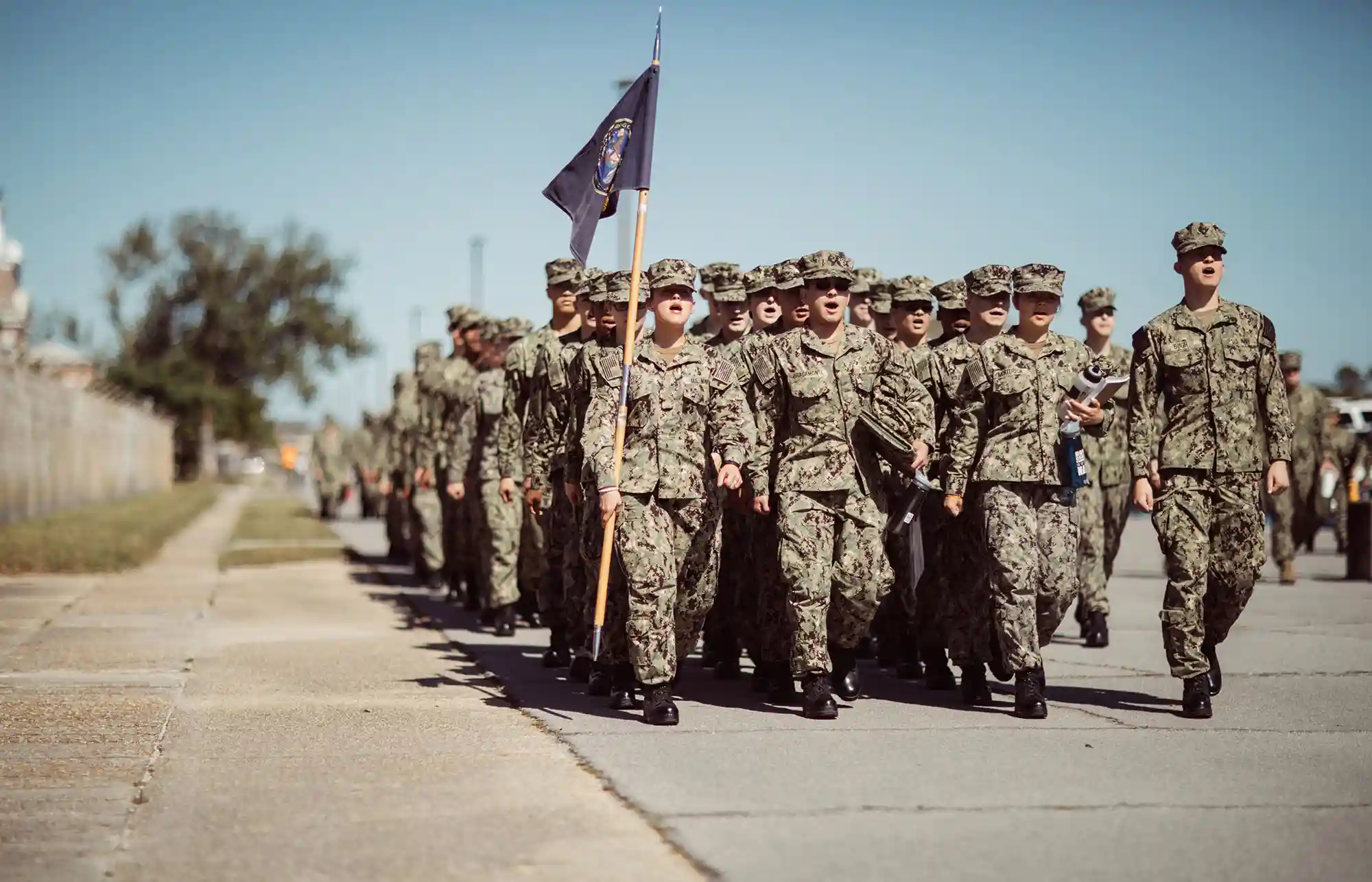
Army bootcamp, officially Basic Combat Training, runs ten weeks split into Reception, Red, White, and Blue phases. How long is army boot camp for someone entering a combat job like infantry? Longer, because those recruits move straight into advanced training under a system called OSUT, stretching the total timeline to 13 to 22 weeks depending on the specialty.
And that’s just one part of it. Physical fitness requirements climb alongside training length in most branches, though not perfectly. Navy and Coast Guard sit in the middle on both duration and intensity.
The week counts in the table are training weeks, and the branches count them a little differently. The Marine Corps’ 13 weeks already include the receiving days, and the Air Force’s 7.5 weeks include Zero Week. The Navy’s 9 weeks are the training clock alone, and about a week of in-processing comes first.
Boot Camp in Each Branch: Summaries and Full Guides
Every branch runs its own program, with its own schedule, final test and graduation routine. The short versions are below. Each branch’s full guide covers the week-by-week detail.
- Marine Corps, 13 weeks. Recruits train at Marine Corps Recruit Depot Parris Island, South Carolina, or Marine Corps Recruit Depot San Diego, California. Both depots run the same program. Training is split into four phases and builds toward the Crucible, a 54-hour final field event near the end. The Marine Corps guide breaks down how long Marine boot camp lasts from ship date to graduation and what comes after.
- Army, 10 weeks. Basic Combat Training runs at four posts: Fort Benning, Fort Jackson, Fort Leonard Wood and Fort Sill. Recruits headed for some combat jobs, such as infantry, train under One Station Unit Training, which combines basic and job training in one longer course. Most others move on to Advanced Individual Training after graduation.
- Navy, 9 weeks. Recruit Training Command Great Lakes, Illinois, is the Navy’s only enlisted boot camp. The 9-week program applies to recruits who arrived on or after January 6, 2025, and it ran 10 weeks before that. Recruits pass a swim qualification, learn firefighting and damage control, and finish with Battle Stations 21, a 12-hour overnight test aboard the USS Trayer simulator. The Navy guide explains how long Navy boot camp is week by week.
- Coast Guard, 8 weeks. Enlisted basic training is held at Training Center Cape May, New Jersey, with new classes starting most weeks. Recruits are tested on close-order drill and manual of arms in their seventh week, and graduation usually falls on a Friday. Fitness standards and the full schedule are in the Coast Guard boot camp guide.
- Air Force, 7.5 weeks. Basic Military Training takes place at Joint Base San Antonio-Lackland, Texas. The field exercise in week 6 is now PACER FORGE, which replaced the older BEAST and has run 57 hours since March 2025. Graduation spans two days, with the Airman’s Run and Coin Ceremony on Wednesday and the parade on Thursday. The Air Force guide covers how long Air Force basic training lasts day by day.
- Space Force, about 7.5 weeks. Guardians train at the same base and on roughly the same schedule as Air Force trainees. Since June 16, 2026, they have had their own unit, the 535th Training Squadron under Space Delta 1. The Space Force basic training guide covers what is different for Guardians.
Physical Requirements And Readiness Outcomes
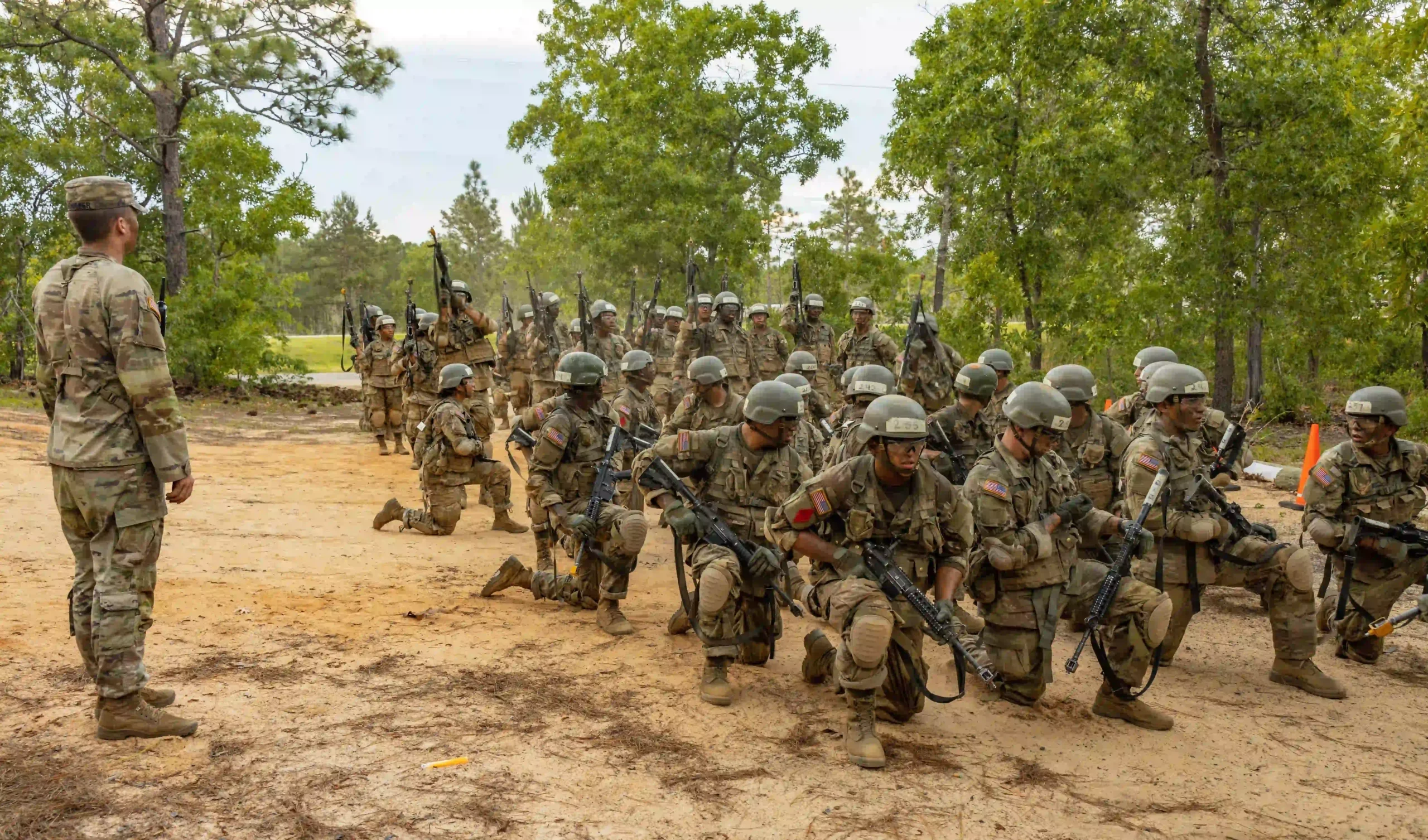
Every branch requires recruits to pass a fitness test before graduation, and the specifics vary more than people expect. Army recruits take the five-event Army Fitness Test (deadlift, hand-release push-ups, sprint-drag-carry, plank, 2-mile run), while Marine Corps recruits face both a Physical Fitness Test and a separate Combat Fitness Test in full gear. Boot camp training, regardless of branch, treats the final fitness test as a hard gate, not a formality.
So what does that actually mean for you? It means showing up out of shape doesn’t disqualify anyone immediately, but it does mean weeks of catching up under pressure instead of building on a head start.
Navy Boot Camp Physical Requirements
Navy boot camp physical requirements come down to three events: forearm planks, push-ups, and a 1.5-mile run. Military OneSource confirms this is the current structure, with alternate cardio options like swimming available for some sailors after boot camp, though not typically during it. To graduate, a recruit needs an average score across the three events known as “Satisfactory Medium,” roughly a 50-point average out of 100.
For context, a male recruit aged 17 to 19 needs a 1:30 plank, 46 push-ups, and a 12:15 run on the 1.5 miles to hit that baseline. A female recruit in the same age bracket needs the same 1:30 plank, 20 push-ups, and a 14:45 run. Combat-specific training isn’t part of this fitness test; the boot camp PRT measures general fitness, with combat skills taught later at fleet schools.
- Forearm plank, held for time
- Push-ups, maximum reps in two minutes
- 1.5-mile timed run, or an approved alternate for some active-duty sailors
Military boot camp training pushes everyone toward the same minimum, but the bar moves with age and sex, which is intentional. The standard is meant to be achievable for a healthy recruit, not punishing for its own sake.
Daily Schedule, Living Conditions, And Training Gear
Think about it this way. Every hour of a recruit’s day is scheduled by someone else, for the entire length of training. The navy boot camp schedule, like every branch’s, runs 16 to 17 hours a day, starting around 0400 and ending with lights out between 2100 and 2200.
Reveille and hygiene kick off the day, followed by physical training before sunrise. Morning chow gets 10 to 15 minutes, not a leisurely breakfast. Classroom instruction, drill, and hands-on training fill the rest of the daylight hours, broken up by two more rushed meals.
Military training equipment gets issued almost immediately, replacing whatever a recruit showed up wearing. Within the first days, personal clothing goes into storage and uniforms, boots, and field gear take over completely.
Typical Lights-Out Routine
Evening hours after dinner go to mail call, barracks cleaning, weapon maintenance, and uniform prep, followed by a short personal-time window for showers and letter writing. Lights out is mandatory, though recruits rotate through overnight fire-guard or watch duties that interrupt sleep on a schedule, not by accident.
The gear issued on day one matters less than the gym bag rule recruits are told about before they ever arrive: nearly every branch limits personal items to what fits in one small carry-on bag. Required documents include a state ID, an original Social Security card, and banking information for direct deposit. Everything else, food, supplements, vapes, and extra electronics, gets confiscated during the first shakedown, while military training equipment quickly fills the gap.
- State-issued photo ID
- Original Social Security card
- Banking or direct deposit information
- One to two days of plain civilian clothing for travel
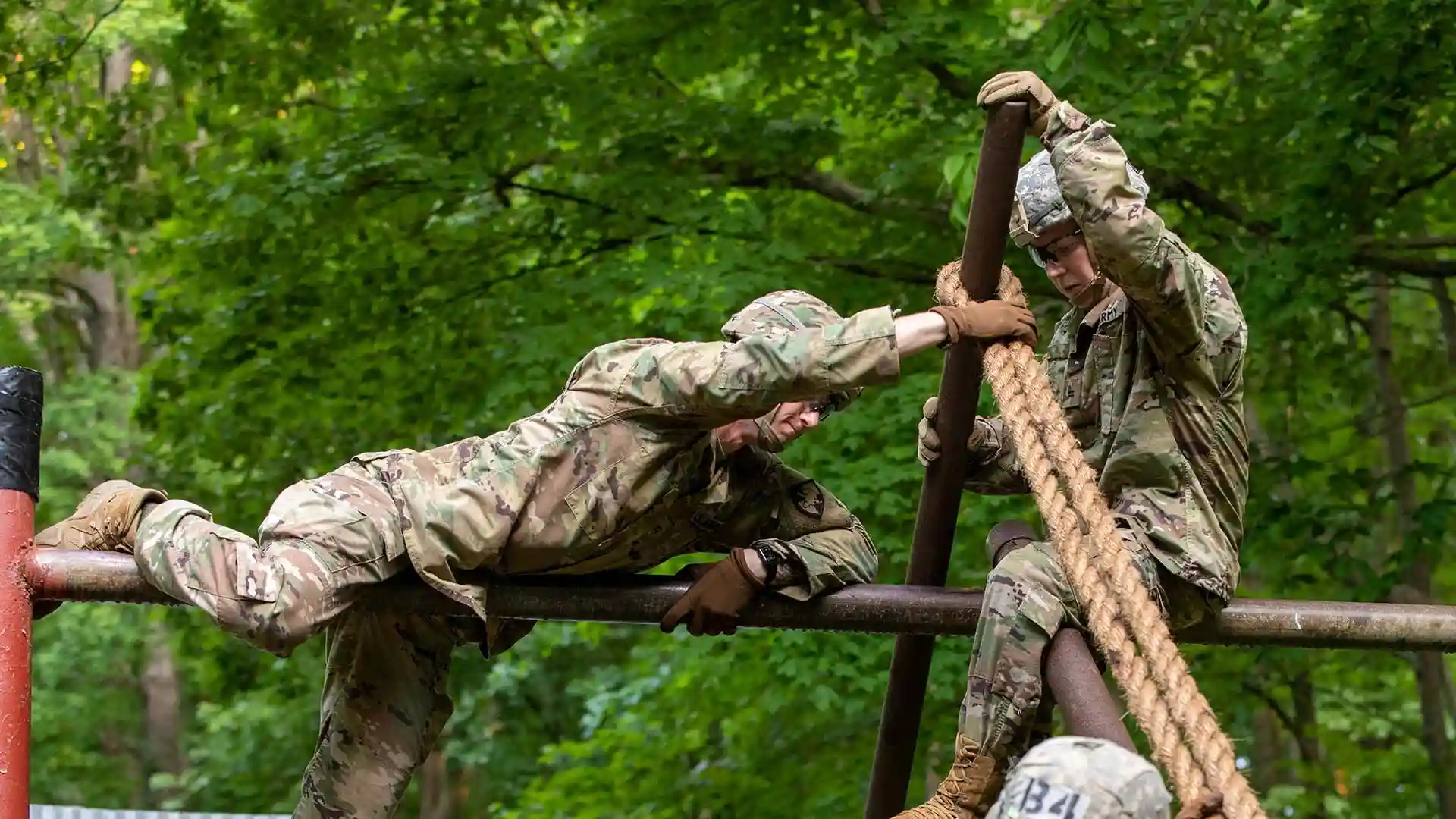
Military boot camp training gear issued during the first week typically includes additional uniforms, hygiene items, and branch-specific equipment, but the personal items list stays minimal by design. There’s nowhere to store extra belongings, and nowhere private to use them anyway.
What Happens If You Don’t Meet Standards?
Recruits who fail a fitness test, miss a rifle qualification, or fail an academic exam don’t automatically wash out of boot camp training. The military uses a process called recycling, which moves a recruit out of their current group and into one that’s earlier in the training cycle, giving them more time on the specific skill they’re missing.
But there’s a catch. Recycling isn’t unlimited. A recruit who keeps failing the same standard after multiple attempts, or who can’t adapt to the discipline required, can eventually face administrative separation, usually an entry-level separation with uncharacterized service.
In my experience covering this topic for families considering enlistment, this is the part that worries parents most, more than the physical training itself.
Recycling exists specifically to prevent good candidates from washing out over a single bad week. It’s a second chance built into the system, not a punishment layered on top of it.
Injuries get handled differently than performance failures. A recruit with a significant injury typically moves to a medical rehabilitation unit, such as the Army’s Warrior Training Rehabilitation Program or the Marine Corps’ Medical Rehabilitation Platoon, recovers under medical supervision, then rejoins training.
Frequently Asked Questions
What is military boot camp?
What is boot camp, in plain terms? It’s the initial training program every branch requires before someone becomes a full member of the military. It mixes physical conditioning, classroom learning, and hands-on skills training, and every recruit goes through some version of it regardless of which job they’ll eventually hold. A boot camp graduate walks away able to follow orders under pressure, function with minimal sleep, and perform the basic tasks their branch requires on day one of their actual career.
How long is military boot camp?
It depends on the branch. Boot camp runs from 7.5 weeks for the Air Force and Space Force up to 13 weeks for the Marine Corps. Navy boot camp runs 9 weeks, Coast Guard runs 8, and Army boot camp runs 10. Combat-arms Army recruits who continue directly into job-specific training under OSUT can see their total time extend to 13 to 22 weeks.
How long is Army basic training?
How long is Army basic training? Ten weeks, for the standard Basic Combat Training pipeline every Army recruit completes regardless of job. Recruits who enlist into a combat job like infantry or armor train longer, because those recruits move directly into advanced training without a break, under the OSUT system. Their total time depends on the job, ranging from 13 weeks up to 22.
Where is boot camp located?
Boot camp locations are fixed by branch, not by where a recruit lives. Army recruits train at Fort Benning, Fort Jackson, Fort Leonard Wood, or Fort Sill. Marine Corps recruits go to Parris Island or San Diego. Navy recruits train exclusively at Great Lakes, Illinois, while Air Force and Space Force recruits share Joint Base San Antonio-Lackland in Texas, and Coast Guard recruits train at Cape May, New Jersey.
What happens if a recruit fails a test during boot camp?
Failing a single test rarely ends someone’s military career on the spot. Most failures trigger recycling, where a recruit gets folded into a group that’s earlier in the training cycle and given another shot at the specific standard they missed. Repeated failures, or an inability to meet the required discipline, can eventually lead to administrative separation. Injuries are handled separately through medical rehabilitation units rather than the standard recycling process.
Which branch has the shortest boot camp?
The Air Force and the Space Force, at 7.5 weeks each. Both train at Joint Base San Antonio-Lackland in Texas. The Marine Corps has the longest program at 13 weeks. The Coast Guard (8 weeks), the Navy (9 weeks) and the Army (10 weeks) fall in between.
Is boot camp the same as basic training?
Yes. Boot camp is the informal name for the first stage of military training, and each branch has its own official term. The Army calls it Basic Combat Training, and the Air Force and Space Force call it Basic Military Training. The Marine Corps and the Navy call it recruit training, and the Coast Guard calls it recruit basic training. Every version mixes fitness, drill, classroom instruction and graded tests before graduation.
Your Path to Enlistment
Choosing A Branch, Knowing What’s Ahead
The way I look at it, the branch comparison matters less than people think once training actually starts. Every program, whether it’s 7.5 weeks or 13, is built to be hard in the specific way that branch needs its people to be hard.
What changes is the flavor of the difficulty. Army and Marine Corps recruits spend more time on land navigation and weapons handling. Navy recruits spend more time on firefighting, flooding control, and water survival, since their entire career happens aboard ships where those skills matter daily, while Air Force, Space Force, and Coast Guard programs sit somewhere in between, shaped by their own missions.
If you’re weighing branches, our military training hub covers enlistment requirements, pay, and education benefits in more depth for each path. The right branch usually comes down to the job you want and the lifestyle you can picture yourself in for the next several years, not just how long boot camp lasts.

William Johnson writes about U.S. military training and enlistment for Servicemembers Opportunity Colleges. His work covers topics such as boot camp, ROTC, the ASVAB test, military pay, and what to expect during basic training, with a focus on giving recruits and their families clear, practical information about military life.
Sources
- Navy.com. “Boot Camp – What to Expect.” Navy.com, 2026.
- U.S. Navy. “Sailors Making Sailors: Battle Stations-21.” Navy.mil.
- Military OneSource. “Tips for Meeting Military Fitness Standards.” Military OneSource, 2026.
- Today’s Military. “Boot Camp.” Today’s Military, 2026.
- U.S. Department of Defense. “Suited to Serve.” Defense.gov.
- GoArmy.com. “Basic Combat Training.” GoArmy.com, 2026.
- Operation Military Kids. “Marine Corps PFT Standards Chart Updated For 2026.” OperationMilitaryKids.org, 2026.
- Military.com. “Coast Guard to Launch Service-Wide Physical Fitness Test for All Members Next Year.” Military.com, 2025.
- Marine Corps Recruit Depot Parris Island. “Unit Home.” MCRDPI.Marines.mil.