
MEPS, the Military Entrance Processing Station, is where every recruit gets tested, screened, and cleared before enlistment becomes official. This guide covers what happens during processing, how long it takes, what the physical actually checks, and a 2026 policy change that’s reshaping who gets disqualified before they even arrive.
If a recruiter has mentioned MEPS, they mean the Military Entrance Processing Station, the single stop every applicant passes through before taking the oath of enlistment. No branch skips it, and nothing about your enlistment is final until it’s done.
What is MEPS actually like day to day? It’s part medical clinic, part testing center, part paperwork office, all packed into one to two days. This guide walks through the full process, the physical, the timeline, and a recent policy shift that’s changing how disqualifications get caught.
In This Article
- What Is MEPS? (Military Entrance Processing Station, Explained)
- What Happens at MEPS? The Step-by-Step Process
- How Long Does MEPS Take?
- The MEPS Physical: What Gets Tested
- Does the Military Test for STDs at MEPS?
- What Can Get You Disqualified at MEPS?
- MEPS by Branch: Is Navy MEPS Different?
- Where This Leaves You
What Is MEPS? (Military Entrance Processing Station, Explained)
MEPS stands for Military Entrance Processing Station. It’s the facility every recruit passes through: medical exam, aptitude test, background check, before taking the oath of enlistment.
In plain terms, think of it as the final quality check between civilian life and military service. No branch skips it. Not the Army, not the Navy, not the Marines.
MEPS is run by USMEPCOM, the U.S. Military Entrance Processing Command, a joint Department of Defense agency. USMEPCOM reports up through the Under Secretary of Defense for Personnel and Readiness, and it runs 65 processing stations nationwide, including locations in Alaska, Hawaii, and Puerto Rico.
Here’s the part most people miss. MEPS standards apply the same way in every state. A recruit in Boise gets held to the exact same medical bar as a recruit in Boston.
MEPS also isn’t limited to first-time enlistees heading into active duty. Reserve and National Guard applicants go through the same building, the same exam, and the same oath, since USMEPCOM screens for every component, not just active service.
Even the Coast Guard, which sits under the Department of Homeland Security rather than the Department of Defense, routes its applicants through MEPS. That’s how central this one agency is to the entire enlistment pipeline.
What Happens at MEPS? The Step-by-Step Process
The MEPS process typically runs one to two days, and it follows the same five stages everywhere in the country. Knowing the order helps you show up prepared instead of caught off guard.
Most recruits arrive at their assigned MEPS the evening before, check into a contracted hotel, and get a briefing on what the next day looks like. That evening is also when many applicants sit for the ASVAB, if they haven’t already taken it.
- Aptitude testing: the ASVAB measures academic and vocational skills, and the score determines which jobs you qualify for.
- Medical exam: height, weight, vision, hearing, blood draw, urinalysis, and a series of joint and mobility checks.
- Moral and legal screening: fingerprinting and a background interview covering any past legal issues.
- Career counseling: a service liaison matches your ASVAB score and physical profile against open jobs.
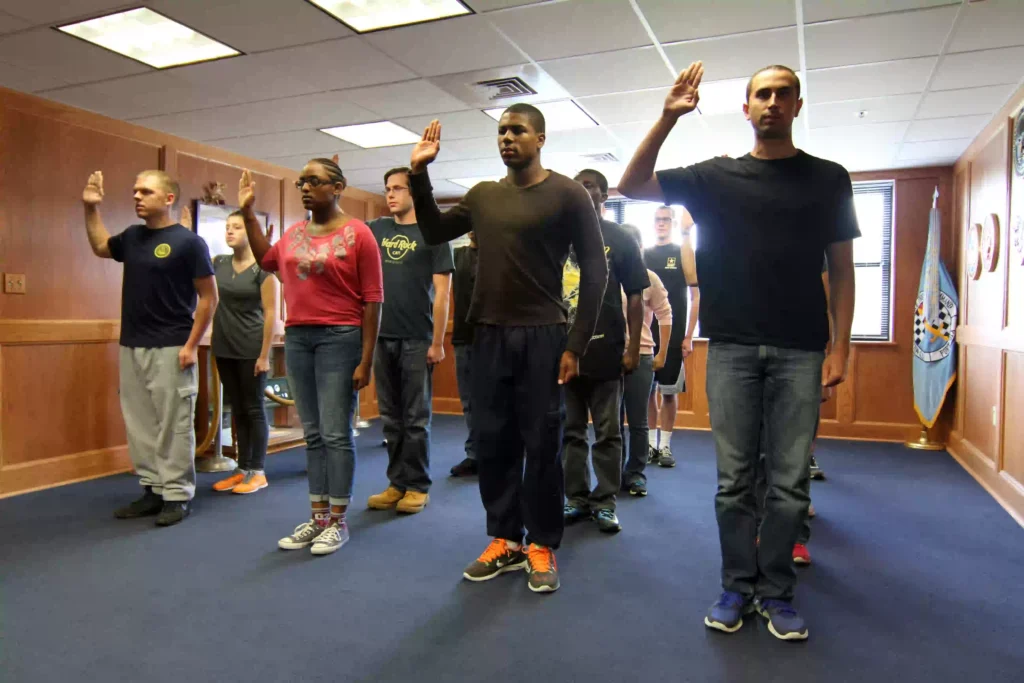
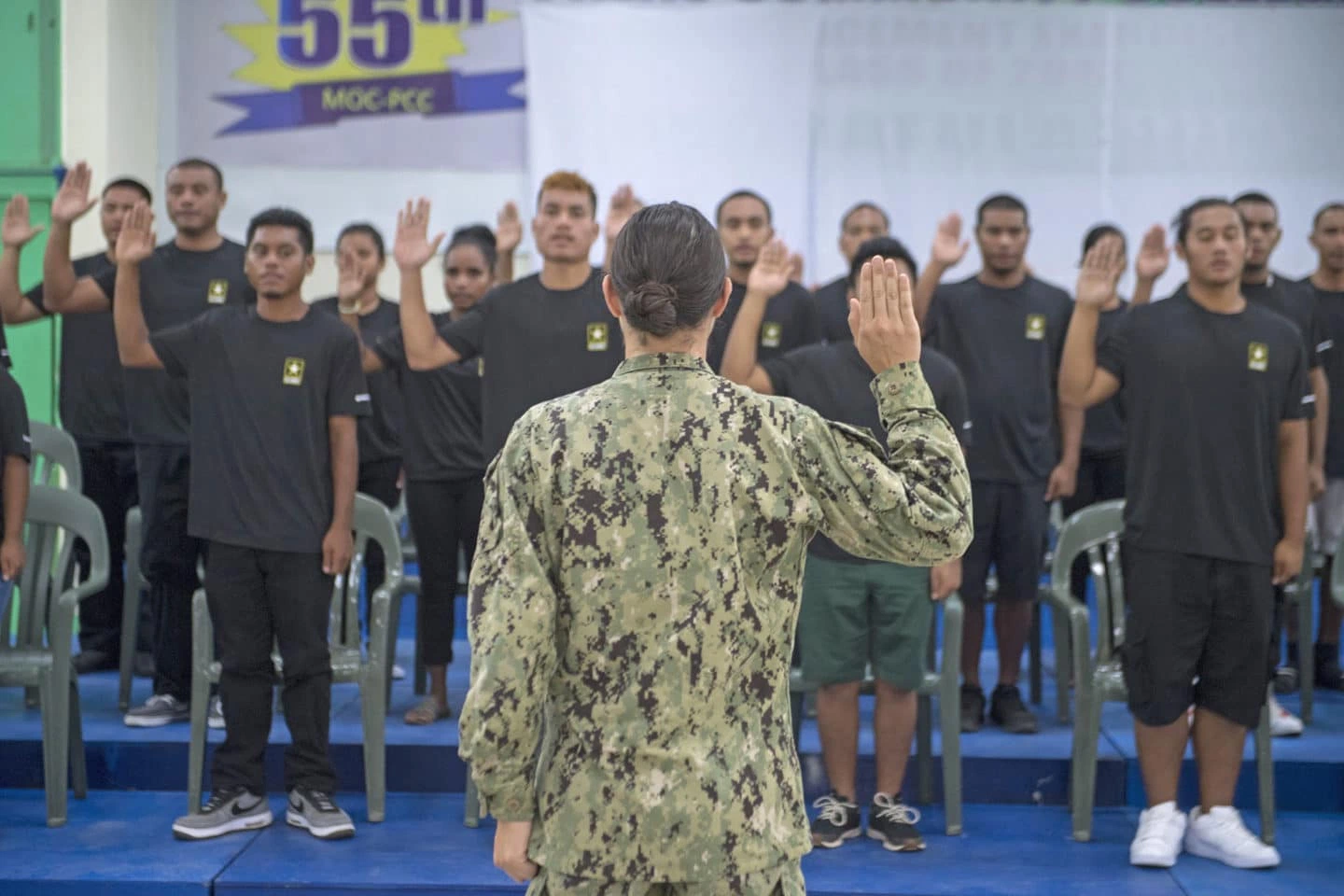
- Oath of enlistment: a commissioned officer administers the oath, and you either ship to basic training or enter the Delayed Entry Program.
And that’s just one part of it. Each stage acts as a checkpoint, and failing one usually means the process pauses right there until the issue gets resolved.
None of this starts cold on the day you arrive, either. Recruiters submit prescreen paperwork, including a detailed medical history form, days or weeks ahead of time so USMEPCOM can flag potential issues before you ever travel.
That prescreen step matters more than most applicants realize. Skipping details on the medical history form doesn’t make problems disappear, it just delays them until they surface later in the process.
How Long Does MEPS Take?
The short answer? It depends. Plan for one full day at minimum, and two days if you need lodging arranged through your recruiter.
Most applicants who live near their assigned MEPS complete everything, testing, physical, counseling, oath, in a single day. That’s the standard experience for people within driving distance of one of the 65 stations.
If you’re traveling from farther away, add an overnight stay. You’ll check in the evening before, sleep at a contracted hotel, and start processing early the next morning.
Recruiters usually give you at least a rough idea of which scenario applies before you ever get a date on the calendar. If your MEPS is more than a couple hours from home, assume the two-day version and plan accordingly.
Delays happen most often on the medical side, though improved prescreen review times have cut typical wait times to about a day in many cases. If your file gets flagged as complex, your review window can still stretch to several business days before you arrive at the station.
Worth pausing on that for a second. The one-to-two-day estimate assumes a clean prescreen. Anyone with a more involved medical history should expect the timeline to shift.
The MEPS Physical: What Gets Tested
The MEPS physical is the most involved part of the entire visit. It’s designed to confirm you can physically handle basic training and the demands of military service.
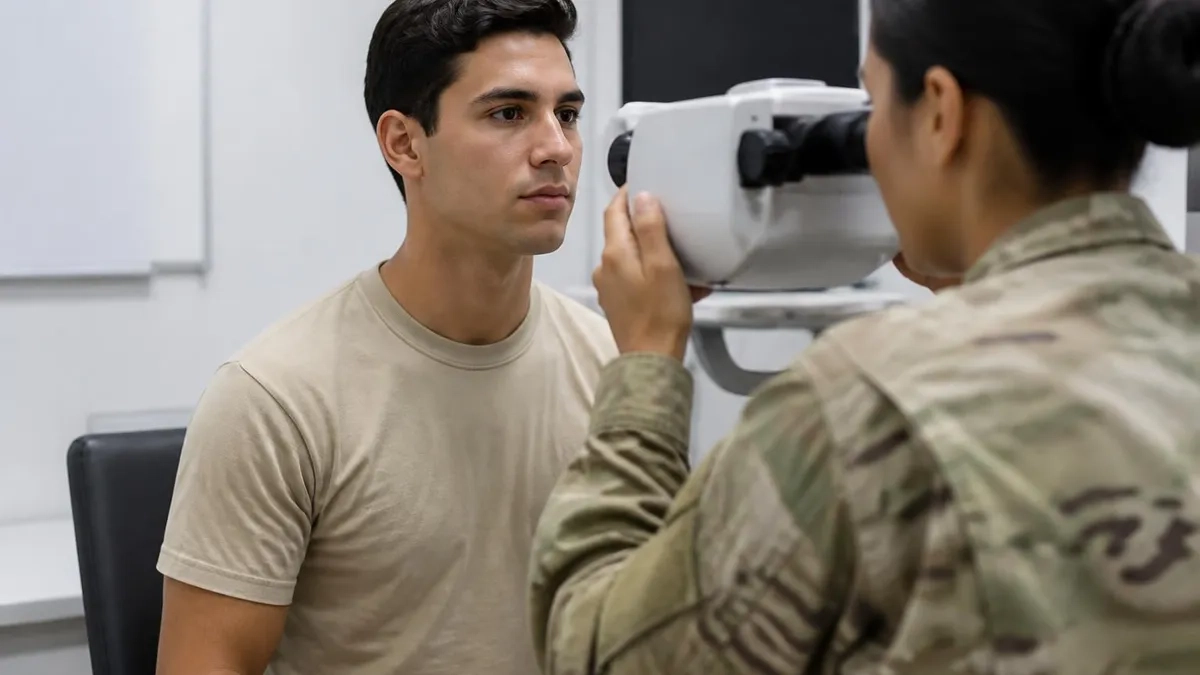
Here’s where it gets interesting. The exam isn’t just a quick checkup, it covers vision, hearing, cardiovascular health, joint mobility, and a full urinalysis and blood draw.
- Height, weight, and body composition measurements
- Vision and color perception testing
- Hearing screened in a sound booth
- Blood pressure and vital signs
- Muscle and joint mobility checks, including the duck walk
- A MEPS urine test screening for drugs, alcohol, and pregnancy
You’ll wear a gown or drape for parts of the exam, and female applicants complete certain steps with a female attendant present in a private room. Bring your prescription eyewear and any medical documentation your recruiter told you to gather.
Most of the physical is routine and quick. The parts that catch people off guard tend to be the joint mobility checks, since a lot of applicants have never had a doctor watch them squat, twist, and reach through a full range of motion before.
Sleep matters more than people expect going in. A good night’s rest and a normal breakfast help keep blood pressure and vitals steady, which avoids an unnecessary temporary disqualification over something that would clear on a retest anyway.
Does the Military Test for STDs at MEPS?
Not the way most people assume. MEPS does not run a broad STD panel on every applicant.
The standard blood draw given to every applicant checks for HIV, following an official testing protocol. That single test is what most applicants actually go through, not the wide screening panel rumors suggest.
In practice, HIV is the only sexually transmitted infection tested on every applicant’s blood sample as a matter of course. Broader STD panels aren’t part of routine screening because they aren’t cost-effective at the scale MEPS processes recruits.
But there’s a catch. If something in your medical history, physical exam, or urinalysis raises a flag, additional testing can get ordered. A positive HIV result is generally disqualifying, though waiver policy has shifted over time.
So why does this matter? Because plenty of online sources overstate what gets screened, and that misinformation makes people more nervous than they need to be walking into MEPS.
The bigger takeaway is disclosure, not testing scope. If you’ve had a diagnosis or treatment history that’s relevant, put it on your medical history form. MHS GENESIS pulls civilian records automatically, so leaving something off the paperwork rarely stays hidden anyway.
What Can Get You Disqualified at MEPS?
MEPS requirements cover three broad categories: physical health, mental and moral fitness, and legal history. Fall short in any one of them, and you can be temporarily or permanently disqualified.
Physical fitness gets scored through a system called PULHES, which rates six categories on a scale of one to four. A perfect score across every category is nicknamed “straight sticks.”
| PULHES Factor | What It Measures | Score of 1 Means |
|---|---|---|
| P – Physical capacity | Cardiovascular, respiratory, and general systemic health | No organic defects |
| U – Upper extremities | Arms, hands, shoulders, upper spine | Full strength and range of motion |
| L – Lower extremities | Legs, feet, hips, lower spine | Full strength and range of motion |
| H – Hearing | Auditory sensitivity and ear structure | Normal hearing thresholds |
| E – Eyes | Vision, color perception, depth perception | 20/20 correctable vision |
| S – Psychiatric | Emotional stability and behavioral health history | No psychiatric history |

And it gets more complicated. In May 2026, USMEPCOM rolled out a policy change effective that month called Conditions Unlikely to Be Waived, or CUW, which flags 28 specific medical conditions during the prescreen stage itself, before an applicant ever travels to MEPS.
“Instead of doing complete processing and then handing it to the waiver authority, we’ve created a trigger on the front end.”
Col. Megan McKinnon, USMEPCOM Command Surgeon
MEPS physical disqualifications tied to CUW conditions, things like a replaced heart valve or narcolepsy, now stop the process early instead of after a full day of testing. That’s a meaningful shift from how MEPS operated even a couple of years ago.
In my time covering enlistment policy, this change actually helps applicants more than it hurts them. Catching a disqualifying condition during prescreen spares you a wasted trip to MEPS.
None of this means a disqualification is automatic or final. Many conditions qualify for a waiver, and your recruiter can help you start that process if you get flagged.
Physical health isn’t the only category that matters. Certain legal violations, particularly ones involving firearms restrictions, can disqualify an applicant regardless of how strong their PULHES score looks.
Moral standards get evaluated during the Pre-Enlistment Interview, where staff review your background alongside your fingerprint check. Being upfront about past issues, rather than hoping they go unnoticed, is almost always the better strategy.
MEPS by Branch: Is Navy MEPS Different?
Navy applicants are processed at the same stations as every other branch. There’s no separate “Navy MEPS” building, Army, Navy, Air Force, Marine Corps, Space Force, and Coast Guard applicants all move through the identical facility and the identical exam.
What changes by branch isn’t the station, it’s the standards applied to your PULHES score and your job options. A Navy rating with heavy sea duty requirements might demand different physical thresholds than an Army desk job.
Think about it this way. MEPS is the shared front door, USMEPCOM even calls it “Freedom’s Front Door,” but each service liaison inside that building represents their own branch’s job openings and waiver authority.
So if your recruiter told you Navy processing feels different, they’re talking about the guidance counselor and job matching, not a separate physical or medical standard.
This shared setup is by design. Running one joint agency instead of six separate branch systems keeps the standards consistent and makes it harder for an applicant to shop around for an easier medical bar.
Can you fail MEPS and try again later?
Yes, in many cases. If you’re temporarily disqualified for something correctable, like a treatable medical condition or a low ASVAB score, you can retest or reapply after addressing the issue. Permanent disqualifications are harder to overturn, though a waiver through your branch’s Medical Waiver Authority is sometimes possible. Your recruiter is the best resource for understanding your specific timeline. Most applicants who fail one section end up back at MEPS within a few weeks to a few months.
What should you bring to MEPS?
Bring your driver’s license or state ID, your original Social Security card, and your original or certified birth certificate. If you wear glasses or contacts, bring them along with your prescription and lens case. Gather any medical records related to conditions you’ve disclosed to your recruiter, since missing documentation can delay your processing. Leave valuables, weapons, and anything with offensive wording or images at home.
Do you need to study for the ASVAB before MEPS?
Yes, and it matters more than most recruits realize. Your ASVAB score determines which military jobs you’re eligible for. So what does that actually mean for you? A stronger score opens up more career options once you reach the counseling stage at MEPS, and many recruiters offer free practice materials to help you prepare.
Your Path to Enlistment
Where This Leaves You
MEPS isn’t designed to trip you up. It’s designed to confirm, once and for all, that you meet the standards required to serve, and to match you with a job that actually fits your scores and your physical profile.
The process has changed over the past few years. Between MHS GENESIS pulling your electronic health records automatically and the new CUW policy flagging certain conditions before you ever travel, disclosure upfront matters more than it used to.
In my years writing about enlistment topics for recruits and their families, the applicants who do best at MEPS are the ones who show up prepared and honest, not the ones trying to hide something on a form. If you want a broader look at how MEPS fits into the rest of the enlistment path, explore more enlistment resources before your appointment.
Talk to your recruiter about anything you’re unsure of well before your MEPS date. That single conversation prevents most of the delays and surprises recruits run into.

William Johnson writes about U.S. military training and enlistment for Servicemembers Opportunity Colleges. His work covers topics such as boot camp, ROTC, the ASVAB test, military pay, and what to expect during basic training, with a focus on giving recruits and their families clear, practical information about military life.
Sources
- USMEPCOM. “USMEPCOM Home.” U.S. Military Entrance Processing Command, 2026.
- Noack, Derrik. “New Process to Increase Efficiency in Military Accessions.” USMEPCOM, 2026.
- Defense Health Agency. “MHS GENESIS: The Electronic Health Record.” Health.mil.
- U.S. Army. “Army Medicine Joins Effort to Combat Recruiting Shortfalls.” DVIDS, 2024.
- USMEPCOM. “HIV Antibody Testing.” U.S. Military Entrance Processing Command.