
Your ASVAB score isn’t a percentage, it’s a percentile that decides whether you can enlist at all. This guide breaks down the score chart, the current passing score for every branch, and a realistic 8 to 12 week study plan built around the four subtests that actually decide your AFQT.
The ASVAB doesn’t grade you on how many questions you got right. It ranks you against a national reference group, and that ranking, your AFQT score, decides whether a recruiter can even process your paperwork. Get the mechanics wrong and you’ll waste weeks studying subtests that don’t move the number that matters.
This guide walks through exactly how ASVAB scoring works, includes a full score chart, and lays out current passing scores for every branch. Coast Guard’s minimum dropped in 2023, and a lot of prep blogs still haven’t caught up. Then it gets into the part most guides skip: an actual week by week study plan, plus subtest specific tactics you can start using today.
In This Article
- What Is the ASVAB and Why Does Your Score Matter?
- How Is the ASVAB Scored? Standard Scores vs. the AFQT
- ASVAB Score Chart: What Each Standard Score Means
- ASVAB Passing Score by Branch
- How to Study for the ASVAB: An 8-12 Week Plan
- Your Daily and Weekly Study Routine
- Subtest-by-Subtest Study Tactics That Actually Move Your Score
- FAQ
- Where This Leaves You
What Is the ASVAB and Why Does Your Score Matter?
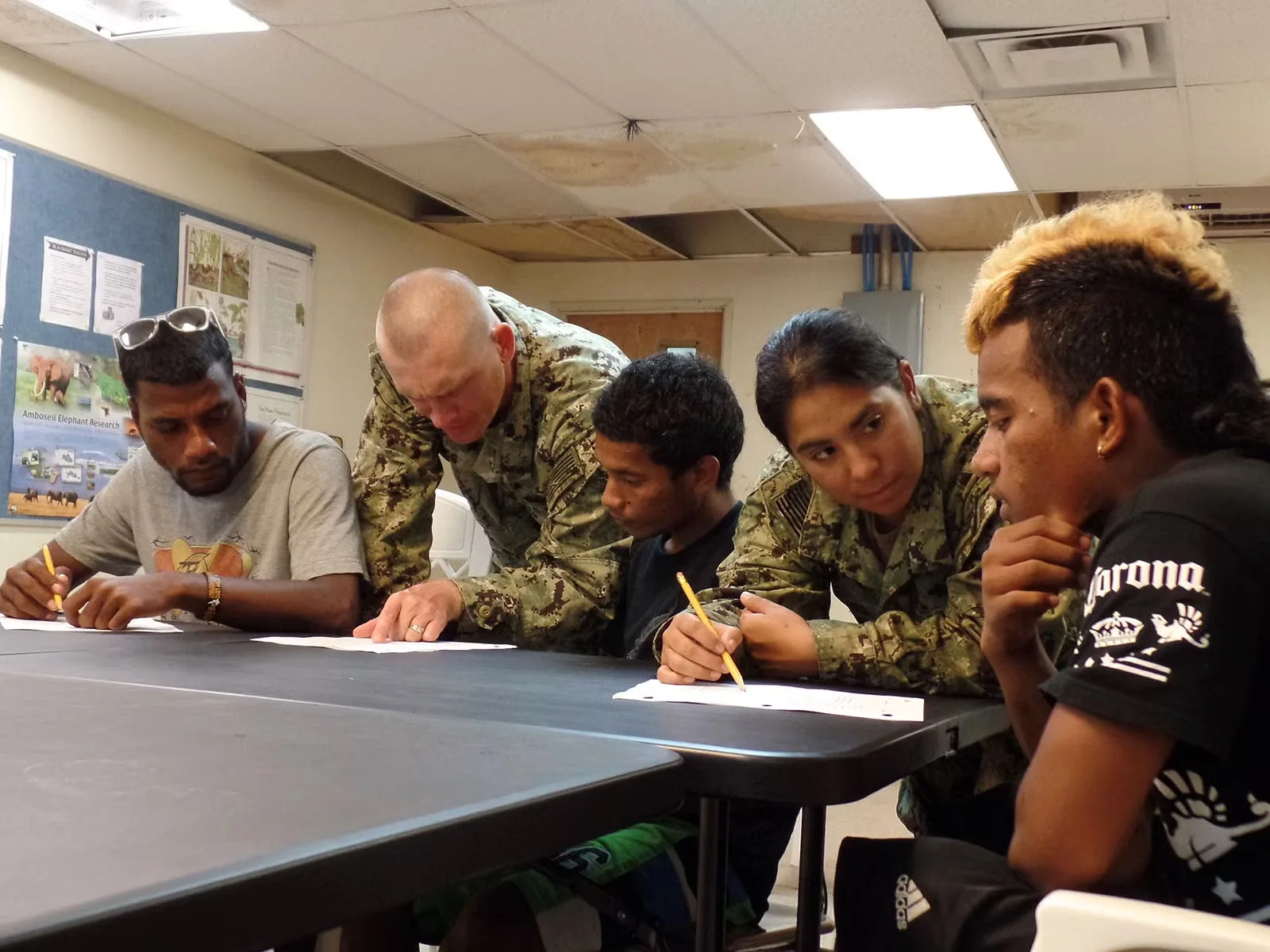
The ASVAB is an aptitude test with 10 subtests (9 on the paper version, which combines Auto and Shop Information) that every enlistment candidate takes before signing anything. It measures verbal, math, science and technical, and spatial reasoning through subtests like Arithmetic Reasoning, Word Knowledge, and Mechanical Comprehension. Every branch of the U.S. military uses it, and there’s no way around it.
But here’s the thing. Your ASVAB score isn’t one number, it’s several. Nine subtests get reported as individual standard scores, and those feed into two very different things: your AFQT, which decides if you can enlist, and your line scores, which decide which jobs you actually qualify for.
I’ve talked to a lot of recruits over the years who studied everything evenly across all nine subtests. That’s not a terrible strategy, but it’s not the smartest one either. Because only four of those subtests decide whether you get in the door at all, and that’s where your first weeks of prep should go.
How Is the ASVAB Scored? Standard Scores vs. the AFQT
Each of the nine ASVAB subtests gets a standard score built on a mean of 50 and a standard deviation of 10, according to the official ASVAB scoring methodology. Score a 50 and you’re dead average against the reference group. Score a 60 and you’re a full standard deviation above it.
Your AFQT, the Armed Forces Qualification Test score, is different. It only pulls from four subtests: Word Knowledge, Paragraph Comprehension, Arithmetic Reasoning, and Mathematics Knowledge. Word Knowledge and Paragraph Comprehension get combined into a Verbal Expression score first, then doubled and added to your two math scores.
So what does that actually mean for you? It means two of your nine subtests, WK and PC, count twice as much toward enlistment eligibility as any single math or science subtest. That’s not a small detail. That’s the whole reason AFQT prep should start with vocabulary and reading before it touches electronics or auto shop.
Your AFQT then gets converted into a percentile from 1 to 99, and that percentile is compared against a national sample of 18 to 23 year olds from a 1997 study. It’s not a grade. A 60 means you outscored 60 percent of that reference group, nothing more and nothing less.
ASVAB Score Chart: What Each Standard Score Means
Here’s an ASVAB score chart that translates standard scores into approximate percentile bands, so you can see where a given number actually lands you. These are approximations based on a normal curve; exact percentiles vary slightly by subtest.
| Standard Score | Approx. Percentile | What It Means |
|---|---|---|
| 20 | ~1st percentile | Far below average |
| 30 | ~2nd-3rd percentile | Well below average |
| 40 | ~16th percentile | Below average |
| 50 | ~50th percentile | Exactly average |
| 60 | ~84th percentile | Above average |
| 70 | ~98th percentile | Very high performance |
Here’s what the data actually shows. According to official ASVAB Career Exploration Program data, only about 16 percent of test takers score 60 or higher on any given subtest. That puts the 40 to 55 range in real context: it’s not a bad zone, but it’s also not competitive if you’re chasing technical jobs with high line score requirements.
Worth pausing on that for a second. Moving a subtest from the low 40s into the mid 50s doesn’t sound dramatic on paper. But it can shift your AFQT from a marginal category into one that opens real job flexibility, especially if that movement happens on Arithmetic Reasoning or Word Knowledge.
ASVAB Passing Score by Branch
There’s no single ASVAB passing score. Each branch sets its own AFQT minimum, and those minimums shift over time based on recruiting needs. Here’s where things stand right now for high school diploma holders.
| Branch | Minimum AFQT (Diploma) | Minimum AFQT (GED) |
|---|---|---|
| Army | 31 | 50 |
| Marine Corps | 32 | 50 |
| Coast Guard | 32 | 50 |
| Navy | 31 | 50 |
| Air Force | 31 | 50 |
| Space Force | 36 | 50 |
That Coast Guard number surprises a lot of people. For years it held the highest bar of any branch at 40, but current Coast Guard enlistment requirements put the minimum at 32. If you’re reading an older guide or a forum post that says 40, it’s outdated.
Clearing the minimum doesn’t mean you’re competitive. The Coast Guard enlists roughly 5,000 people a year across the entire branch, so most accepted recruits score well above the floor. Same goes for the Air Force, where a 31 gets you in the conversation but not necessarily a technical job.
And it gets more complicated for anyone without a diploma. GED holders face a steeper climb everywhere. Most branches, including the Air Force, want at least a 50 from GED holders, compared with an Air Force diploma minimum of 31. If you have a GED and can pick up 15 college credit hours first, several branches will treat you like a diploma holder instead.
How to Study for the ASVAB: An 8-12 Week Plan
The short answer? It depends. Your baseline matters, but 8 to 12 weeks gives most people enough runway to move their AFQT meaningfully without burning out. Think about it this way: every week you skip AFQT drilling is a week your competitive edge slips.
- Weeks 1-2, Baseline: Take a full diagnostic practice test. Calculate your rough AFQT using just AR, MK, WK, and PC, and compare it to your target branch’s minimum. Start daily vocabulary drills and a basic math refresher right away.
- Weeks 3-5, AFQT drilling: Put 60 to 70 percent of your study time here. Daily word problem sets for AR, topic based review for MK, vocabulary flashcards for WK, and timed reading passages for PC. Retake a short AFQT only practice test once a week to track movement.
- Weeks 6-8, Technical and vocational: Add General Science, Electronics Information, Mechanical Comprehension, and Auto and Shop Information. Keep two AFQT maintenance sessions per week so your verbal and math scores don’t slide backward.
- Weeks 9-12, Full simulation: Take two or three complete, timed practice ASVABs. After each one, tag every miss as a content gap, a misread, or a careless error, then build micro drills around whatever pattern shows up most.
The final week or two before test day should be light. Review, don’t cram new material, and get your sleep schedule locked in. A tired brain loses more points on timed sections than a slightly under-prepared one.
Your Daily and Weekly Study Routine
Generic “study more” advice doesn’t move scores. What moves scores is a routine you actually repeat. Here’s a structure that works for most people balancing prep with a job or school.
- 30 to 45 minutes on AFQT math: Arithmetic Reasoning and Mathematics Knowledge
- 30 minutes on AFQT verbal: Word Knowledge and Paragraph Comprehension
- 30 to 45 minutes rotating through a technical or vocational subtest
That’s roughly 90 to 120 minutes a day, which sounds like a lot until you break it into three focused chunks instead of one long slog. Most people retain more from three 30 minute sessions than from a single 2 hour marathon anyway.
Weekly, add one full or half length practice exam and one dedicated error review session. Here’s the part most people miss. During error review, don’t just check the right answer and move on. Rework the problem, figure out why you missed it, and file it under content gap, careless mistake, or misread question.
Subtest-by-Subtest Study Tactics That Actually Move Your Score
Different subtests respond to different tactics. Treating them all the same is one of the most common mistakes I see recruits make.
For Arithmetic Reasoning and Mathematics Knowledge, build a formula sheet covering percent change, simple interest, distance-rate-time, and basic area and volume formulas. Drill it until recall is automatic, then translate every word problem into an equation before you touch the answer choices.
For Word Knowledge and Paragraph Comprehension, keep a running flashcard deck of every word you miss, with a definition and example sentence attached. Practice Paragraph Comprehension using short nonfiction articles or technical manuals, and quiz yourself on main idea and tone, not just literal recall.
General Science and Electronics Information reward short, focused sessions over long ones. Ten to fifteen minutes on a single concept, like Ohm’s law or basic cell structure, sticks better than an hour trying to cram an entire subject. Mechanical Comprehension and Auto and Shop Information lean heavily visual, so work through diagrams of engines, levers, and pulleys rather than just reading definitions.
Assembling Objects tests spatial reasoning: how pieces fit, rotate, and mirror. Puzzle apps and dedicated AO practice sets help more here than traditional studying does, since the skill is closer to a reflex than a memorized fact.
For resources, lean on established military career guides and official branch recruiting sites for current numbers, and save the third party practice books for realistic question sets. Plan on at least three to five full length practice tests before test day. If you want more reading beyond the ASVAB, explore our other enlistment guides for a broader look at what’s available.
FAQ
What is a good ASVAB score?
A good AFQT score generally falls between 50 and 64, which puts you in Category IIIA and shows a solid grasp of the material relative to the national reference group. Scoring 65 or above moves you into Category II or higher, which is considered excellent and tends to open up more specialized and technical job assignments. Anything below 50 can still qualify you for enlistment depending on your branch, but it narrows your options considerably. The honest answer is that “good” depends on what job and branch you’re targeting, so check your desired composite score requirements before deciding what number to aim for.
Can I retake the ASVAB if I don’t pass?
Yes, and it’s common. You can retake the ASVAB after waiting one calendar month from your first attempt, then another full month if you need a third try. After your third attempt, most branches require a six month wait before a fourth try, so it’s worth treating the second attempt seriously rather than rushing back in. Retaking is not a mark against you, recruiters see it regularly, but you’ll want a real study plan in place before you retest rather than hoping for a better day. Use your first score report to identify exactly which subtests dragged your AFQT down and focus your prep there.
Does the ASVAB score expire?
Your ASVAB scores stay valid for two years from your test date, and they can be used for enlistment purposes throughout that window. If more than two years pass, you’ll need to retake the full test even if your original score was strong. Some students who take the ASVAB through a school’s Career Exploration Program will find their scores are primarily used for career counseling rather than enlistment, so it’s worth confirming with a recruiter which version of your score is on file. If your two year window is closing and you’re still deciding on enlistment, talk to a recruiter early so you’re not scrambling to retest at the last minute.
Your Path to Enlistment
Where This Leaves You
The ASVAB rewards a specific kind of prep, not just hours logged. Focus your first weeks on the four AFQT subtests, because that percentile is the gate everything else sits behind. Then expand into the technical and vocational subtests once your verbal and math scores are where they need to be.
In my time covering enlistment and basic training for recruits and their families, the biggest difference between people who hit their target score and people who don’t isn’t raw talent. It’s whether they built a routine and stuck with it for eight straight weeks instead of cramming the last one.
Check your target branch’s current AFQT minimum before you start studying, not after, since those numbers shift more often than most people expect. And if you’re aiming for a specific job rather than just clearing the floor, start looking at that job’s line score requirements now so your subtest priorities line up with where you actually want to end up.

William Johnson writes about U.S. military training and enlistment for Servicemembers Opportunity Colleges. His work covers topics such as boot camp, ROTC, the ASVAB test, military pay, and what to expect during basic training, with a focus on giving recruits and their families clear, practical information about military life.
Sources
- Official ASVAB Program. “Understanding ASVAB Scores.” OfficialASVAB.com, 2026.
- U.S. Air Force. “ASVAB.” Airforce.com, 2026.
- U.S. Coast Guard. “Get Started.” GoCoastGuard.com, 2026.
- ASVAB Career Exploration Program. “Understanding Your ASVAB Results.” ASVABProgram.com, 2026.
- Military.com. “What Your ASVAB Scores Mean: 2026 Enlistment Guide.” Military.com, 2026.
- Achievable. “Decode Your ASVAB Score Report Step by Step.” Achievable.me, 2026.