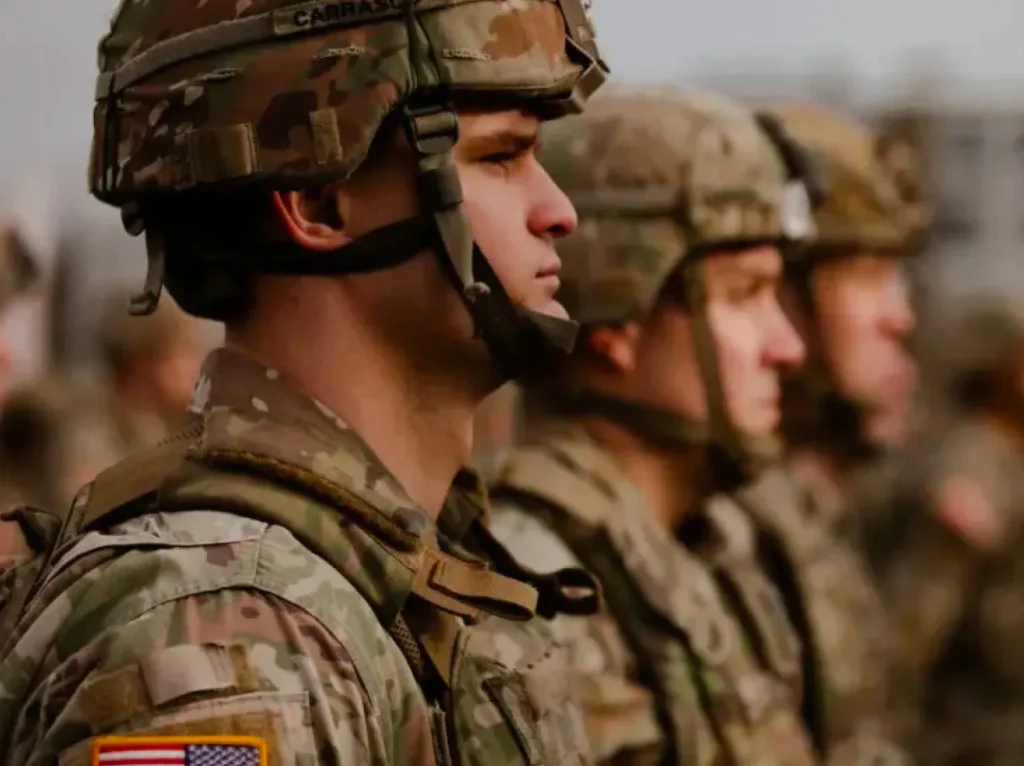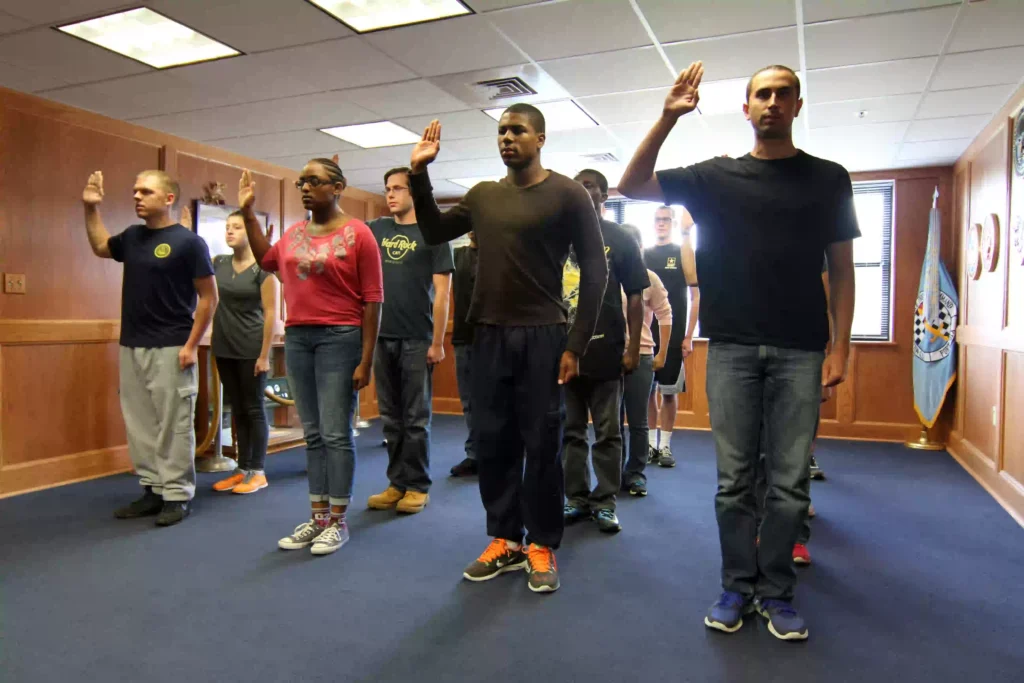
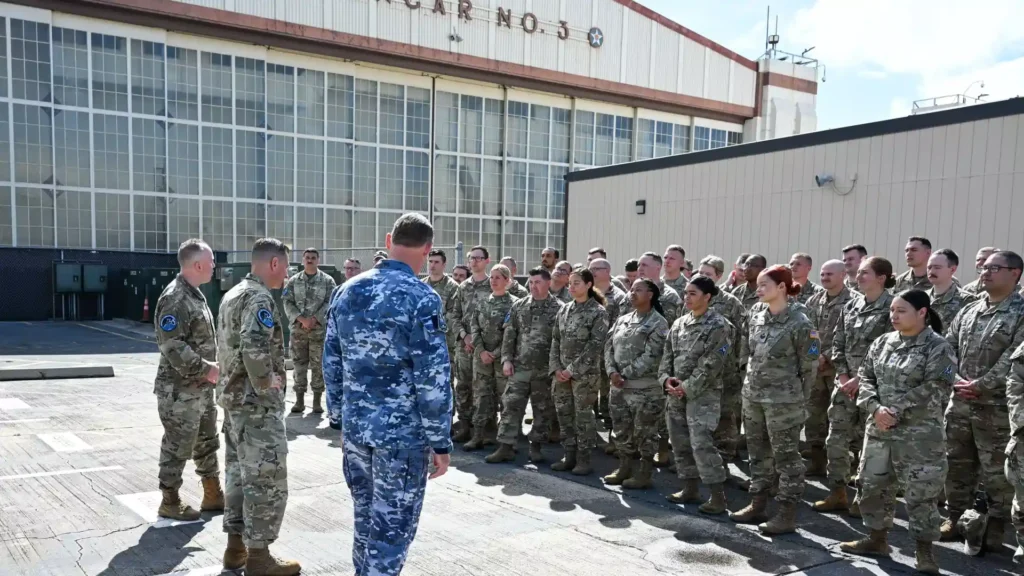

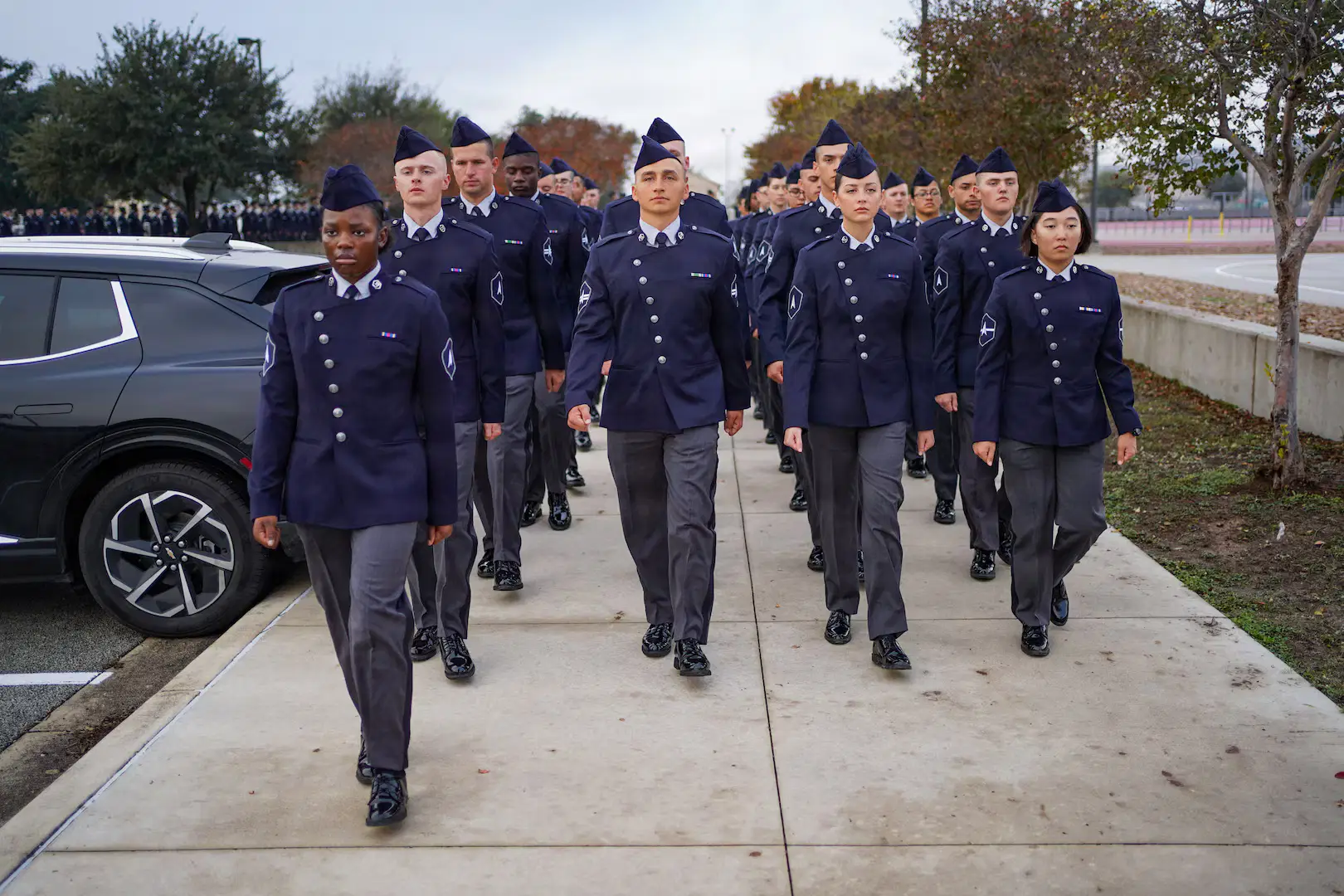
US Space Force basic training happens at Joint Base San Antonio-Lackland, Texas, and runs about 7.5 weeks. Guardians share the installation with Air Force recruits, but since June 2026 the Space Force runs its own basic training squadron with its own curriculum. This guide covers the location, length, requirements, and what changed this year.
If you’ve been told Space Force basic training is just Air Force boot camp with a few extra classes bolted on, that description is out of date. It was accurate for years. It isn’t anymore.
Here’s the short version. Space Force basic training takes place at Joint Base San Antonio-Lackland, lasts roughly 7.5 weeks, and as of mid-2026 runs under a dedicated Space Force training squadron with its own leadership and a curriculum built specifically for Guardians. Below, we’ll walk through where it happens, how long it takes, what you’ll actually do there, and how it stacks up against traditional Air Force basic training.
In This Article
- Where Is Space Force Basic Training Held?
- How Long Is Space Force Basic Training?
- Does the Space Force Have Its Own Boot Camp?
- What Guardians Actually Learn in BMT
- Space Force Boot Camp vs. Air Force Basic Training
- Space Force Bootcamp Requirements to Enlist
- What Happens After Space Force Basic Training
- FAQ
- What This Means If You’re Considering the Space Force
Where Is Space Force Basic Training Held?
Space Force basic training happens at Joint Base San Antonio-Lackland in San Antonio, Texas. That’s the same installation the Air Force has used for enlisted basic training since 1946, and it’s the only basic training location for both services.
So where is Space Force boot camp exactly, down to the address? Trainees are assigned to a specific squadron and flight, and mail gets routed through that unit. For Guardians, that means the 535th Training Squadron rather than one of the Air Force’s training squadrons.
Nobody ships to a separate Space Force-only base for basic training. The whole idea of “Guardian basic training” sounding like it should happen somewhere futuristic or space-adjacent doesn’t match reality. It’s Lackland, same as it’s always been for Air Force recruits.
How Long Is Space Force Basic Training?
Space Force basic training runs about 7.5 weeks. That figure has held steady for years and applies to normal progression, meaning no setbacks, no recycles, no medical holds.
How does that compare to what people assume? A lot of applicants guess it’s shorter, maybe because the Space Force itself is small and technical. It isn’t shorter.
Think about it this way. It follows the same overall timeline as Air Force basic training, which currently runs about 7.5 weeks.
Here’s a rough breakdown of how the weeks tend to stack up:
- Week zero: in-processing, gear issue, medical checks, first phone call home
- Weeks one through three: drill, customs and courtesies, classroom instruction, physical training
- Weeks four through five: applied skills, teamwork exercises, scenario-based training
- Week six: capstone period and end-of-course evaluation
- Week seven: graduation and transition to technical training
Worth pausing on that for a second. This sequence is the official Air Force BMT planning model, not a guaranteed Guardian-specific schedule. Because Space Force training is actively changing, treat this as a rough map rather than a locked itinerary.
Does the Space Force Have Its Own Boot Camp?
Yes, and this is genuinely new. For most of the Space Force’s short history, the answer would have been “not really.”
Guardians trained inside Air Force basic training with a handful of extra briefings tacked on. That changed in June 2026.
On June 16, 2026, the Space Force activated the 535th Training Squadron under Space Delta 1, its first dedicated basic training unit. It’s a small but real milestone: the Space Force now runs Guardian-specific training with its own commander, its own instructors, and its own chain of command inside the shared Lackland ecosystem.
But here’s the thing. “Its own squadron” doesn’t mean “its own base.” Guardian recruits still train at JBSA-Lackland, the same installation where the Air Force’s 737th Training Group runs Air Force basic training, but the 535th Training Squadron reports to Space Delta 1 under the Space Force’s training command, STARCOM. Think of it this way: the building is shared, but Guardians now have their own room inside it, with their own furniture and their own rules.
And it gets more complicated. By mid-2026, that room had matured fast. A Guardian who came up through basic training without transferring in from another branch graduated from the Space Force’s own instructor school.
She then returned to train the next class. That’s a small detail, but it says a lot: the Space Force is no longer borrowing instructors indefinitely. It’s growing its own.
What Guardians Actually Learn in BMT
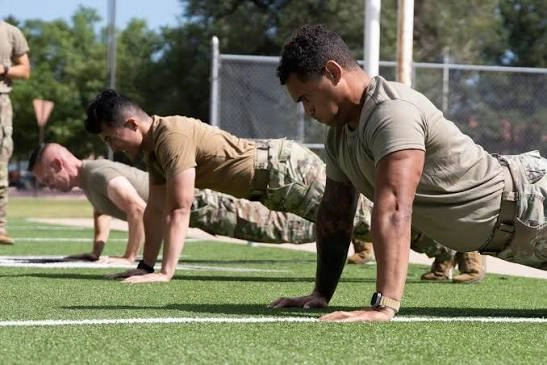
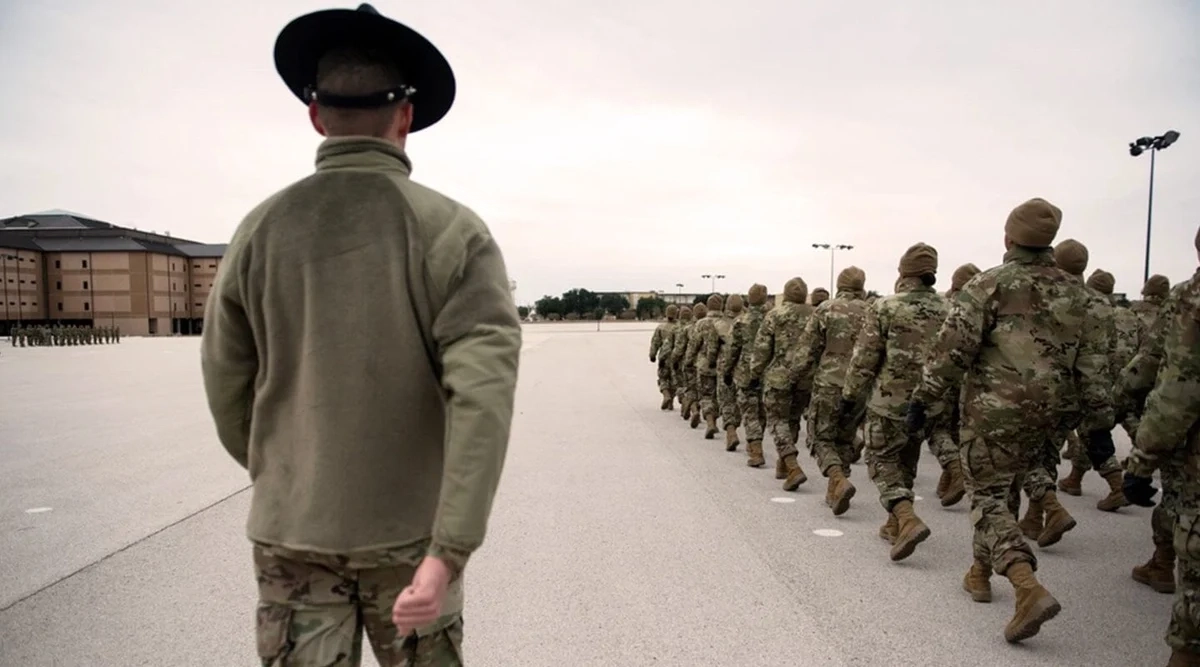
Every recruit at Lackland, Space Force training or Air Force, works through the same military foundation. That includes drill and ceremonies, physical training, service values, and the basics of military life. Nobody skips that part.
Space Force BMT layers Guardian-specific material on top. Older recruiting material described this as roughly 21 hours of extra instruction covering emotional intelligence, Space Force structure, and senior-leader briefings. That figure still shows up on some public pages, but treat it as a legacy description rather than the full current picture.
Here’s where it gets interesting. Current official language points toward something broader: Guardian identity, peer-led teamwork, resiliency, cognitive agility, problem-solving, combatives, and operating in degraded or contested environments.
That’s a different emphasis than a stack of extra classroom hours. It reads more like the Space Force is trying to build a distinct training identity, not just add content.
So why does this matter? None of this makes a recruit a satellite operator or a cyber specialist by graduation day.
Basic training builds the military foundation. The technical skills, the actual job training, come later.
Space Force Boot Camp vs. Air Force Basic Training
So what does that actually mean for you if you’re weighing Space Force against Air Force enlistment? Mostly, the training experience overlaps heavily. Same base, same overall length, same core military skills.
The differences show up in leadership, emphasis, and scale.
| Factor | Space Force BMT | Air Force Basic Training |
|---|---|---|
| Location | JBSA-Lackland, TX | JBSA-Lackland, TX |
| Length | About 7.5 weeks | About 7.5 weeks |
| Leading unit | 535th Training Squadron, Space Delta 1 | 737th Training Group squadrons |
| Annual enlisted intake | Roughly a few hundred recruits | Tens of thousands of recruits |
| Extra service-specific focus | Guardian identity, spacepower context, resiliency training | Standard Air Force core values and mission focus |
The class size difference matters more than people expect. Air Force basic training moves tens of thousands of recruits through Lackland every year. Space Force boot camp handles a fraction of that number, which means smaller flights and, in theory, more individualized attention from instructors.
And it gets more complicated when you factor in how fast this is changing. A year from now, the gap between Space Force training and Air Force basic training could look wider than it does today, simply because the 535th Training Squadron is still building out its curriculum.
Space Force Bootcamp Requirements to Enlist
Before you can ship to basic training, you have to qualify to enlist. The core Space Force bootcamp requirements are straightforward on paper: U.S. citizenship, an age between 17 and 42, and a qualifying score on the Armed Services Vocational Aptitude Battery.
“You must be 17-42 years of age, a U.S. citizen and obtain a qualifying ASVAB score.”
U.S. Space Force, Official Enlisted Guardian Recruiting Page
Meeting the minimums is only step one. The Space Force is small and highly technical, so many specialties set their own ASVAB thresholds well above the baseline, plus medical, vision, or security-clearance conditions specific to that job. Cyber operations, space systems operations, and intelligence roles all have their own added bars to clear.
Let me explain why that matters. Because the Space Force is comparatively tiny, job availability moves fast, and a slot can close before you finish paperwork if you’re not confirmed for a documented Space Force position rather than a general Department of the Air Force enlistment. Talk through contract length, ship date, and any bonus conditions with a Space Force recruiter directly before you sign anything.
What Happens After Space Force Basic Training
Graduation from Space Force basic training is normally a two-day event at JBSA-Lackland, with a run and coin ceremony one day and a formal graduation parade the next. Guardian graduates also get a private patching ceremony where they receive their first Space Force patches.
Graduating from BMT doesn’t hand you a technical qualification. It hands you a foundation. From there, new Guardians head to career-specific training tied to their Space Force Specialty Code. Most new Guardians start out in the junior enlisted Specialist grades, which are laid out in this guide to Space Force ranks.
Depending on the job, that could mean Vandenberg Space Force Base for space systems work, Keesler Air Force Base for cyber specialties, or Goodfellow Air Force Base for several intelligence roles.
The short answer? It depends on your career field, but the sequence itself is consistent. Recruiter and testing, then Delayed Entry Program, then roughly 7.5 weeks at Lackland, then technical training, then your first operational assignment.
FAQ
Is Space Force basic training the same as Air Force basic training?
They share the same installation and roughly the same length, so in a broad sense, yes, they overlap heavily. But since June 2026, Guardian basic training runs under its own squadron, the 535th Training Squadron within Space Delta 1, with its own leadership and an evolving curriculum built around Guardian identity and spacepower context. Older descriptions that frame it as simply Air Force training plus a handful of extra classes no longer capture the full picture. Think of it as shared infrastructure with increasingly separate execution.
How hard is Space Force basic training physically?
It’s a real physical program, not a formality. Official guidance requires physical training at least six days a week and a graduation fitness test. Since July 1, 2026, the Department of the Air Force fitness assessment for Airmen and Guardians centers on a 2-mile run (or HAMR) plus strength, core, and body composition components, so confirm the current BMT graduation events with your recruiter. Applicants who assume a technical branch means an easy fitness bar tend to be surprised. After graduation, operational Guardians also take a separate fitness assessment twice a year, so basic training fitness habits matter well beyond boot camp.
Can you go straight into a Space Force job after boot camp?
No, not directly. Basic training builds the military foundation: discipline, drill, fitness, and core service knowledge. It doesn’t teach satellite operations, cyber defense, or intelligence analysis. Those skills come in follow-on technical training tied to your Space Force Specialty Code, at locations like Vandenberg, Keesler, or Goodfellow depending on your job. Basic training is the gate you pass through first, not the training itself.
Do Space Force officers attend the same basic training as enlisted Guardians?
No. What most people call “Space Force basic training” refers specifically to enlisted Basic Military Training. Officer candidates commission through different pathways entirely, including Officer Training School, Air Force ROTC, or the U.S. Air Force Academy. The Space Force also runs a separate consolidated Officer Training Course, a 12-month initial-skills program covering space, intelligence, and cyber mission areas, which is distinct from both enlisted BMT and the commissioning source itself.
What This Means If You’re Considering the Space Force
Here’s the part most people miss: Space Force basic training isn’t a shrunken version of Air Force boot camp, and it isn’t some separate space-themed program either. It’s a shared foundation that’s actively splitting into its own thing, in real time, while you’re reading this.
If you’re weighing enlistment, don’t rely on an old blog post or a three-year-old recruiting video for the details. Talk to a recruiter about the current curriculum, confirm your Space Force Specialty Code before you ship, and use the latest official fitness standards rather than a chart you found online.
The short version: same base, same rough timeline, a leadership structure and curriculum that’s genuinely Guardian-led as of 2026. That’s a meaningful shift from where things stood even a year or two ago, and it’s worth understanding before you sign.

William Johnson writes about U.S. military training and enlistment for Servicemembers Opportunity Colleges. His work covers topics such as boot camp, ROTC, the ASVAB test, military pay, and what to expect during basic training, with a focus on giving recruits and their families clear, practical information about military life.
Sources
- U.S. Space Force. “Join as an Enlisted Guardian.” Spaceforce.com, 2026.
- Mallard, Jonathan. “Historic First: Space Force BMT Graduate Returns to Train Next Generation of Guardians.” DVIDS, 2026.
- U.S. Space Force. “535th Training Squadron Activated as Space Delta 1, Detachment 3 Deactivates.” DVIDS, 2026.
- Air Force Basic Military Training. “535th Training Squadron.” Basictraining.af.mil.
- Wikipedia. “United States Air Force Basic Military Training.”