
A combat medic is the first person to reach a wounded soldier and the last line of defense before evacuation. The Army calls the job MOS 68W, and getting there takes a specific ASVAB score plus a 16-week training pipeline at Fort Sam Houston. Pay starts modest but climbs fast with rank and specialization.
Ask a soldier who they trust most in a bad situation and a lot of them will say “Doc.” That’s the informal title every combat medic earns, whether they’re an Army 68W, a Navy corpsman, or an Air Force medical technician. The job sits at the exact spot where combat and clinical medicine collide.
I’ve spent years writing about military training pipelines, and the combat medic MOS keeps coming up as one of the most misunderstood jobs in the Army. People assume it’s basic first aid with a rifle. It’s closer to paramedic-level trauma care performed under fire, sometimes for hours before help arrives.
In This Article
- What Does a Combat Medic Actually Do?
- What Is the Combat Medic MOS, and How Does It Compare Across Branches?
- What Are the Requirements to Become a Combat Medic?
- How Do You Actually Become a Combat Medic?
- What Does Combat Medic Training Involve?
- How Much Do Combat Medics Actually Make?
- What Comes After Initial Training?
- Where a Combat Medic Career Can Take You
What Does a Combat Medic Actually Do?
A combat medic provides emergency trauma care at the point of injury, then stabilizes and evacuates the patient. That’s the job in one sentence. Everything else is detail.
In the Army, this role goes by the title Combat Medic Specialist, or MOS 68W. Army medics run daily sick call on base, treating everything from twisted ankles to strep throat. In the field, the same soldier controls bleeding, manages airways, and starts IV fluids on a casualty under fire.
Other branches use different names for the same core role. The Navy calls it Hospital Corpsman, the Air Force calls it Aerospace Medical Service Specialist, and the Coast Guard calls it Health Services Technician. An official Defense Health Agency overview describes the Medical Education and Training Campus at Joint Base San Antonio-Fort Sam Houston, Texas, where the Army, Navy, and Air Force train their enlisted medics. Coast Guard Health Services Technicians attend HS A School at Training Center Petaluma, California.
Think about it this way. Every branch needs the same basic skill set, so the Department of Defense consolidated Army, Navy, and Air Force training instead of running three separate programs. That’s why an Army medic and a Navy corpsman learn from the same instructors during their first weeks of training.
An Army medic also carries a weapon alongside the aid bag, which surprises a lot of people outside the military. Modern doctrine treats medics as soldiers first and clinicians second, since the same insurgent forces they treat casualties around don’t always respect noncombatant protections. It’s a strange balance: heal under one set of rules, fight under another when the situation demands it.
Assignments vary widely too. A line medic might spend a year attached to an infantry platoon, living and training alongside the same 30 to 60 soldiers they’re responsible for. A medic assigned to a combat support hospital, on the other hand, works more like hospital staff, rotating through departments and handling a broader caseload.
What Is the Combat Medic MOS, and How Does It Compare Across Branches?
The Army combat medic MOS is 68W. The Navy equivalent is the HM rating, the Air Force uses AFSC 4N0X1, and the Coast Guard uses the HS rating. Each carries its own line score requirements and training length, even though the coursework overlaps heavily.
Here’s where it gets interesting. Despite the overlap in coursework, the branches don’t train on identical timelines. The Army’s 68W path runs 16 weeks of Advanced Individual Training, while the Coast Guard’s HS pipeline stretches to 22 or 23 weeks because it folds in more general clinical medicine.
| Branch | Designator | ASVAB Line Score | Initial Training |
|---|---|---|---|
| Army | MOS 68W | ST: 101, GT: 107 | 10 wks BCT + 16 wks AIT |
| Navy | Rating HM | VE+MK+GS: 156 | 10 wks RTC + 19 wks A School |
| Air Force | AFSC 4N0X1 | General (G): 50 | 7.5 wks BMT + 14 wks Tech School |
| Coast Guard | Rating HS | VE+MK+GS+AR: 207 | 8 wks Boot Camp + 22-23 wks A School |
Army 68W, Navy HM, and Air Force 4N0X1 trainees all train at Joint Base San Antonio-Fort Sam Houston, while the Coast Guard trains its HS rating at Training Center Petaluma, California. That’s not an accident. A 2005 base realignment moved nearly all enlisted medical training to one campus, and it’s been that way ever since, according to the Wikipedia entry on the 68W specialty.
So what does that actually mean for you? If you’re weighing branches, the coursework will feel familiar no matter which one you pick. The differences show up in deployment tempo, unit culture, and how each branch uses its medics day to day.
What Are the Requirements to Become a Combat Medic?
You need a qualifying ASVAB score, U.S. citizenship or permanent resident status, a high school diploma or equivalent, and a clean medical and legal background. For the Army specifically, that means hitting a Skilled Technical score of 101 and a General Technical score of 107.
Combat medic requirements go beyond the paperwork. You’re also evaluated under the PULHES physical profile system, which screens hearing, vision, and psychiatric fitness alongside general physical stamina.
- U.S. citizenship or permanent resident legal status
- High school diploma or GED equivalent
- ASVAB line scores meeting your branch’s minimum (ST: 101, GT: 107 for Army 68W)
- Clean background check with no disqualifying legal violations
- Physical qualification through MEPS under the PULHES system
Vision and hearing standards matter more here than in a lot of other jobs. You’ll need vision correctable to 20/20 and normal color vision, though some waivers exist for minor color deficiency. Candidates who fall short on the ASVAB can sometimes retest or work with a recruiter on a waiver.
Here’s the part most people miss. A Secret clearance isn’t required for every entry-level medic slot, but it becomes mandatory the moment you’re assigned to a deployable operational unit, flight duty, or special operations support role.
Recruiters sometimes describe a 68W slot as “moderately competitive,” which is a fair label. It’s not the hardest MOS to qualify for, but training slots are limited, so a strong ASVAB score and a clean physical exam still matter.
How Do You Actually Become a Combat Medic?
You enlist through a recruiter, qualify on the ASVAB, pass MEPS, complete Basic Combat Training, then finish Advanced Individual Training at Fort Sam Houston. That sequence takes roughly six months from the day you ship to basic training to the day you graduate as a certified medic.
- Meet with a recruiter and confirm eligibility for the medical field
- Take the ASVAB and hit the required line scores for your branch
- Pass the medical exam and background check at MEPS
- Complete Basic Combat Training, typically 10 weeks
- Attend Advanced Individual Training and earn National Registry EMT (NREMT) certification
- Graduate and receive your first duty station assignment
If you’re asking how to become a combat medic and you already have some college credit or prior EMT experience, mention it to your recruiter early. Programs like the Army Civilian Acquired Skills Program can shorten training or bump your starting rank.
The short answer? It depends on how prepared you walk in. Candidates who study ahead of the ASVAB and arrive in decent physical shape tend to move through the pipeline with fewer setbacks than those who don’t.
What Does Combat Medic Training Involve?
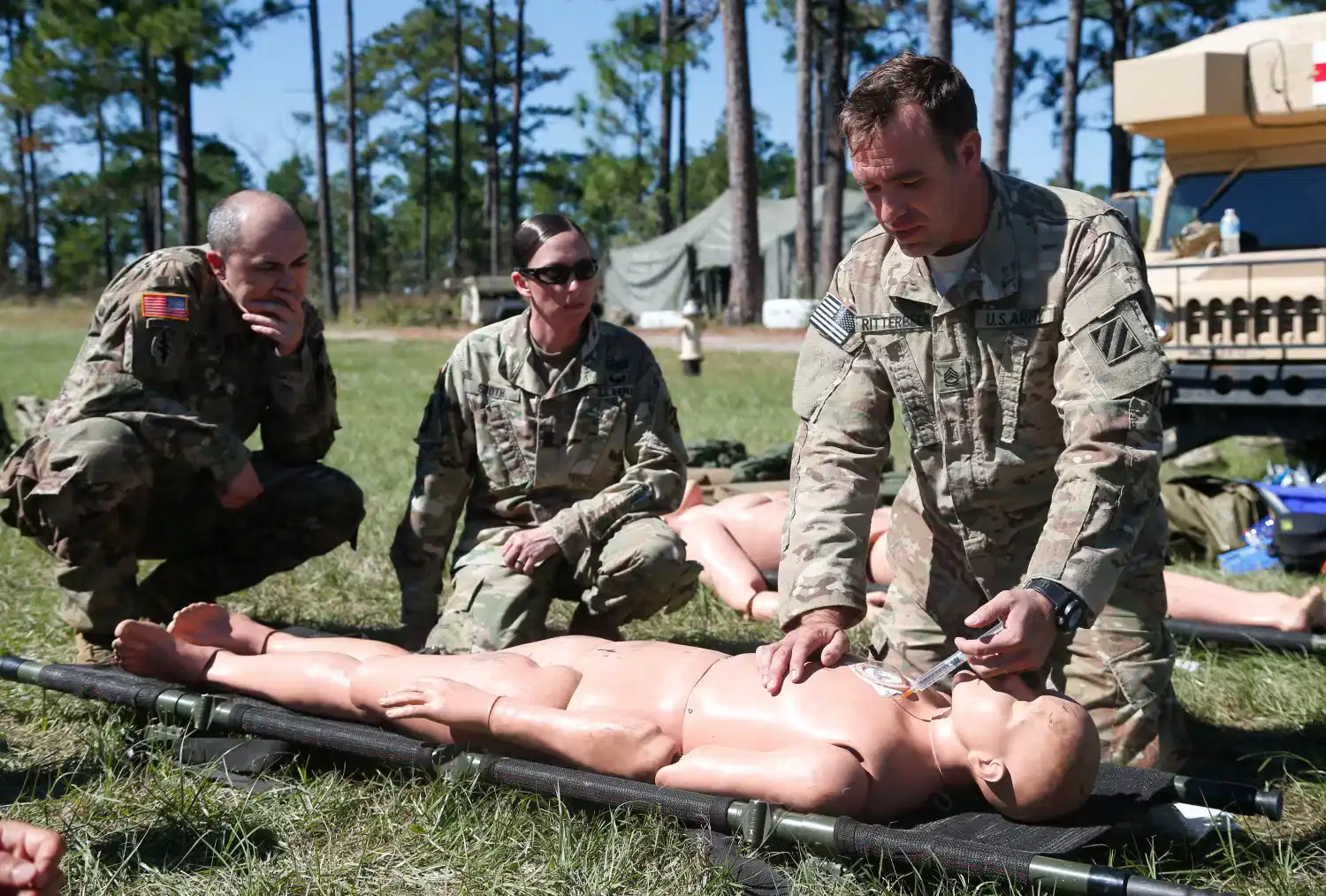
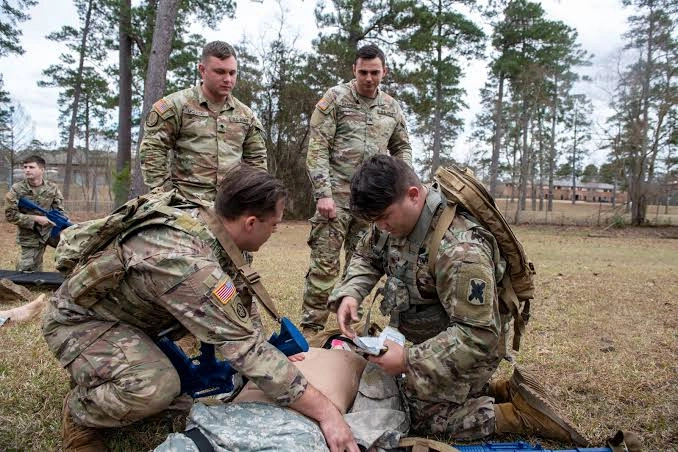
Combat medic training splits into two phases. The first phase builds toward National Registry EMT (NREMT) certification, covering CPR, basic life support, anatomy, and emergency pharmacology. The second phase, often called the Whiskey Phase, pushes into combat-specific trauma skills that go well beyond standard EMT scope.
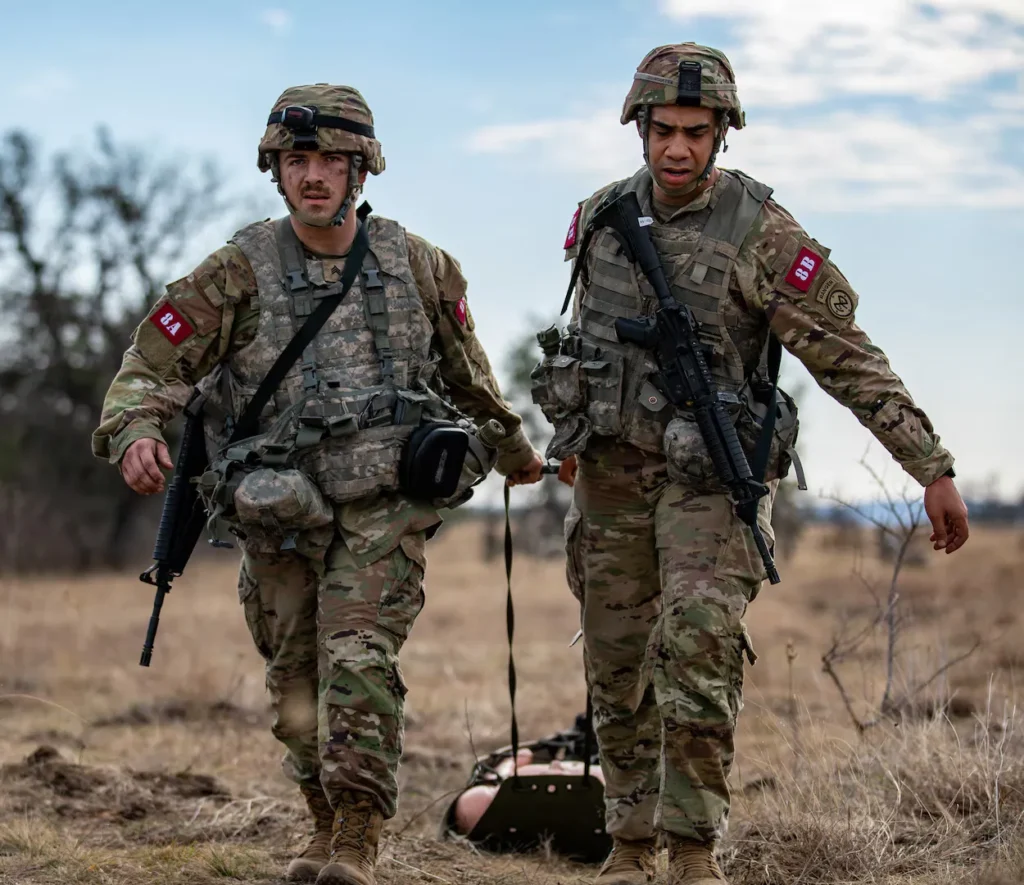
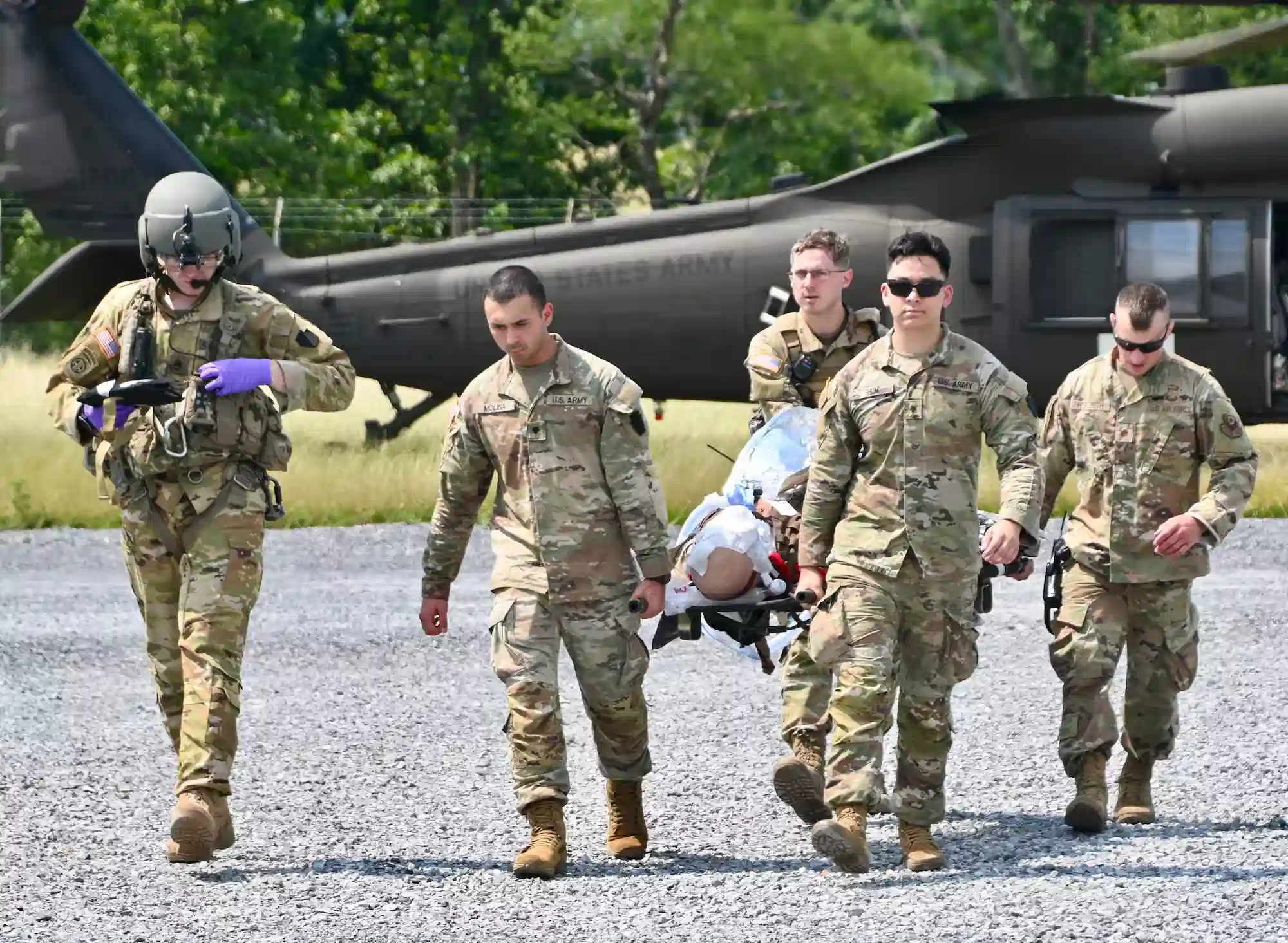
During the tactical phase, training covers tourniquet application, surgical cricothyroidotomies, needle decompression for collapsed lungs, and intraosseous infusion. Trainees also practice loading casualties onto MRAP ambulances and helicopter mockups under simulated combat stress.
“Modern military medical training has shifted from rapid evacuation assumptions toward Prolonged Casualty Care, preparing medics to sustain complex trauma patients for 24, 48, or even 72 hours without evacuation support.”
Combat medic training curriculum overview, Medical Education and Training Campus
And it gets more complicated. Combat medic specialist training now includes Prolonged Casualty Care, a response to modern warfare scenarios where air superiority and evacuation aren’t guaranteed. Medics may need to keep a critically wounded soldier stable for days, not hours.
The full pipeline ends with a 12-day field training exercise that simulates urban combat, mass casualty events, and battalion aid station operations. Trainees get six attempts to pass the NREMT cognitive exam; failing means reclassification out of the MOS.
How Much Do Combat Medics Actually Make?
Combat medic salary is built on standard military basic pay, not a special medical bonus scale. In 2026, an E-1 earns roughly $2,407 per month in base pay, and that number climbs with rank and time in service under the current pay tables.
Basic pay is only part of the picture. Add tax-free housing and food allowances, plus free or low-cost health care, and total compensation looks a lot better than the base number suggests.
| Pay Grade | 2026 Monthly Basic Pay | Approx. Annual Base Pay |
|---|---|---|
| E-1 (entry) | $2,407 | $28,884 |
| E-4 (4 years) | $3,659 | $43,902 |
| E-6 (10+ years) | $4,760 | $57,120 |
Here’s what the data actually shows. The official 2026 basic pay tables reflect a 3.8 percent raise that took effect January 1, 2026, layered on top of an earlier targeted increase for junior enlisted ranks. Civilian salary trackers estimate total 68W compensation, including housing and food allowances, in the $44,000 to $58,000 range depending on rank and duty station.
But there’s a catch. Those civilian estimates blend allowances and base pay together, so they won’t match the number on your leave and earnings statement exactly. Your actual take-home depends on your ZIP code, dependency status, and years of service.
What Comes After Initial Training?
Graduating AIT isn’t the end of the road. Combat medics can pursue advanced pipelines like the Special Operations Combat Medic course, a demanding 36 to 37 week program that trains medics to handle multi-system trauma and perform surgical interventions in the field.
- Special Operations Combat Medic course at Fort Bragg, North Carolina
- Special Forces Medical Sergeant qualification, MOS 18D, for Green Beret candidates
- Interservice Physician Assistant Program, a fully funded path to a PA degree
- Enlisted to Medical Degree Preparatory Program for aspiring physicians
Let me explain why this matters for career planning. A soldier who completes the Special Operations Combat Medic course walks away eligible for National Registry Paramedic certification, a credential that translates directly to civilian EMS work.
The Interservice Physician Assistant Program takes it even further. Enlisted medics with 60 semester hours of college credit can apply for a fully funded, 29-month path to a Master of Physician Assistant Studies degree and a commission as a First Lieutenant.
Worth pausing on that for a second. Very few enlisted jobs offer a direct, funded bridge to a graduate healthcare degree without leaving active duty. That’s part of why the medical field draws soldiers who plan to stay in healthcare long after their enlistment ends.
There’s also the Enlisted to Medical Degree Preparatory Program, which lets qualified medics complete pre-med coursework full time while still drawing military pay. It’s competitive, with GPA and standardized test minimums, but it exists specifically because the Army wants to keep experienced trauma medics in its healthcare pipeline.
How much do combat medics make?
Combat medic pay follows the standard military basic pay scale, which starts around $2,407 a month for an E-1 in 2026 and rises with rank and years of service. On top of base pay, medics receive tax-free housing and food allowances that vary by duty station and dependency status. Civilian salary trackers estimate total compensation for the role, including those allowances, somewhere between $44,000 and $58,000 a year. Actual pay depends heavily on rank, location, and whether the medic serves active duty, reserve, or National Guard.
How do you become a military medic?
You start by talking to a recruiter and confirming you meet the ASVAB line score requirement for your branch’s medical specialty. From there, you’ll pass a medical exam and background check at MEPS, complete initial military training like Basic Combat Training, and move into your branch’s medical technical school. Training culminates in a national EMT certification exam, which every branch requires before awarding the medical specialty. The whole process, from enlistment to graduation, typically takes around six months.
Is combat medic training hard?
Yes, and it’s designed that way on purpose. Trainees compress a semester’s worth of EMT coursework into a few weeks, then immediately move into tactical trauma skills that exceed standard civilian EMT scope, including surgical airway procedures and combat casualty evacuation. The physical demands stack on top of the academic load, since trainees still carry gear and complete field exercises. Most people who struggle do so on the academic side, particularly the NREMT cognitive exam, which allows only six attempts before reclassification.
Where a Combat Medic Career Can Take You
A combat medic career is rarely a dead end. Most of the clinical skills learned at Fort Sam Houston translate directly into civilian healthcare, and the Department of Defense has built multiple funded paths to keep that momentum going after enlistment.
But the real question is this: what do you actually want out of the job? Some medics want the tactical, deployable side of the role. Others use it as a stepping stone toward nursing school, a physician assistant program, or civilian paramedic work through Servicemembers Opportunity Colleges education benefits.
Either path starts the same way: a qualifying ASVAB score, a recruiter conversation, and a willingness to spend 16 weeks in Texas learning to keep people alive under pressure. Talk to a recruiter, ask specifically about the 68W or your branch’s equivalent, and get a straight answer on your current eligibility before you commit to anything.

William Johnson writes about U.S. military training and enlistment for Servicemembers Opportunity Colleges. His work covers topics such as boot camp, ROTC, the ASVAB test, military pay, and what to expect during basic training, with a focus on giving recruits and their families clear, practical information about military life.
Sources
- Defense Finance and Accounting Service. “2026 Military Basic Pay Tables.” DFAS.mil, 2026.
- Defense Finance and Accounting Service. “2026 Military Pay Tables on DFAS Website.” DFAS.mil, 2026.
- Medical Education and Training Campus. “Official METC Homepage.” METC.mil, 2026.
- Defense Health Agency. “Medical Education and Training Campus.” Health.mil, 2026.
- Wikipedia. “68W.” Wikipedia.org, 2026.
- Salary.com. “68W Combat Medic Salary.” Salary.com, 2026.