
Air force ranks look simple on a chart, but the hardest stripe to earn in 2026 wasn’t Chief. Only 11.07% of eligible master sergeants made Senior Master Sergeant (E-8), 1,474 of 13,315, or about 1 in 9, per the Air Force Personnel Center (AFPC). Chief (E-9) went to 26.18% of eligibles in the 25E9 cycle.
But there’s a catch. That higher Chief rate reflects a pool already filtered at E-8, not an easy stripe. And a new master sergeant averaged 14.2 years of service in 2026, against a minimum of 8 under AFI 36-2502 (July 2, 2026).
The short version of U.S. Air Force ranks: nine enlisted grades (E-1 to E-9), ten officer grades (O-1 to O-10) and five warrant officer grades (W-1 to W-5), revived in 2024 for cyber and IT. The tables below list them in order.
Air Force Ranks in Order (Lowest to Highest)
Abbreviations follow the official Air Force rank chart: mixed case, no periods.
Enlisted and Warrant Officer Grades
| Pay grade | Rank | Abbreviation |
|---|---|---|
| E-1 | Airman Basic | AB |
| E-2 | Airman | Amn |
| E-3 | Airman First Class | A1C |
| E-4 | Senior Airman | SrA |
| E-5 | Staff Sergeant | SSgt |
| E-6 | Technical Sergeant | TSgt |
| E-7 | Master Sergeant | MSgt |
| E-8 | Senior Master Sergeant | SMSgt |
| E-9 | Chief Master Sergeant | CMSgt |
| E-9 | Command Chief Master Sergeant | CCM |
| E-9 | Chief Master Sergeant of the Air Force | CMSAF |
| W-1 | Warrant Officer 1 | WO1 |
| W-2 | Chief Warrant Officer 2 | CW2 |
| W-3 | Chief Warrant Officer 3 | CW3 |
| W-4 | Chief Warrant Officer 4 | CW4 |
| W-5 | Chief Warrant Officer 5 | CW5 |
Source: USAF rank insignia chart.
First Sergeant (FS) isn’t a separate grade but a duty held by an E-7 to E-9, depending on the job. Warrant officer grades are cyber and IT only, with 137 on active duty as of July 31, 2026, per the Defense Manpower Data Center (DMDC).
Air Force Officer Ranks (O-1 to O-10)
| Pay grade | Rank | Abbreviation | Insignia |
|---|---|---|---|
| O-1 | Second Lieutenant | 2d Lt | One gold bar |
| O-2 | First Lieutenant | 1st Lt | One silver bar |
| O-3 | Captain | Capt | Two joined silver bars |
| O-4 | Major | Maj | Gold oak leaf |
| O-5 | Lieutenant Colonel | Lt Col | Silver oak leaf |
| O-6 | Colonel | Col | Silver eagle |
| O-7 | Brigadier General | Brig Gen | One star |
| O-8 | Major General | Maj Gen | Two stars |
| O-9 | Lieutenant General | Lt Gen | Three stars |
| O-10 | General | Gen | Four stars |
| O-11 | General of the Air Force (inactive) | GAF | Five stars |
Source: USAF rank insignia chart.
How Is the Air Force Rank Structure Organized?
The nine air force enlisted ranks split into three tiers, and the officer grades do the same:
- Airmen: E-1 to E-4
- Noncommissioned officers (NCOs): E-5 and E-6
- Senior NCOs: E-7 to E-9
- Company grade officers: O-1 to O-3
- Field grade officers: O-4 to O-6
- General officers: O-7 to O-10
NCO status starts at E-5. That wasn’t always so: E-4 NCO status was revoked effective May 1991, according to Air & Space Forces Magazine. Every commissioned officer outranks every enlisted airman.
The Space Force uses its own titles, covered in this guide to Space Force ranks.
How Rare Is the Top?
Fewer than 1 in 100 enlisted airmen is a chief: 2,525 of 258,695 on July 31, 2026, or 0.98%, per DMDC. Senior master sergeants made up 1.94% (5,022).
But the real question is this: does the law force it that low? Many sites still say it caps E-8 at 2% and E-9 at 1%, but the current text of Title 10, Section 517 allows up to 3.0% and 1.25% of active-duty enlisted strength. So the Air Force sits below both ceilings.
Why Is Senior Master Sergeant the Hardest Stripe to Earn?
Because it had the lowest selection rate of the five 2026 NCO promotion cycles. AFPC’s senior master sergeant cycle statistics show 11.07% of eligibles selected, the narrowest cut a master sergeant in the Air Force faces. Chief came in at 26.18%.
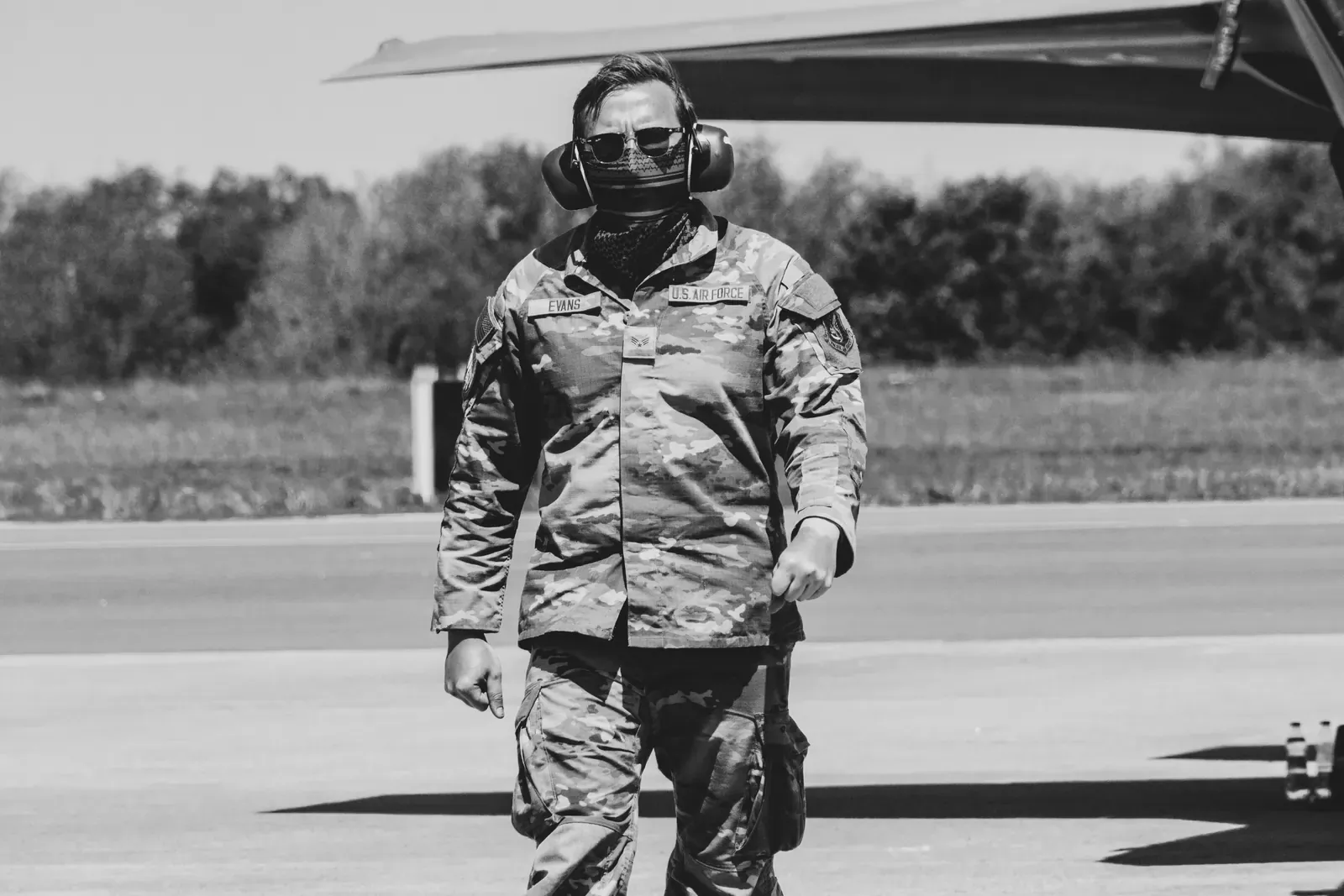
And it gets more complicated. Selection odds are only half the picture, so the table also sets each minimum next to the service time selectees actually had.
How Fast Do Airmen Move Up? Minimum vs. Real (2026 Cycles)
| Promotion to | Minimum TIS / TIG | Selected / eligible | Selection rate | Average TIS of selectees |
|---|---|---|---|---|
| SSgt (E-5) | 3 yrs / 6 mo | 12,671 / 39,774 | 31.86% | 5.06 yrs |
| TSgt (E-6) | 5 yrs / 23 mo | 6,668 / 25,080 | 26.59% | 10.15 yrs |
| MSgt (E-7) | 8 yrs / 24 mo | 4,475 / 21,552 | 20.76% | 14.16 yrs |
| SMSgt (E-8) | 11 yrs / 20 mo | 1,474 / 13,315 | 11.07% | 17.72 yrs |
| CMSgt (E-9) | 14 yrs / 21 mo | 640 / 2,445 | 26.18% | 20.84 yrs |
Sources: AFPC promotion releases, 26E5 to 26E8 and 25E9; AFI 36-2502, July 2, 2026.
So the toughest cut is E-8, not E-9, and it’s smarter to plan on about 14 years to make MSgt, not 8. Across the air force NCO ranks, selectees averaged roughly 2 to 7 years more service than the minimum.
Method: this guide took selected and eligible counts from each AFPC cycle release, published between January 8 and August 13, 2026, and checked them on October 14, 2026. Chief figures come from 25E9 because 26E9 statistics weren’t out yet. These are single-cycle odds among eligibles, not lifetime odds, since an airman can compete in several cycles.
Minimums come from Table 2.1 of the AFI 36-2502 promotion rules, which also set how airmen compete:
- Staff and technical sergeant: SKT and PFE tests, decorations and the EPB Promotion Recommendation Score, with no points for time in service or grade.
- Master sergeant and up: a central board score only, from 270 to 450.
- Senior master sergeant and chief: an associate degree or higher.
Which Rank Do You Start At, and How Do Officers Move Up?
Most recruits start at the bottom, but not all:
- Standard enlistment: Airman Basic (E-1).
- College credit: historically, 45 semester hours meant enlisting as an Airman First Class (E-3), per a 2015 Air Force records board decision. Confirm current rules with a recruiter.
- Air Force Academy, ROTC or Officer Training School: usually Second Lieutenant (O-1).
- Prior enlisted: officers with over 4 years of enlisted or warrant service get higher O-1E to O-3E pay.
Officer promotion is board-based from Major up. The 2020 lieutenant colonel board was the first to drop below-the-zone early promotions, according to Air & Space Forces Magazine. About 1,200 majors were promoted, and the on-schedule rate was about 76%.
How Do You Read Air Force Rank Insignia?
Officer insignia climb from bars to oak leaves to an eagle to stars, and generals wear separate stars rather than joined ones. Enlisted airmen wear stripes, with a few special devices at the top.
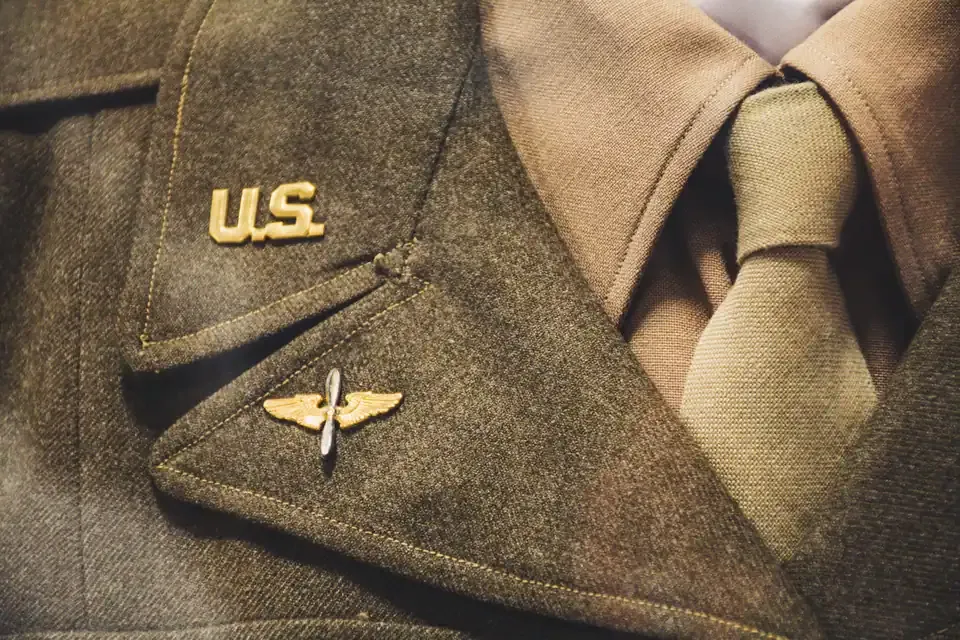
Here’s the part most people miss. On officer insignia, the cheaper metal is the senior one.
“Gold is worth more than silver, but silver outranks gold.” Jim Garamone, American Forces Press Service
The reason is history. In 1832 the Army had infantry colonels wear gold eagles on silver and all other colonels silver eagles on gold, a DoD history of insignia explains. When majors and lieutenant colonels received oak leaves, silver went to lieutenant colonels and gold to majors.
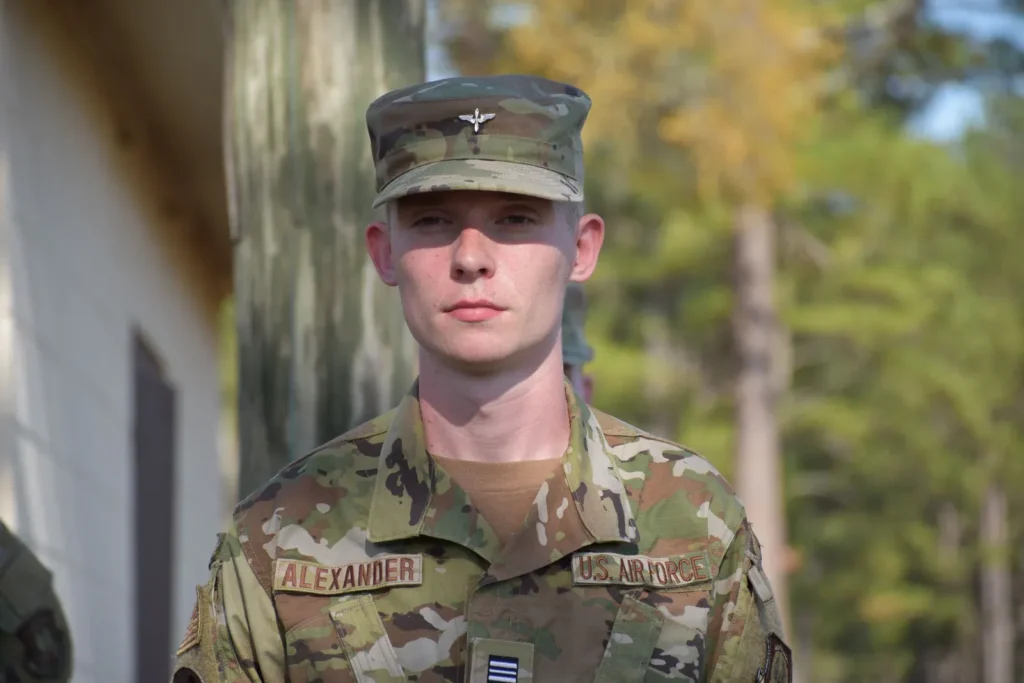
On the enlisted side, Airman Basic wears no insignia, and a first sergeant adds a diamond to the stripes. A command chief adds a silver star in the upper field, and the Chief Master Sergeant of the Air Force keeps a wreath-enclosed star, with the Great Seal added on November 1, 2004, per Air & Space Forces Magazine.
Air Force officer ranks on the OCP uniform appear in spice brown, with First Lieutenant and Lieutenant Colonel in black, on a tab centered on the chest.
What Do Air Force Ranks Pay in 2026?
Air force ranks and pay are tied through the pay grade. Below is monthly basic pay from the DFAS 2026 pay tables, before allowances.
| Pay grade | Years of service | Monthly basic pay |
|---|---|---|
| E-1 | 2 or less | $2,407.20 |
| E-9 | Over 20 | $8,105.10 |
| CMSAF | Any | $11,166.90 |
| O-1 | 2 or less | $4,150.20 |
| O-6 | 2 or less | $8,751.30 |
| O-7 to O-10 | Cap | $18,999.90 |
Source: DFAS Basic Pay tables, effective January 1, 2026.
At the service time selectees actually had, the biggest raises come at master sergeant and chief. E-6 to E-7 at over 14 years adds $704.70 a month, and E-8 to E-9 at over 20 adds $1,109.70, a 15.9% jump.
Here’s what the data actually shows. A chief with over 20 years earns about 1.95 times a new second lieutenant, even though the lieutenant outranks the chief.
Does the Air Force Have Warrant Officers?
Yes. Air force warrant officer ranks (W-1 to W-5) returned in 2024, for cyber and IT only. DMDC counted 137 on active duty on July 31, 2026, up from 62 on September 30, 2025 and zero in 2020.
Higher figures of about 200 or 245 elsewhere likely mix in more than active duty. The warrant officer school had graduated more than 200 by May 28, 2026, and the Air National Guard had 87 warrant officers in January 2026.
The Air Force announced the phase-out in 1959, and the last active-duty warrant officer retired in 1980. The revival was announced on February 14, 2024, and the first class of 30 graduated on December 6, 2024. That’s why one source says 45 years and another 66: one counts from 1980, the other from the late 1950s.
What Is the Highest Rank in the Air Force?
General (O-10) is the highest rank held today, with 11 on active duty as of July 31, 2026, per DMDC. Above it sits General of the Air Force, held only by Henry “Hap” Arnold, who Air & Space Forces Magazine says remains the only officer to reach five-star status in two services. The top enlisted airman is the Chief Master Sergeant of the Air Force, paid a fixed $11,166.90 a month.
But here’s the thing. The Chief of Staff of the Air Force is a four-star general, and the CMSAF is still an E-9. Both are positions held within an existing grade, so in the air force chain of command the title adds a job, not a new grade.
As of mid-2026, Gen. Kenneth Wilsbach was Chief of Staff, sworn in November 3, 2025, and David Wolfe was the 21st CMSAF.
Where This Leaves You
USAF ranks are easier to follow with the timelines attached. The 2026 data gives realistic horizons: about 10 years to technical sergeant and 14 to master sergeant.
The real filter is E-8, not Chief. Air force ranks also change at the edges, as the warrant officer revival shows, so check the date on any figure.
Comparing branches? See the guides to Navy ranks and ratings and Army ranks in order.
Frequently Asked Questions
Does an O-1 outrank an E-9?
Yes. A Second Lieutenant (O-1) holds a commission, and every commissioned officer outranks every enlisted airman, including a Chief Master Sergeant (E-9).
Pay tells a different story. In 2026 a chief with over 20 years earns $8,105.10 a month in basic pay, while a new O-1 earns $4,150.20, so the chief makes about 1.95 times as much. Officers with more than 4 years of prior enlisted service also get higher O-1E pay rates.
What percentage of airmen make E-9?
Fewer than 1 in 100. On July 31, 2026, the Air Force had 2,525 chiefs among 258,695 active-duty enlisted airmen, or 0.98%, per DMDC.
The law would allow up to 1.25%, so the Air Force sits below its legal ceiling. Within a single cycle the odds look better: 26.18% of eligible senior master sergeants made chief in 25E9, because the pool had already been narrowed at E-8.
How long does it take to make E-7 in the Air Force?
The minimum is 8 years in service and 24 months as a technical sergeant, under AFI 36-2502. In practice, 2026 selectees averaged 14.16 years of service.
Only 20.76% of eligible technical sergeants were selected in the 26E7 cycle. From E-7 up, promotion rests on a central board score rather than tests, so the performance record carries the most weight.
How many ranks are in the Air Force?
The Air Force has 24 pay grades: nine enlisted (E-1 to E-9), five warrant officer (W-1 to W-5) and ten officer (O-1 to O-10). Counts of ranks vary because some E-9 titles are positions within the same grade.
Command Chief Master Sergeant and Chief Master Sergeant of the Air Force are both E-9s, and First Sergeant is a duty, not a grade. General of the Air Force (O-11) adds one more title, but it’s inactive. That’s why rank counts differ from one guide to the next.
What is the lowest rank in the Air Force?
Airman Basic (E-1) is the lowest rank, and it’s the only grade with no insignia. Most new recruits start there.
Some enlist higher with college credit. Historically, 45 semester hours or 67 quarter hours qualified a recruit for Airman First Class (E-3), but rules change, so confirm the current version with a recruiter.
Sources
- Air Force Personnel Center. “Air Force Releases Senior Master Sergeant Promotion Cycle Statistics,” March 5, 2026.
- Department of the Air Force. “AFI 36-2502: Enlisted Airman Promotion and Demotion Programs,” July 2, 2026.
- Defense Finance and Accounting Service. “Basic Pay: Enlisted Members,” effective January 1, 2026.
- Defense Manpower Data Center. “Active Duty Military Personnel by Rank/Grade,” July 31, 2026.
- Legal Information Institute, Cornell Law School. “10 U.S. Code § 517.”
- Jim Garamone, American Forces Press Service. “Insignia: The Way You Tell Who’s Who in the Military.”