
Army ranks run from Private to General, but soldiers aren’t spread evenly across them. More than one in five active-duty soldiers is an E-4, a Specialist or Corporal: 98,249 of 454,886, per Defense Manpower Data Center (DMDC) figures for July 31, 2026. Only 7 hold General (O-10), about 1 in 65,000.
So how do Army ranks work? There are three tracks: 13 enlisted ranks (E-1 to E-9), 5 warrant officer ranks (W-1 to W-5) and 10 commissioned officer ranks (O-1 to O-10), plus the inactive five-star General of the Army. Private (E-1) is the lowest, and General is the highest rank held today.
U.S. Army Ranks in Order, Lowest to Highest
Here’s the army ranks chart, split into three tracks.
Enlisted (E-1 to E-9)
| Pay grade | Rank | Abbr. | Insignia |
|---|---|---|---|
| E-1 | Private | PVT | None |
| E-2 | Private | PV2 | One chevron |
| E-3 | Private First Class | PFC | One chevron above one arc |
| E-4 | Specialist | SPC | Eagle on a shield-shaped patch |
| E-4 | Corporal | CPL | Two chevrons |
| E-5 | Sergeant | SGT | Three chevrons |
| E-6 | Staff Sergeant | SSG | Three chevrons, one arc |
| E-7 | Sergeant First Class | SFC | Three chevrons, two arcs |
| E-8 | Master Sergeant | MSG | Three chevrons, three arcs |
| E-8 | First Sergeant | 1SG | Same, plus a diamond |
| E-9 | Sergeant Major | SGM | Same, plus a star |
| E-9 | Command Sergeant Major | CSM | Same, plus a star in a wreath |
| E-9 | Sergeant Major of the Army | SMA | Same, plus the Great Seal eagle between two stars |
Both E-1 and E-2 are called Private; only E-2 wears a chevron.
Warrant Officers (W-1 to W-5)
| Pay grade | Rank | Abbr. | Insignia |
|---|---|---|---|
| W-1 | Warrant Officer 1 | WO1 | Silver bar, one black square |
| W-2 | Chief Warrant Officer 2 | CW2 | Silver bar, two black squares |
| W-3 | Chief Warrant Officer 3 | CW3 | Silver bar, three black squares |
| W-4 | Chief Warrant Officer 4 | CW4 | Silver bar, four black squares |
| W-5 | Chief Warrant Officer 5 | CW5 | Silver bar, black center line |
Commissioned Officers (O-1 to O-10)
| Pay grade | Rank | Abbr. | Insignia |
|---|---|---|---|
| O-1 | Second Lieutenant | 2LT | Gold bar |
| O-2 | First Lieutenant | 1LT | Silver bar |
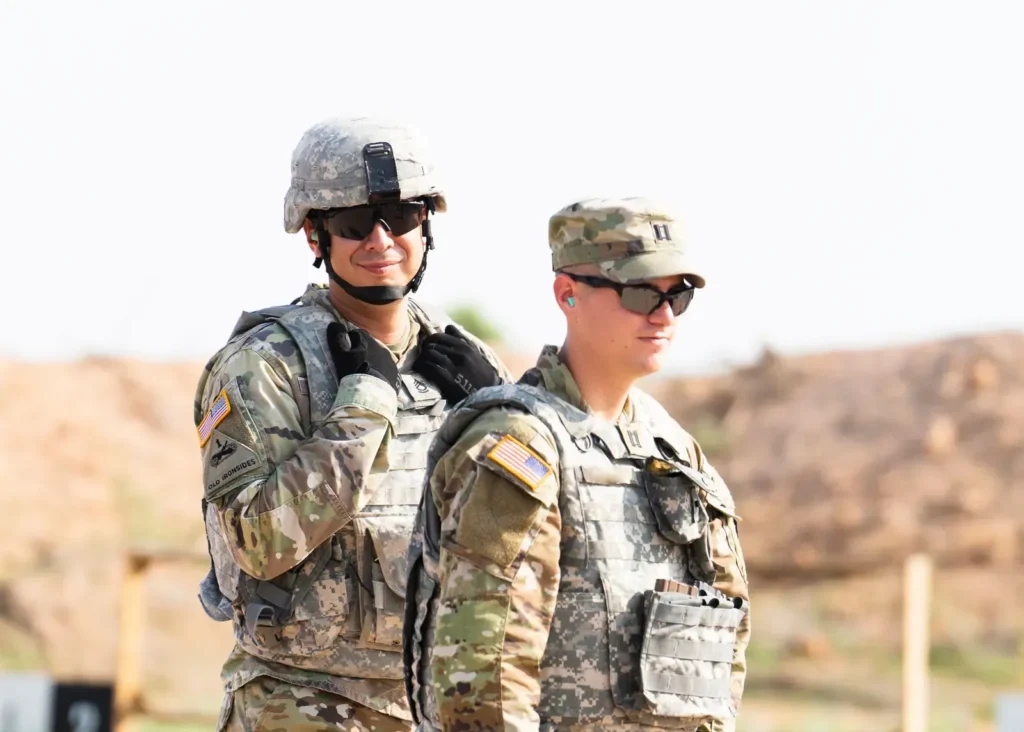
| O-3 | Captain | CPT | Two silver bars |
| O-4 | Major | MAJ | Gold oak leaf |
| O-5 | Lieutenant Colonel | LTC | Silver oak leaf |
| O-6 | Colonel | COL | Silver eagle |
| O-7 | Brigadier General | BG | One star |
| O-8 | Major General | MG | Two stars |
| O-9 | Lieutenant General | LTG | Three stars |
| O-10 | General | GEN | Four stars |
| Inactive | General of the Army | None | Five stars |
Source: U.S. Army, army.mil/ranks.
How Rare Is Each Army Rank? The 2026 Headcount
Among all ranks in the army, E-4 is the most common: 98,249 soldiers, or 21.6% of the active force. Among enlisted soldiers alone it’s 27.1%, more than one in four. At the other end sit 7 four-star generals.
Here’s where it gets interesting. The largest group isn’t the newest soldiers but E-5 and E-6 sergeants.
| Group | Pay grades | Soldiers | Share of the Army |
|---|---|---|---|
| Junior enlisted | E-1 to E-3 | 94,949 | 20.9% |
| Specialists and Corporals | E-4 | 98,249 | 21.6% |
| Sergeants and Staff Sergeants | E-5 to E-6 | 121,254 | 26.7% |
| Senior NCOs | E-7 to E-9 | 48,332 | 10.6% |
| Warrant officers | W-1 to W-5 | 16,247 | 3.6% |
| Company grade officers | O-1 to O-3 | 48,376 | 10.6% |
| Field grade officers | O-4 to O-6 | 27,193 | 6.0% |
| General officers | O-7 to O-10 | 286 | 0.06% |
Source: DMDC, active-duty strength as of July 31, 2026.
The counts come from the Army column of the DMDC Active Duty by Rank/Grade report for July 31, 2026, downloaded on October 14, 2026. The base is 454,886 soldiers: 92,102 officers including warrant officers plus 362,784 enlisted, without the 4,541 West Point cadets.
One caveat: DMDC counts pay grades, not ranks, so it can’t split E-4 into Specialists and Corporals.
Here’s what the data actually shows. Only 527 soldiers hold CW5 against 3,180 at E-9, so a CW5 is about six times rarer than an E-9.
How Does the Army Rank Structure Actually Work?
The army rank structure rests on two ideas: rank and pay grade. Pay grade sets the paycheck and rank sets title and authority, so two soldiers in one pay grade can hold different ranks.
But here’s the thing. Rank also signals how many soldiers someone leads, as the Army’s official rank guide shows.
| Rank | Typical unit | Soldiers |
|---|---|---|
| Sergeant | Team | 4 |
| Staff Sergeant | Squad (2 to 3 teams) | 8 to 16 |
| Lieutenant | Platoon (2 to 4 squads) | 16 to 44 |
| Captain | Company (3 to 5 platoons) | 60 to 200 |
| Lieutenant Colonel | Battalion (3 to 5 companies) | 300 to 1,000 |
| Colonel | Brigade (3 or more battalions) | 1,500 to 3,200 |
| Major General | Division (3 brigades) | 10,000 to 16,000 |
| Lieutenant General | Corps (2 to 5 divisions) | 20,000 to 40,000 |
Source: U.S. Army, army.mil/ranks.
Enlisted soldiers perform specific job functions, warrant officers are technical experts, and commissioned officers plan missions, give orders and assign tasks. First Sergeant and Command Sergeant Major are ranks tied to a position, not just a pay grade. More on how enlisted and officer careers differ.
Army Enlisted Ranks: Who Counts as an NCO?
Private through Specialist are junior enlisted. The army NCO ranks start at Corporal (E-4) and run up to Sergeant Major of the Army. Sergeant (E-5) is the first NCO rank most soldiers reach by promotion.
Here’s the part most people miss. Several pay grades hold more than one rank:
- E-4: Specialist and Corporal, and only the Corporal is an NCO.
- E-8: Master Sergeant and First Sergeant.
- E-9: Sergeant Major, Command Sergeant Major and Sergeant Major of the Army.
Under AR 600-8-19, effective April 6, 2026, a commander in grade O-5 or above can laterally appoint a Specialist to Corporal for an authorized NCO position. The automatic appointment after the Leaders Course is gone.
So most of the 98,249 E-4s are likely Specialists. That’s a reading of the regulation, not a DMDC count.
Pay flattens at E-4 too. Under the 2026 table, E-4 basic pay reaches $3,815.40 a month at over six years and stays there (see military pay by grade).
At the top, 10 U.S.C. §517 caps E-8 at 3% and E-9 at 1.25% of enlisted strength. In July 2026 the Army’s E-8 share sat at 3.00%, right on the line.
Only one soldier at a time is Sergeant Major of the Army. As of 2026, that’s Michael R. Weimer, the 17th SMA.
Army Officer Ranks: Warrant, Company, Field and General Grades
Commissioned officers run from Second Lieutenant (O-1) to General (O-10). Company grade officers lead platoons and companies, field grade officers lead battalions and brigades, and generals lead divisions and corps.
The top is shrinking, too. Four-star generals fell from 17 in October 2020 to 7 in July 2026, down 59%.
Federal law (10 U.S.C. §525) allows no more than 8 Army generals at O-10. And a May 2025 memo from the Secretary of Defense ordered four-star billets cut by at least 20%, as CBS News reported.
Army Warrant Officer Ranks (W-1 to W-5)
The Army calls warrant officers adaptive technical experts, combat leaders, trainers and advisers. A WO1 holds a warrant from the Secretary of the Army, and from CW2 up, the commission comes from the President.
Three of every four warrant officers in the U.S. military are Army: 16,247 of 20,944 as of July 2026, plus 73% of all CW5s.
What Is the Highest Rank in the Army?
The army general ranks run from Brigadier General (O-7) to General (O-10), and General is the highest rank anyone holds today.
Above it sits the five-star General of the Army. According to the Army Center of Military History, five men held it: Marshall, MacArthur, Eisenhower, Arnold and Omar Bradley, the last promoted on September 20, 1950.
General of the Armies ranks higher still. Pershing received it in 1919, and Public Law 94-479 in 1976 re-established it for George Washington, with precedence over all other grades of the Army, past or present.
How to Read Army Rank Insignia on the Uniform
Army rank insignia follow a simple logic. Read enlisted insignia in this order:
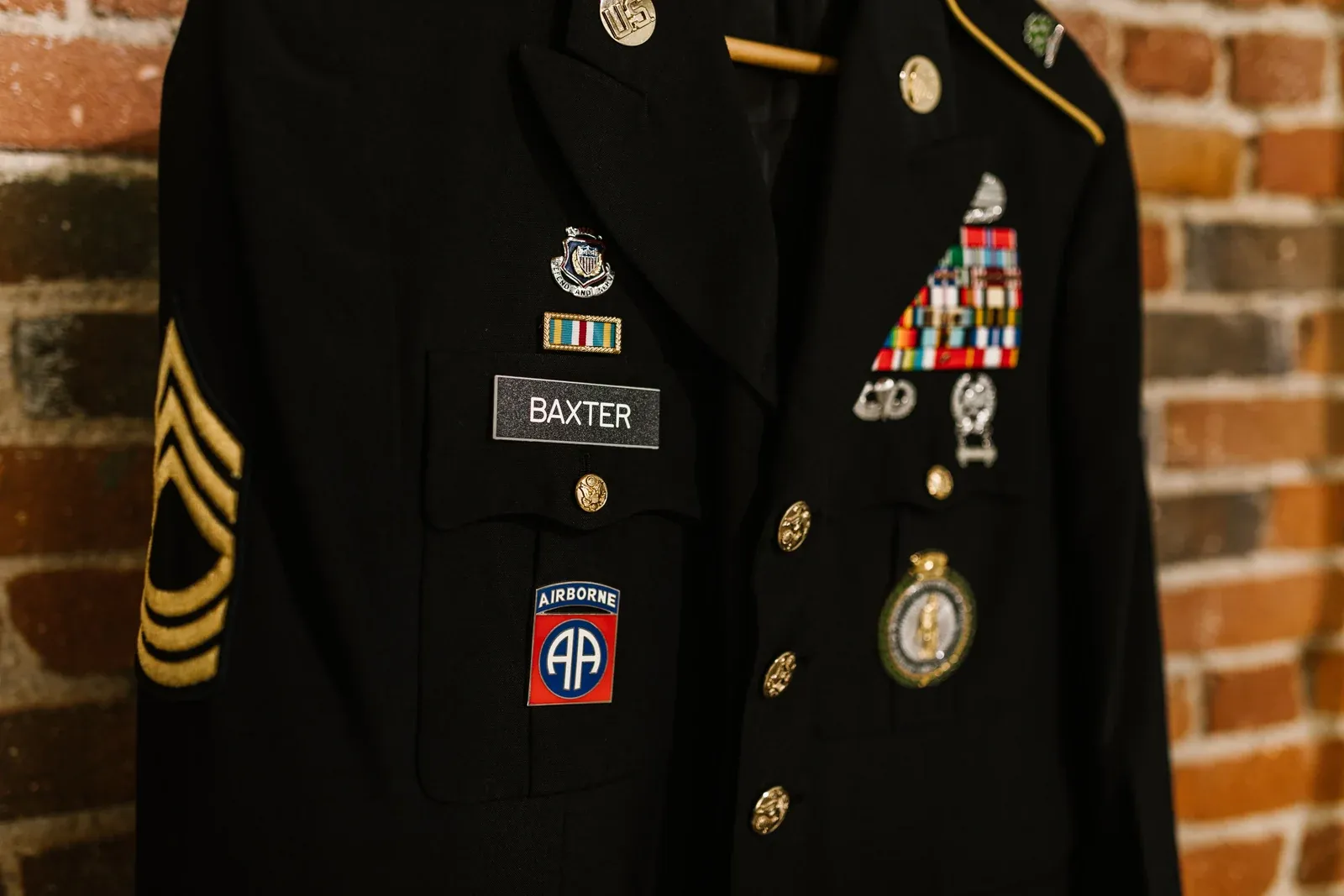
- No insignia means Private (E-1).
- Chevrons count up: one for PV2, two for Corporal, three for Sergeant.
- Arcs below add seniority: one for PFC, then one, two or three under three chevrons for SSG, SFC and MSG.
- A center device marks the top: diamond (1SG), star (SGM), star in a wreath (CSM), Great Seal eagle between two stars (SMA).
- Specialist is the odd one out, an eagle on a shield-shaped patch.
On the OCP uniform, subdued insignia sits centered on a hook-and-loop pad on the chest. On the Army Green Service Uniform, enlisted insignia is sewn on the sleeves and officer insignia goes on the shoulder loops, and the Army Green Service Uniform FAQ makes owning it mandatory from October 1, 2027.
How Long Does It Take to Get Promoted in the Army?
The first three promotions come mostly with time. After Specialist, it’s points, boards and competition within a soldier’s job specialty.
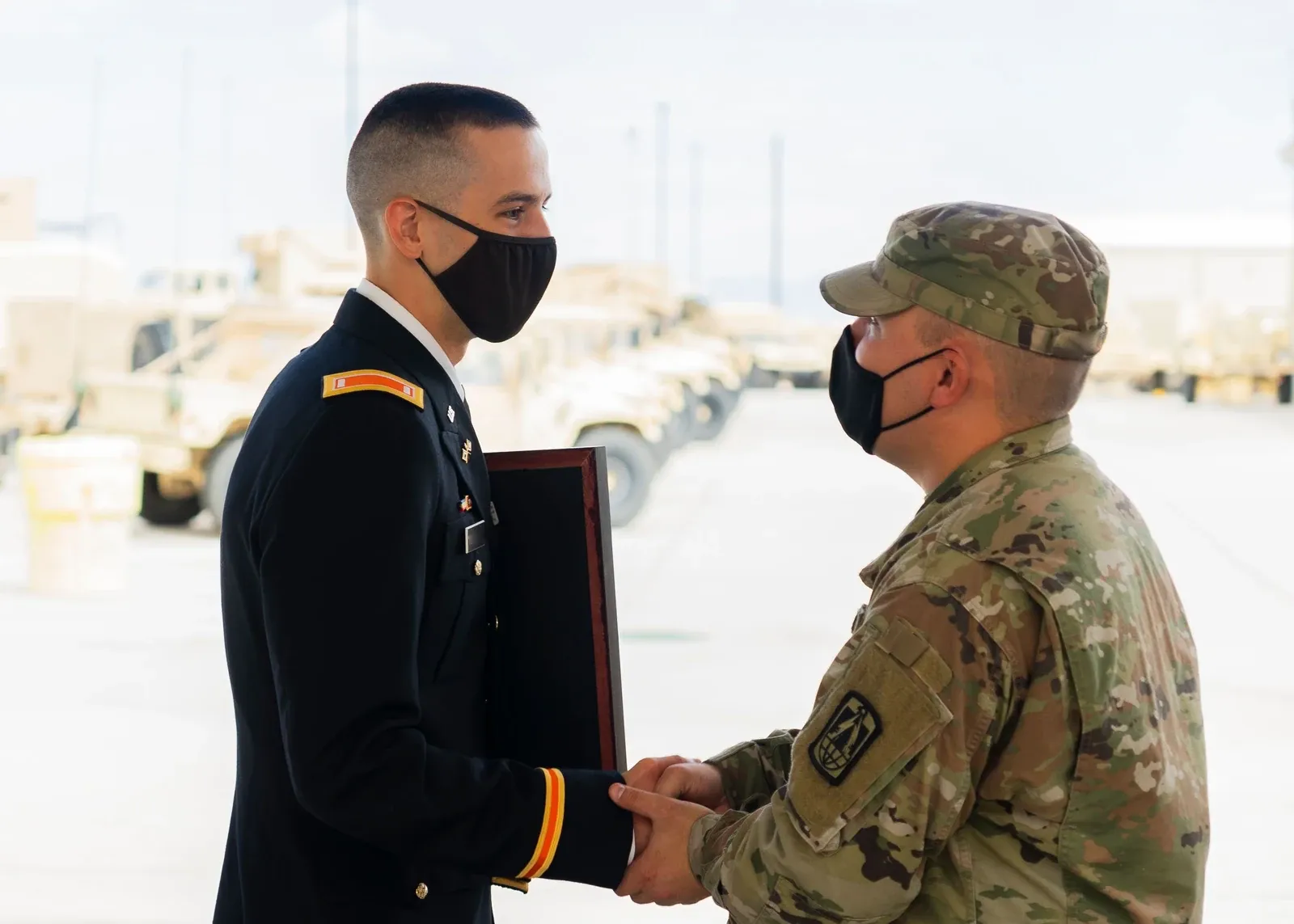
Here are the minimums in the current AR 600-8-19 regulation, dated March 6, 2026.
| Promotion to | Minimum time in service |
|---|---|
| PV2 (E-2) | 6 months (waiver from 4) |
| PFC (E-3) | 12 months (waiver from 6) |
| SPC (E-4) | 24 months (waiver from 18) |
| SGT (E-5) | 36 months primary zone, 18 secondary |
| SSG (E-6) | 72 months primary zone, 48 secondary, plus BLC |
| SFC to SGM | Set every year by HQDA |
Source: AR 600-8-19 (2026), paras 2-2 and 5-5.
Some recruits skip the first rows: under AR 601-210, a bachelor’s degree can mean enlisting as a Specialist (E-4).
So what does that actually mean for you? The minimum doesn’t guarantee stripes. Per the HQDA cutoff score memo for April 2026, 1,843 of 18,003 soldiers on the Sergeant list were promoted (10.2%), and 980 of 22,553 on the Staff Sergeant list (4.3%).
The short answer? It depends on the job. Some specialties promoted every eligible soldier that month, others nobody.
Officers have a legal floor too. Under 10 U.S.C. §619, it takes at least 18 months in grade to go from Second to First Lieutenant and 2 years from First Lieutenant to Captain.
Where This Leaves You
Army ranks make more sense once the numbers sit next to the names. E-4 is the normal place to be, and the pyramid narrows quickly after E-7.
Timelines change with each AR 600-8-19 edition and monthly cutoff memo.
Comparing branches? See this guide to Navy ranks and ratings.
Frequently Asked Questions
What is the rarest rank in the Army?
Sergeant Major of the Army is the rarest active rank, because only one soldier holds it at a time. Among ranks held by a group, General (O-10) is the rarest, with 7 soldiers as of July 31, 2026.
Lieutenant General (O-9) follows with 51. In the warrant track, Chief Warrant Officer 5 is the rarest at 527 soldiers. General of the Army is still on the Army’s rank chart, but nobody has held it since Omar Bradley died in 1981.
What are the ranks in the Army, and how many are there?
The Army has 28 ranks in active use: 13 enlisted, 5 warrant officer and 10 commissioned officer ranks. Add General of the Army, the inactive five-star rank, for 29, matching the Army’s 29 official rank cards.
The count runs higher than the number of pay grades because some grades hold more than one rank. E-4 covers Specialist and Corporal, E-8 covers Master Sergeant and First Sergeant, and E-9 covers three ranks. So the Army has 24 pay grades but 29 ranks.
Who outranks a captain in the Army?
Every officer from Major (O-4) up outranks a Captain (O-3). That includes Lieutenant Colonel, Colonel and all four general officer ranks.
A Captain typically leads a company of 60 to 200 soldiers. Rank order also matters inside a single pay grade. A Corporal outranks a Specialist even though both are E-4.
What rank is 7 years in the Army?
There’s no standard rank at seven years, because promotion depends on job specialty, points and open slots. What the regulation does set is a floor: under AR 600-8-19 (2026), the earliest primary-zone promotion to Staff Sergeant comes at 72 months, or six years, of service.
So Staff Sergeant at year seven is possible in a specialty short on NCOs. It isn’t guaranteed, though: only about 4.3% of soldiers on the Staff Sergeant list were promoted in April 2026, and that is one month’s list, not overall odds. Ranks from Sergeant First Class up use time-in-service floors that HQDA sets every year.
Sources
- Defense Manpower Data Center. “Active Duty Military Personnel by Rank/Grade,” July 31, 2026.
- Army Publishing Directorate. “AR 600-8-19: Enlisted Promotions and Reductions,” March 6, 2026.
- U.S. Army. “U.S. Army Ranks.”
- Legal Information Institute, Cornell Law School. “10 U.S. Code § 517.”
- U.S. Army Center of Military History. “How Many U.S. Army Five-Star Generals Have There Been,” archived 2004.
- U.S. Army. “Sergeant Major of the Army.”