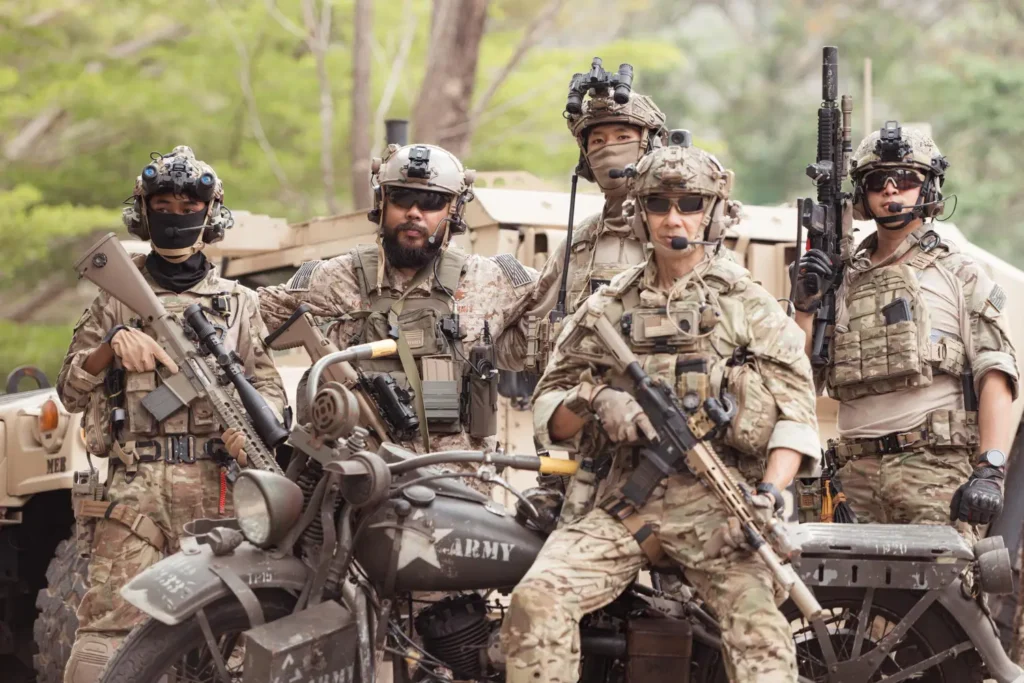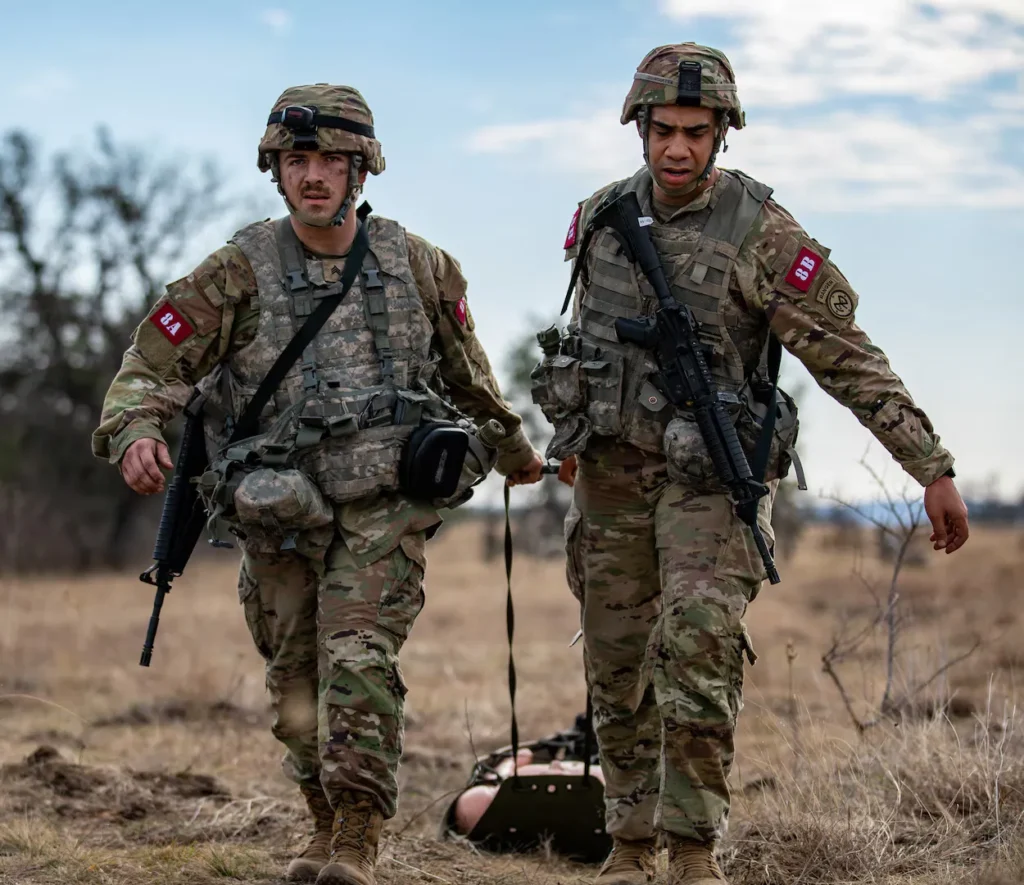
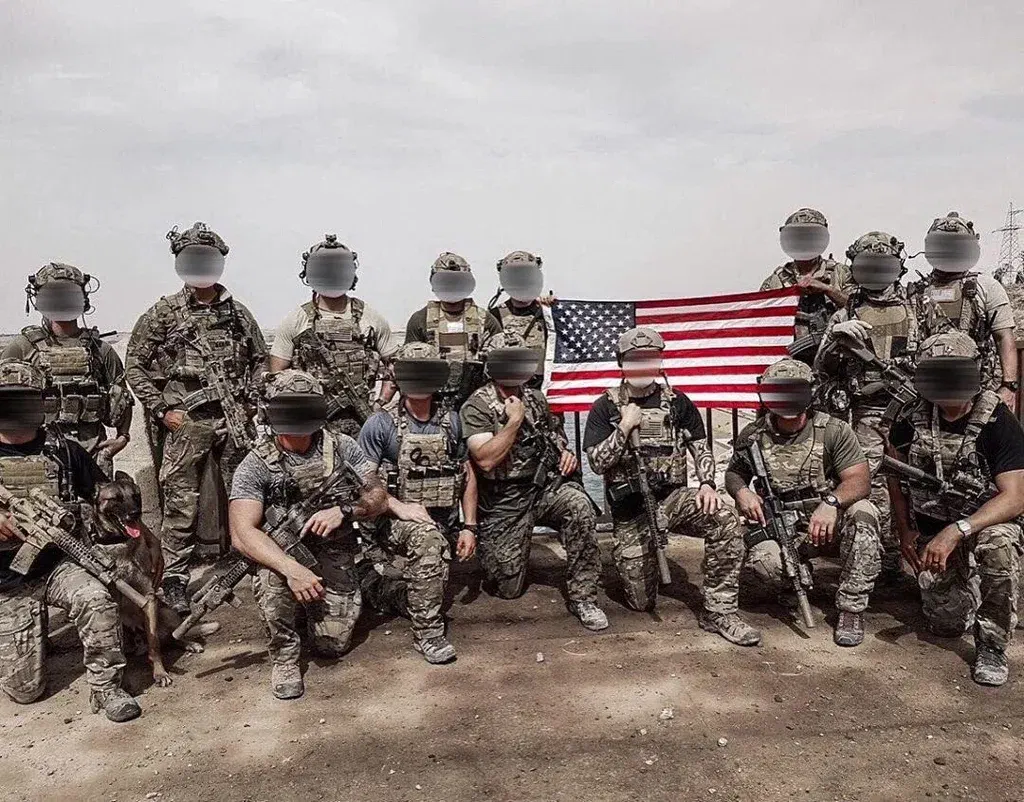

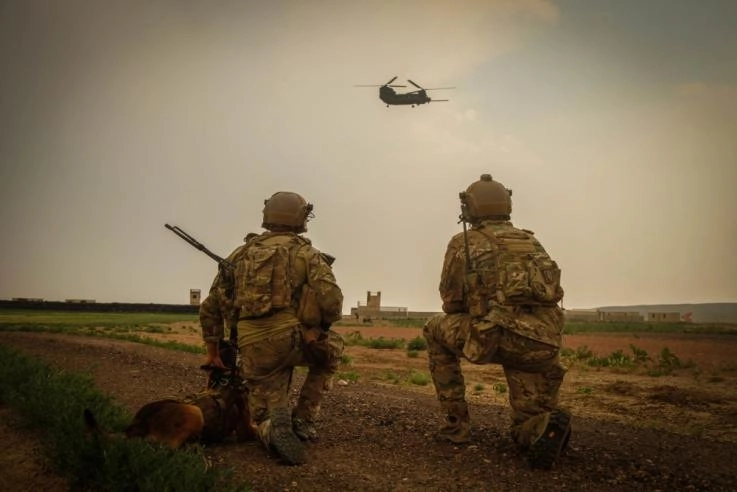
Army Rangers and Green Berets both wear elite tabs, but they are not competing for the same job. Rangers are a large, fast direct-action force built for raids and airfield seizures. Green Berets are small advisory teams built to train and lead foreign fighters for months or years at a time.
Search “army ranger vs green beret” enough times and you start to notice a pattern. Most articles list the beret colors, throw in a few acronyms, and call it a day. That leaves out the part that actually matters if you are trying to pick a path: these are two different jobs wearing similar reputations.
Choosing between the two units is not really a rivalry question. It is a fit question. One unit wants speed and mass, the other wants patience and language skills.
Here’s the part most people miss. A lot of the advice floating around online about these two units is quietly out of date.
In This Article
- What’s the Difference Between Army Rangers and Green Berets?
- Direct Action vs. Special Warfare: How Their Missions Differ
- Inside the 75th Ranger Regiment: Structure and Strength
- Inside a Special Forces ODA: The 12-Man Team
- How to Become an Army Ranger: Option 40 and RASP
- How to Become a Green Beret: The 18X Pipeline to SFQC
- RASP vs. SFAS: Which Selection Is Actually Harder?
- FAQ
- Choosing Your Path: Ranger or Green Beret
What’s the Difference Between Army Rangers and Green Berets?
The difference comes down to one core split: Rangers hit targets, Green Berets build relationships. The 75th Ranger Regiment is a large, centrally organized light infantry force that raids airfields, captures high-value targets, and moves fast in big numbers. Special Forces, the Green Berets, operate in small 12-man teams that train and fight alongside foreign partner forces, sometimes for months at a stretch.
Think about it this way. A Ranger platoon storms a compound and is gone within hours. A Green Beret team might spend a year in a village, teaching local fighters how to hold ground long after the Americans leave.
Both units fall under Army Special Operations Command. Both require an airborne qualification. But the missions, team sizes, and skill sets barely overlap once you get past the shared parent command.
Direct Action vs. Special Warfare: How Their Missions Differ
The difference between Special Forces and the Rangers is really a doctrine question. Rangers operate under Direct Action, a doctrine built around speed, surprise, and overwhelming force at the point of contact. Green Berets operate under Special Warfare, which leans on relationships, language skills, and long-term influence instead of raw firepower.
Their missions rarely cross paths in practice. A Ranger company might seize an airfield so a larger force can land behind it. A Green Beret detachment might spend that same week embedded with a partner nation’s militia, planning an operation the locals will lead themselves.
Here’s where it gets interesting. The 75th Ranger Regiment can put a task-organized element anywhere in the world within about 18 hours through what the Regiment calls its Ranger Ready Force. Special Forces Groups, by contrast, are regionally aligned, meaning a soldier in the 3rd Special Forces Group builds career-long expertise in Africa while a 1st Group soldier focuses on the Indo-Pacific.
| Category | 75th Ranger Regiment | Special Forces (Green Berets) |
|---|---|---|
| Core doctrine | Direct Action | Special Warfare |
| Primary missions | Raids, airfield seizure, special reconnaissance | Foreign internal defense, unconventional warfare |
| Typical team size | ~152-person rifle company | 12-person ODA |
| Deployment posture | Global response within 18 hours | Regionally aligned, long-duration presence |
| Headgear | Tan beret | Green beret |
Inside the 75th Ranger Regiment: Structure and Strength
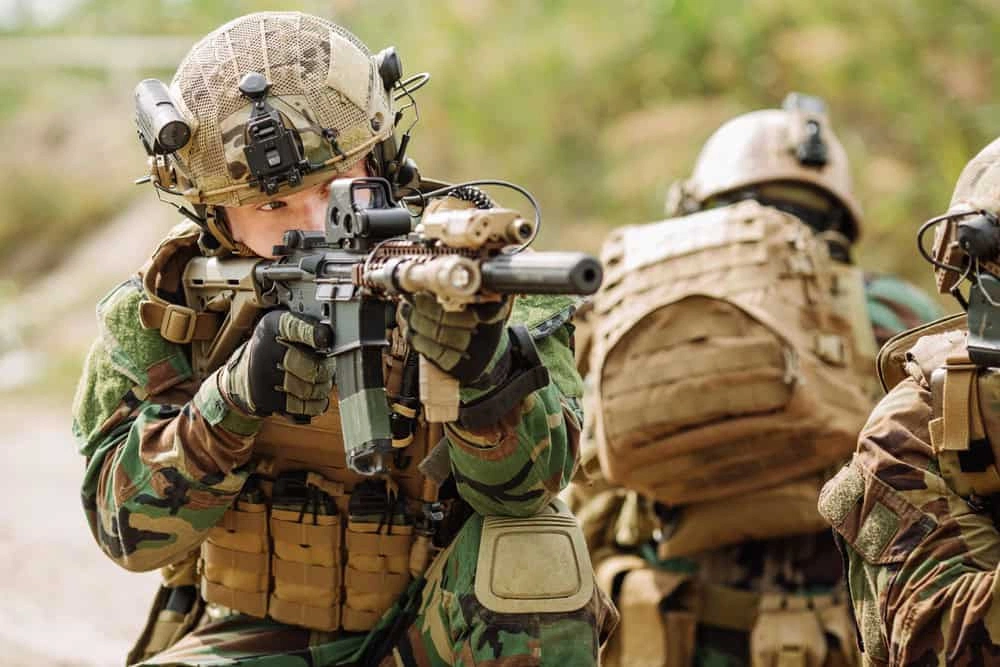
The 75th Ranger Regiment runs roughly 3,500 soldiers out of Fort Benning, Georgia, spread across five battalions. Three are line battalions built around rifle companies. The other two, the Regimental Special Troops Battalion and the Ranger Military Intelligence Battalion, handle reconnaissance, communications, and intelligence support for the whole Regiment.
Comparisons often skip this part: Rangers are not a small niche unit. A single Ranger rifle company runs about 152 soldiers split into rifle platoons and a weapons platoon with mortars, anti-armor teams, and snipers built in.
That scale is the point. Rangers are designed to mass firepower fast, then disappear before a conventional response can form around them.
Inside a Special Forces ODA: The 12-Man Team
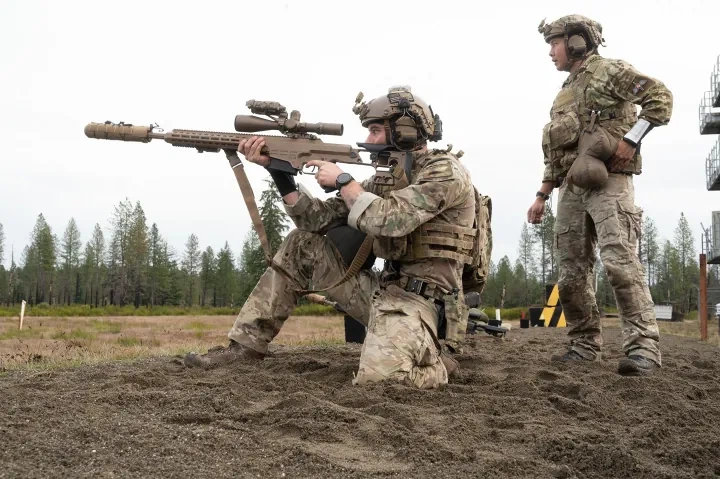
The comparison gets more interesting once you look at team composition. Special Forces is organized into seven Groups, five active duty and two National Guard, each aligned with a specific region of the world. The working unit inside each Group is the Operational Detachment Alpha, or ODA.
The two units also differ in how they specialize. Where a Ranger company has soldiers doing dozens of different jobs, each member of a 12-man ODA specializes in one Career Management Field 18 skill, such as weapons, engineering, medicine, or communications, and cross-trains in the others.
- 18A Detachment Commander, a Captain who leads mission planning
- 180A Assistant Detachment Commander, a Warrant Officer providing tactical continuity
- 18Z Operations Sergeant, the senior enlisted advisor
- 18F Intelligence Sergeant, handling target development
- 18B Weapons Sergeants, two per team, experts in foreign and domestic arms
- 18C Engineer Sergeants, two per team, focused on demolitions and fortifications
- 18D Medical Sergeants, two per team, trained for prolonged field trauma care
- 18E Communications Sergeants, two per team, running encrypted field comms
That structure lets an ODA operate on its own for extended periods, far from any larger support element. A Special Forces Assessment and Selection course is built specifically to find soldiers who can handle that kind of isolation without a chain of command checking in every day.
How to Become an Army Ranger: Option 40 and RASP
The difference between the two paths starts at enlistment. Civilians can lock in a shot at the Regiment through an Option 40 contract, which guarantees a slot at the Ranger Assessment and Selection Program after Basic Combat Training, AIT or OSUT, and Airborne School.
The entry numbers differ too. Rangers need a minimum ASVAB placement TECH score of 105, and citizenship, age, and security clearance requirements apply on top of that.
But here’s the thing. A lot of recruiting content still describes the Army Combat Fitness Test (ACFT), and that test is gone. Every Ranger candidate now has to pass the Army Fitness Test, which replaced the older combat fitness test on June 1, 2025.
So why does this matter? The AFT keeps five events (3-rep max deadlift, hand-release push-up, sprint-drag-carry, plank, and two-mile run) and drops the ACFT’s standing power throw, so candidates training off older guides may be prepping for the wrong events.
RASP itself runs eight weeks for junior enlisted candidates and is split into two phases. Phase one grinds through land navigation, water survival, and a brutal 12-mile ruck march. Phase two shifts to marksmanship, breaching, and airfield seizure tactics before candidates earn the Tan Beret.
How to Become a Green Beret: The 18X Pipeline to SFQC
The contrast gets sharper once you look at the Green Beret entry pipeline. Civilians enlist through the 18X option, which routes them through Infantry OSUT, Airborne School, and a preparation course before Special Forces Assessment and Selection.
Ranger and Green Beret standards diverge right away on paperwork. Current 18X requirements call for a minimum GT score of 110 and a CO score of 100, both pulled from the ASVAB, and applicants must be 18 to 34 years old.
Let me explain. That pipeline runs long for a reason: after SFAS, candidates move into the Special Forces Qualification Course, often called the Q Course, which can run anywhere from about 14 months to more than two years depending on MOS track and assigned language.
- Infantry OSUT and Airborne School
- Special Operations Preparation Course
- Special Forces Assessment and Selection, 24 days at Camp Mackall
- SFQC Phase I through III: doctrine, SERE training, and MOS-specific skills
- Robin Sage, the unconventional warfare capstone exercise
- 16 to 24 weeks of foreign language training before earning the Green Beret
So what does that actually mean for you? A candidate choosing the 18X path is signing up for roughly two years of training before ever reaching an operational team, compared to six to eight months for a Ranger candidate.
RASP vs. SFAS: Which Selection Is Actually Harder?
Comparing the two selection courses is not really a fair fight, because the two courses test different things. RASP is a physical and mental attrition event, with historical washout rates between 50 and 70 percent driven by sleep deprivation, rucking, and sustained fatigue.
The two selection philosophies split hard right here. SFAS leans less on pure exhaustion and more on judgment. Cadre want to see how a candidate navigates alone at night, solves ambiguous team problems, and handles stress without anyone telling them the right answer.
And it gets more complicated once you add the ASVAB into the picture. Special Forces candidates need both a GT and CO composite score to even qualify for the 18X contract, while Rangers only need to clear the single TECH threshold.
“Neither course is harder in some universal sense. RASP breaks you down physically to see what’s left. SFAS leaves you rested enough to think, then watches how you think under pressure.”
William Johnson, Contributing Writer, Servicemembers Opportunity Colleges
In my time covering enlistment pipelines for recruits and their families, the question I get most is which course to fear more. The honest answer depends on whether a candidate’s weak spot is their body or their patience.
The two paths also differ in what happens after a candidate fails. Failing RASP typically sends a soldier to a conventional airborne unit. Failing SFAS or the Q Course does the same, but only after a much longer investment of time already spent.
FAQ
Are Green Berets Rangers?
No, Green Berets are not Rangers, and the two are separate career tracks inside Army Special Operations Command. A soldier can attend Ranger School and earn the Ranger Tab without ever joining the 75th Ranger Regiment, since Ranger School is an Army-wide leadership course rather than a unit assignment. Green Berets go through an entirely different pipeline centered on SFAS and the Q Course. The only real overlap is that both groups are airborne qualified and both fall under the same higher command.
Are Army Rangers Green Berets?
Army Rangers are not Green Berets either, since the two units train for opposite ends of the special operations spectrum. Rangers specialize in direct-action raids executed by large, fast-moving light infantry formations. Green Berets specialize in long-term advisory missions carried out by small, autonomous teams. A soldier could theoretically pursue both career paths over a career, but they are not the same job at the same time.
Are Rangers and Green Berets the Same Thing?
Rangers and Green Berets are not the same thing, despite both being labeled elite Army units in casual conversation. They sit under different commands within Army Special Operations Command, follow different doctrines, and require different selection courses to join. The confusion usually comes from movies and general media treating all Army special operations troops as one interchangeable group. In reality, the training pipelines, team structures, and day-to-day missions have very little in common beyond a shared parent command.
Choosing Your Path: Ranger or Green Beret
The choice between Rangers and Green Berets ultimately comes down to what kind of soldier you want to become. Someone who thrives on structure, physical intensity, and a clear tactical role tends to gravitate toward the Ranger Regiment. Someone drawn to language, culture, and long-term problem-solving tends to fit better with Special Forces.
But there’s a catch. Both contracts can be voided if you wash out of selection, and both send you to a conventional unit if that happens. Neither path is a safety net, and neither guarantees the beret at the end.
Worth pausing on that for a second before you talk to a recruiter. Ask about your ASVAB composite scores, your timeline, and whether you would rather test your body in eight weeks or your judgment over two years. Families researching options for a recruit can find broader context on military training and enlistment paths through the military education programs available at Servicemembers Opportunity Colleges.
Neither unit is objectively better than the other. They were built to solve different problems, and the right fit depends entirely on which problem sounds like the one you want to spend your career solving.

William Johnson writes about U.S. military training and enlistment for Servicemembers Opportunity Colleges. His work covers topics such as boot camp, ROTC, the ASVAB test, military pay, and what to expect during basic training, with a focus on giving recruits and their families clear, practical information about military life.
Sources
- U.S. Army. “Army Rangers.” GoArmy.com, 2026.
- U.S. Army. “Army Fitness Test (AFT).” Army.mil, 2025.
- All Veteran. “18X Army Special Forces Enlistment.” AllVeteran.com, 2026.
- Operation Military Kids. “Army MOS 18X Explained.” OperationMilitaryKids.org, 2026.
- Battalion Duty. “Special Operations ASVAB and Fitness Requirements.” BattalionDuty.com, 2026.
- Wikipedia. “United States Army Special Forces Selection and Training.” Wikipedia.org.