
The U.S. Army War College (USAWC) at Carlisle Barracks, Pennsylvania, is the Army’s senior service college. It educates selected lieutenant colonels and colonels from all services, senior federal civilians, and about 80 International Fellows a year. Resident students complete a 10-month program from August to June that awards a Master of Strategic Studies and JPME Phase II. A two-year Distance Education Program awards the same degree with JPME Phase I. This guide covers selection, the curriculum, distance education, campus life, and how USAWC compares with the other war colleges.
The Army War College is the last step in the Army’s formal officer education system. The Army describes completing senior-level education, in residence or by distance, as required for promotion to general officer. Students don’t apply in the usual sense. A centralized board selects them, usually after about two decades of service.
If you are a cadet, a young officer, or a parent trying to picture a full Army career, this is where many future generals spend a year thinking about war, strategy, and leadership at the national level.
In This Article

What the Army War College Is
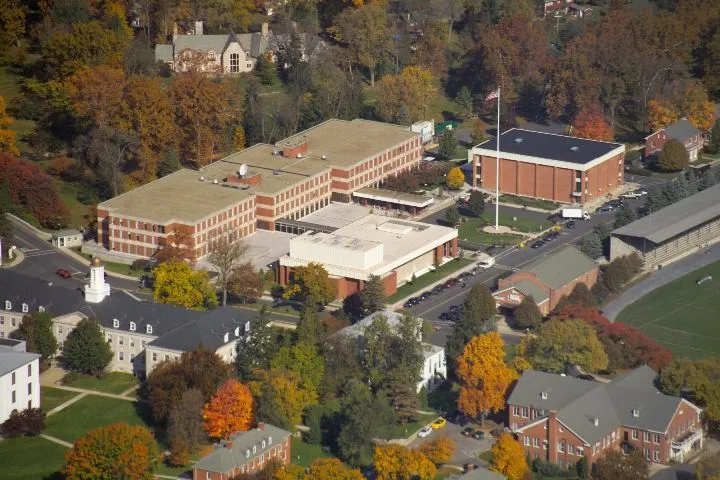
USAWC is part of Army University and sits at Carlisle Barracks in south-central Pennsylvania. Its focus is strategic leadership and the use of landpower, meaning how ground forces contribute to national security alongside the other services and the other instruments of national power.
The college states its mission on its official site this way:
“The U.S. Army War College enhances national and global security by developing ideas and educating U.S. and International leaders to serve and lead at the strategic-enterprise level.”
U.S. Army War College, Mission (army.edu/USAWC)
Besides its teaching departments, USAWC houses the Center for Strategic Leadership, which runs strategic-level simulations and supports Army and joint exercises, and the Strategic Studies Institute and USAWC Press, which publish research including the quarterly journal Parameters.
Who Attends and How Students Are Selected
The resident class is mostly U.S. Army officers, with officers from the Navy, Air Force, Marine Corps, and other services, senior federal civilians, and roughly 80 International Fellows. USAWC reports that it graduates about 340 JPME II-certified students a year from the resident program, plus more than 300 JPME I-certified distance students.
Military officers
Each service picks its own senior service college students through a centralized, competitive process. The college’s Academic Program Guide says officers chosen are typically in the top 10 percent of their peer groups. For the Army:
- Lieutenant colonels and colonels are eligible through their 25th year of service.
- Completing intermediate-level education (such as the Command and General Staff College) and holding a bachelor’s degree are prerequisites.
- Army Regulation 350-1 governs selection for the active Army, Army Reserve, and Army National Guard. The Reserve and Guard run their own boards, which produce order-of-merit lists for both the resident and distance programs.
Some selected officers spend the year as USAWC Fellows at universities, think tanks, or agencies instead of in Carlisle. Fellows get senior-level education credit (MEL 1) but not JPME II or the master’s degree.
Civilians and International Fellows
Department of the Army civilians compete through a centralized board and must be GS-14 or higher, with at least three years in a full-time Army position. Other Defense Department civilians at GS-14 and above apply through the Defense Senior Leader Development Program. The commandant may also invite up to 10 students from selected federal agencies to the resident program.
The Chief of Staff of the Army invites International Fellows from selected countries each year. Before the academic year, they complete a mandatory six-week orientation that includes a Field Studies Program on U.S. institutions, government, media, and civil society.
How students got here
The journey to Carlisle Barracks begins decades before an officer ever sets foot in Pennsylvania. Students come from every commissioning source. Most Army officers, including most War College students, were commissioned through ROTC, with smaller shares coming from the United States Military Academy and Officer Candidate School. Some are prior-enlisted leaders who earned a commission mid-career; our enlisted to officer commissioning guide explains those routes.
The Resident Education Program
The Resident Education Program runs about 199 academic days, from early August to early June. Students work in seminars of officers and civilians from different services, agencies, and countries. A Secret clearance is required for the core curriculum.
The core curriculum in the AY 2025 Academic Program Guide includes:
- Foundations and Theory of War and Strategy
- Strategic Leadership
- National Security Policy and Strategy
- Military Strategy and Campaigning, in two parts
- Defense Management, covering how the Defense Department plans, budgets, and buys
- Regional Studies Program, where each student picks a region for deeper study
- China Integrated Course
On top of the courses, students complete a strategic research requirement, a comprehensive oral examination, three national security staff rides, and the weeklong National Security Seminar, plus electives. Optional specializations include the Carlisle Scholars Program, the National Security Policy Program, the Advanced Strategic Art Program, and Defense Enterprise Management. All U.S. students must also give at least one public talk to a civilian audience before graduating.

This strategic focus differs significantly from the technical programs at the Naval Postgraduate School. NPS awards technical and policy master’s degrees to mid-career officers. USAWC prepares senior officers to advise on, plan, and lead at the strategic level.
The Degree and JPME Phase II
All U.S. resident students pursue the USAWC diploma and the Master of Strategic Studies (MSS) degree. The college is accredited by the Middle States Commission on Higher Education. To earn the degree, students need at least a C in every course, a 3.0 GPA, a B or better on the comprehensive oral exam, and a B- or better on the strategic research requirement. Credits from other schools are not accepted.
The resident program carries JPME Phase II credit from the Chairman of the Joint Chiefs of Staff. JPME II is a key requirement for Joint Qualified Officer status. The same credit comes from the joint National War College in Washington and from the other senior service colleges, but USAWC is the only one focused on landpower.
Army officers in the active component incur a two-year active-duty service obligation after the program. Department of the Army civilians agree to 30 more months of government service after the resident program.
The Distance Education Program
The Distance Education Program (DEP) is a two-year program that awards the same Master of Strategic Studies. It is mostly online, with two two-week resident courses at Carlisle. USAWC describes it as the only senior-level distance program certified for JPME Phase I. Graduates receive JPME I, not JPME II, although a Distance Education Joint Studies Program is accredited for JPME II for sections of the non-resident students.
- First year: Foundations, Strategic Leadership, Theory of War and Strategy, National Security Policy and Strategy, and a Regional Studies Program (choose from the Americas, Arctic, Europe, Greater Middle East, Indo-Pacific, Sub-Saharan Africa, or Russia/Eurasia), then a comprehensive exam and the First Resident Course at Carlisle.
- Second year: a China Integrated Course, Defense Management, Military Strategy and Campaigning I and II, two electives (or an elective plus an enhanced program or research project), and the Second Resident Course, which serves as the capstone.
DEP eligibility: U.S. officers must be serving O-5s or O-6s with at least 16 and no more than 25 years of service when the program starts, must have completed their service’s intermediate-level education, and must hold a bachelor’s degree. Department of the Army civilians must be GS-14, and other federal civilians may be accepted at GS-13. Selection is through a centralized board of the component, service, or agency.
Carlisle Barracks and History
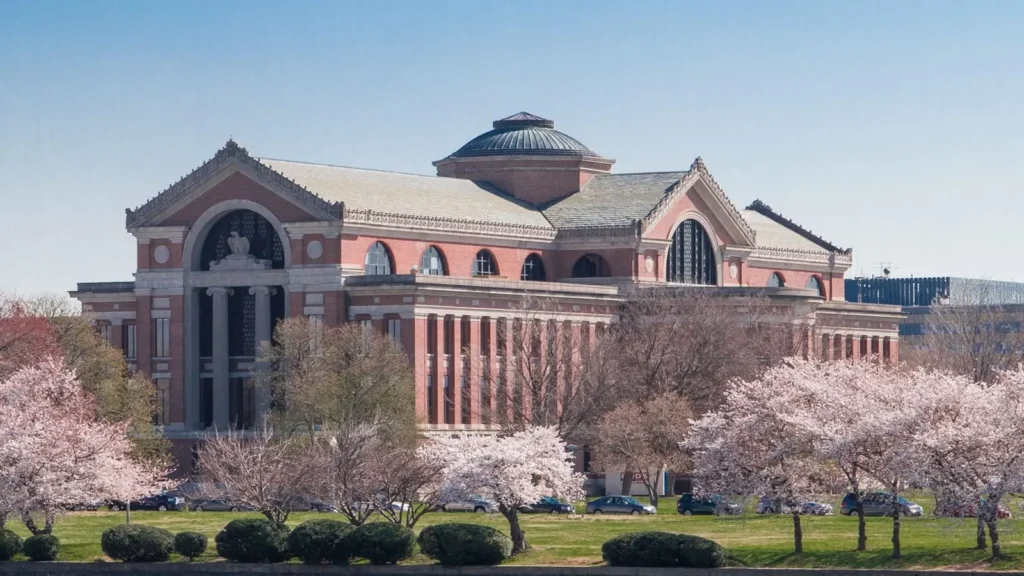
General Order 155 established the Army War College on November 27, 1901, under Secretary of War Elihu Root. Root laid the cornerstone of Roosevelt Hall at Washington Barracks (now Fort McNair) in 1903, and the college stayed in Washington until it closed in 1940 for World War II. It reopened at Fort Leavenworth, Kansas, in 1950 and moved to Carlisle Barracks a year later. Today it is based in Root Hall.
Alumni include Dwight D. Eisenhower, who graduated in 1928, and George S. Patton. Both attended while the college was in Washington, not at Carlisle. The National War College now occupies the college’s original building, Roosevelt Hall.
Life at Carlisle includes family support programs, seminar socials, sports teams, and the spring Jim Thorpe Sports Days competition against the other senior service colleges.

Comparing Senior Service Colleges
Six senior service colleges give U.S. officers JPME Phase II and a master’s degree. Here is how they line up, using each school’s latest published figures.
| College | Location | Students (latest published figure) | Degree | Resident Length |
|---|---|---|---|---|
| U.S. Army War College | Carlisle Barracks, Pennsylvania | About 340 U.S. JPME II graduates a year, plus about 80 International Fellows | Master of Strategic Studies | Early August to early June |
| National War College (NDU) | Fort McNair, Washington, D.C. | About 200 (Class of 2027) | Master of Science in National Security Strategy | 10 months, from August |
| Eisenhower School (NDU) | Fort McNair, Washington, D.C. | About 330 per year | Master of Science in National Resource Strategy | 10 months, August to June |
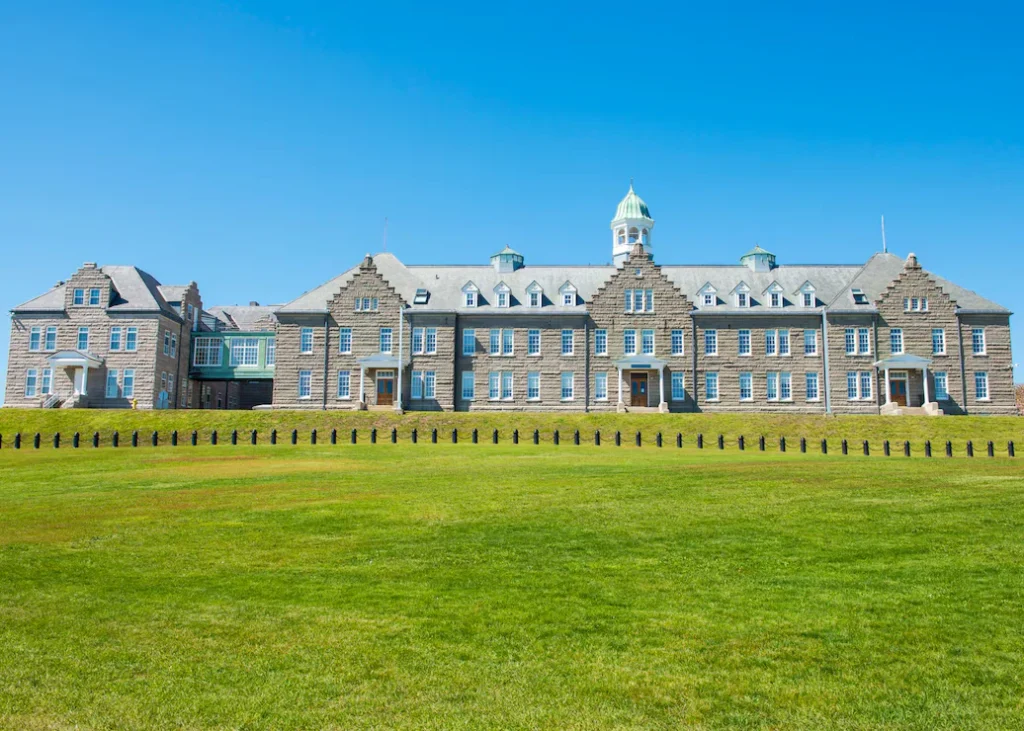
| Naval War College, College of Naval Warfare | Newport, Rhode Island | 192 senior-course students (AY 2022-23) | Master of Arts in National Security and Strategic Studies | 10 months |
| Air War College | Maxwell AFB, Alabama | About 245 resident students a year | Master of Strategic Studies | July to May |
| Marine Corps War College | Marine Corps Base Quantico, Virginia | Small student body (MCU does not publish a set number) | Master of Strategic Studies | One academic year, August to June |
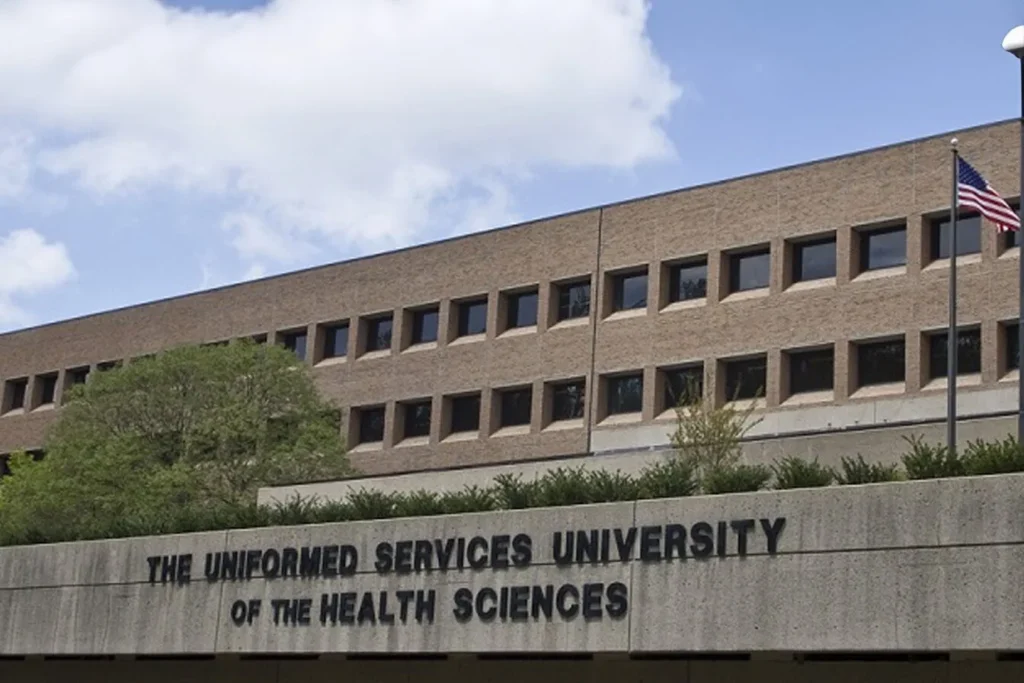
The Army War College, the Air War College, and the Marine Corps War College all award a degree called the Master of Strategic Studies, each from its own institution. The Naval War College awards a Master of Arts, and the two NDU colleges award a Master of Science. Don’t confuse any of these with the senior military colleges, which are undergraduate schools with a corps of cadets.
Career Impact
Senior service college is a gate rather than a guarantee. For Army officers, the Academic Program Guide describes completing it, in residence or at distance, as required for promotion to general officer. Graduates typically go on to brigade-level command, to senior staff jobs on the Army Staff, the Joint Staff, and combatant commands, or to key roles in their agencies and, for International Fellows, their home militaries.
The year also builds a network. Seminar-mates from other services, agencies, and countries often meet again later in joint and combined headquarters.
Frequently Asked Questions
Can I apply to the Army War College?
Not directly. Officers are picked by their service’s centralized senior service college selection process, and civilians through their agency’s board or development program. There is no open application for private citizens.
Do Distance Education students get the same degree?
Yes. DEP graduates earn the same Master of Strategic Studies after a two-year program with two short resident courses at Carlisle. They receive JPME Phase I rather than the JPME Phase II awarded to resident graduates.
Is the Master of Strategic Studies accredited?
Yes. The U.S. Army War College is accredited by the Middle States Commission on Higher Education, and the Joint Staff accredits its programs for joint education.
How long is the Army War College?
The resident program runs about 10 months, from early August to early June. The Distance Education Program takes two years.
Where This Leaves You
The Army War College is a year at Carlisle Barracks, or two years by distance, for selected lieutenant colonels, colonels, senior civilians, and International Fellows. It awards a Master of Strategic Studies, with JPME Phase II for resident graduates and JPME Phase I for distance graduates. For Army officers, it is the senior-level education that the Army requires on the way to general officer. Getting there takes two decades of strong performance, an intermediate-level school, and a board selection. Early career choices matter too, because they shape the record that board will see.

William Johnson writes about U.S. military training and enlistment for Servicemembers Opportunity Colleges. His work covers topics such as boot camp, ROTC, the ASVAB test, military pay, and what to expect during basic training, with a focus on giving recruits and their families clear, practical information about military life.
Sources
- U.S. Army War College. “U.S. Army War College (USAWC): Mission and Vision.” army.edu, 2026.
- U.S. Army War College. “About the U.S. Army War College.” army.edu, 2026.
- U.S. Army War College. “Academic Program Guide AY25.” army.edu, 2024.
- U.S. Army War College. “Welcome Resident Students.” army.edu, 2026.
- U.S. Army War College. “Welcome International Fellows.” army.edu, 2026.
- U.S. Army War College. “Distance Education Program.” army.edu, 2026.
- Dwight D. Eisenhower Presidential Library. “Dwight David Eisenhower Chronology.” eisenhowerlibrary.gov, 2026.
- U.S. Army War College. “Celebrating the Worldwide Accomplishments of US Army War College Alumni.” armywarcollege.edu, 2026.
- National War College. “Dean of Students Welcome Letter, Class of 2027.” nwc.ndu.edu, 2026.
- Eisenhower School. “Eisenhower Students.” es.ndu.edu, 2026.
- U.S. Naval War College. “Fast Facts, Academic Year 2022-2023.” usnwc.edu, 2023.
- Air War College. “About.” airuniversity.af.edu, 2026.
- Marine Corps University. “AY 2025-26 MCU Course Catalog.” usmcu.edu, 2025.