
“Military college” can mean three very different things: a federal service academy (free, with a required service obligation), one of the six senior military colleges (a state or private university with a Corps of Cadets and an optional commission), or a regular civilian university where you join ROTC. This guide compares all three on cost, service commitment, daily life, admissions and commissioning, with a side-by-side table and current 2026-27 cost figures.
Choosing between a military college and a traditional university is a life-altering decision. Both pathways offer a high-quality degree, but the daily experience couldn’t be more different. A common mistake is treating every school with uniforms as the same thing. A cadet at West Point, a cadet at The Citadel and an Army ROTC cadet at a state university all wear uniforms, but they pay different amounts, owe different service, and live very different weeks.
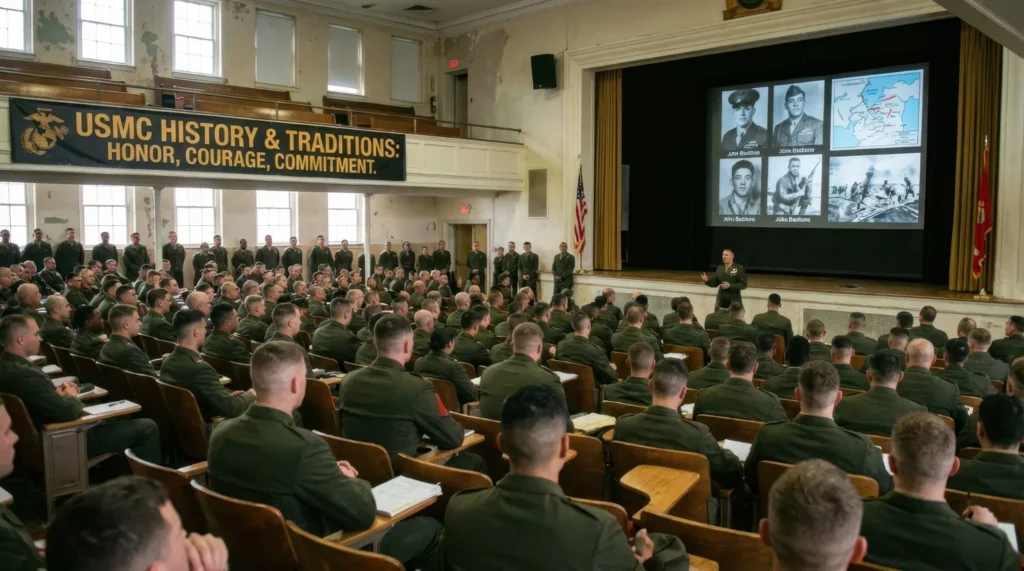
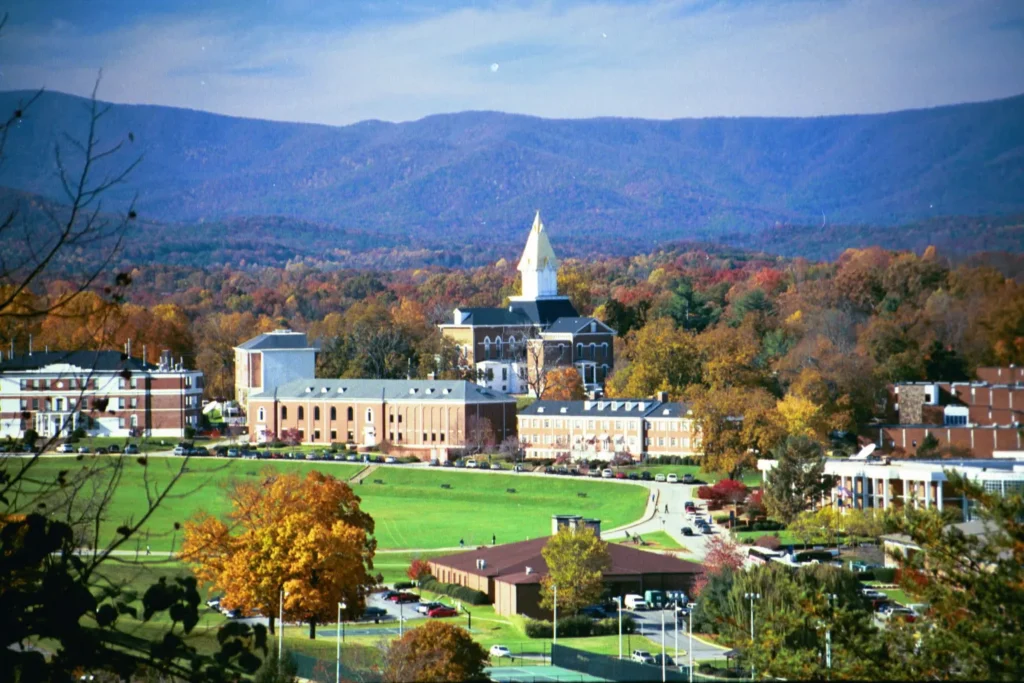
Traditional universities prioritize the “college experience,” including social events, flexible schedules, and independent living. Military colleges, such as the Virginia Military Institute, focus on leadership development and character building through a structured military environment that runs 24/7 for cadets, though at four of the six senior military colleges Corps membership is optional and civilian students attend too.
In This Article
What Counts as a Military College?
Federal service academies
There are five: the U.S. Military Academy (West Point), the U.S. Naval Academy, the U.S. Air Force Academy, the U.S. Coast Guard Academy and the U.S. Merchant Marine Academy. They are run by the federal government. Every student is a cadet or midshipman, the education is paid for by the government, and graduates owe a service obligation. Admission to four of the five requires a nomination, usually from a Member of Congress; the Coast Guard Academy does not use nominations.
Senior military colleges
Federal law, 10 U.S.C. 2111a, names six senior military colleges: Texas A&M University, Norwich University, the Virginia Military Institute, The Citadel, Virginia Tech and the University of North Georgia. They are state or private schools that you apply to like any other college. Each has a Corps of Cadets and ROTC programs, but commissioning is optional. At VMI and The Citadel the cadet corps is the core of the undergraduate student body; at Texas A&M, Virginia Tech, Norwich and North Georgia, cadets live and train inside a larger university with civilian students. Our guide to senior military colleges covers each school.
Military junior colleges
Four two-year military junior colleges (Georgia Military College, Marion Military Institute, New Mexico Military Institute and Valley Forge Military College) offer the Army ROTC Early Commissioning Program. Cadets can commission as second lieutenants in the Army Reserve or National Guard after two years, then must finish a bachelor’s degree before serving on active duty.
Traditional universities with ROTC
Many civilian colleges host Army, Navy (including Marine Corps) and Air Force ROTC units, or let students cross-enroll at a nearby host school. You live a normal college life, take military science classes, do physical training a few mornings a week and attend summer training. Many students at traditional universities join ROTC to become officers, with or without a scholarship.
Side-by-Side Comparison
| Feature | Federal service academy | Senior military college | Civilian university with ROTC |
|---|---|---|---|
| Who runs it | Federal government | State or private university | State or private university |
| How you get in | Academy application plus a nomination (none for USCGA); fitness test and medical exam | Regular college application | Regular college application; ROTC scholarship is a separate competition |
| Tuition, room and board | Paid by the government; cadets also receive monthly pay | Paid by the family unless covered by scholarships or aid (2026-27 totals: about $34,000 to $66,500 a year at VMI) | Normal cost of attendance; an ROTC scholarship can cover full tuition and fees |
| Daily life | Military structure 24/7 for all students | Military structure for Corps members; civilians also enrolled at four of the six | Civilian student life plus ROTC classes and training |
| Commission | Required for graduates of USMA, USNA, USAFA and USCGA; USMMA graduates have several options | Optional; requires completing ROTC | Only for students who contract and complete ROTC |
| Typical active-duty obligation | 5 years (West Point adds 3 years in the reserves; Air Force pilots serve 10 years after pilot training) | Same as ROTC if you commission | Army scholarship: 4 years active plus 4 reserve; Navy: 5 years; Marine option: 4 years; Air Force: 4 to 10 years by career field |
| Can you leave early without owing service? | At West Point and Annapolis, yes, before the start of junior (third) year | Yes, unless you have signed an ROTC contract | Yes, unless you have signed an ROTC contract |
Financial Costs And Commitments
Federal service academies, like the United States Military Academy, are tuition-free. The Naval Academy says the Navy pays 100 percent of midshipmen’s tuition, room and board, and medical and dental care, and the Coast Guard Academy says there is no cost for tuition, room or board. By law, cadets and midshipmen at West Point, Annapolis, the Air Force Academy and the Coast Guard Academy also earn monthly pay equal to 35 percent of a new O-1’s basic pay, though much of it goes to uniforms, books and fees in the early years.
The trade is service. West Point graduates serve at least five years on active duty and three more in the reserve components. Naval Academy and Coast Guard Academy graduates serve five years, and Air Force Academy graduates serve at least five, with pilots committing to 10 years after they earn their wings. Merchant Marine Academy graduates can meet their obligation by working five years in the maritime industry while holding a reserve commission for eight years, or by serving five years on active duty.
Senior military colleges charge tuition like any public or private college, plus Corps fees for uniforms and other items. Here is what two of them publish for 2026-27:
| School (2026-27) | In-state tuition | Out-of-state tuition | Total published cost, in-state | Total published cost, out-of-state |
|---|---|---|---|---|
| The Citadel (Corps of Cadets, freshman year) | $13,140 | $40,407 | $35,935 | $62,202 |
| The Citadel (Corps of Cadets, upperclass) | $13,140 | $40,407 | $29,859 | $56,126 |
| Virginia Military Institute | $10,680 | $43,220 | $33,974 | $66,514 |
| Service academies (USMA, USNA, USAFA, USCGA) | $0 | $0 | $0 for tuition, room and board | $0 for tuition, room and board |
The Citadel’s totals include tuition, room and board, a leadership lab fee and a quartermaster deposit for uniforms and gear (higher in the freshman year). VMI’s totals include tuition, housing, food, auxiliary fees and a quartermaster charge, before books and personal expenses. Families at either school can lower the bill with ROTC scholarships, state aid and school scholarships.
At a traditional university, an ROTC scholarship can make the cost comparable. An Army ROTC scholarship pays full tuition and fees (or, as an alternative, room and board), plus $1,200 a year for books and a $420 monthly stipend for up to 10 months a year. In return, scholarship cadets serve four years on active duty and four in the reserves, or their full obligation in the Army Reserve or National Guard. Navy-option NROTC scholarship graduates owe five years of active duty and Marine-option graduates four; Air Force ROTC graduates owe four, six or 10 years depending on career field.
Daily Routine And Personal Freedom
At a traditional university, you control your own time. You choose when to wake up, what to wear to class, and how to spend your evenings. ROTC adds structure to a few parts of your week (early physical training, a lab, a military science class) but leaves the rest of your life civilian.
In contrast, a military college puts cadets on a strictly controlled schedule. You wake up before dawn for physical training and wear a specific uniform every single day. Your rooms are inspected, and your free time is earned through performance. The first year is the hardest: the “knob” year at The Citadel and the Rat Line at VMI. At the service academies, the year starts even earlier with a summer program before classes, such as Cadet Basic Training at West Point and Plebe Summer at the Naval Academy.
At the senior military colleges with civilian students, only Corps members live under that schedule. Their civilian classmates live like students anywhere else. Families of younger students who want that kind of structure before college can look at military schools for teens.
Admissions And Physical Requirements
Traditional colleges primarily care about your grades, test scores and activities, and the same is true of senior military colleges. Federal service academy applicants must pass the Candidate Fitness Assessment; senior military colleges such as The Citadel or VMI admit through a regular college application and do not use the CFA.
Service-academy applicants and ROTC scholarship applicants must also pass a DoDMERB medical review; enrolling at a senior military college without a scholarship does not require it. For federal academies, you also need to navigate the complex process of securing a congressional nomination, with application deadlines that often fall in the fall of your senior year.
Academies also have strict eligibility rules that civilian schools don’t: at the Naval Academy, for example, you must be a U.S. citizen, at least 17 and not past your 23rd birthday on July 1 of the year you enter, unmarried, not pregnant and without dependents.
Commissioning And Career Outcomes
Both paths can lead to a military career. Many students at traditional universities join ROTC to become officers. This allows them to enjoy a “normal” college life while still preparing for the military. Enlisted service members can also use enlisted to officer commissioning programs that send them to either type of school.
The key differences are whether a commission is required and how certain active duty is:
- Service academies: graduates of West Point, Annapolis, the Air Force Academy and the Coast Guard Academy commission and serve on active duty. At West Point and the Naval Academy, cadets can leave without owing service before the start of their junior year; after that, the commitment applies.
- Senior military colleges: commissioning is optional, and many graduates go straight into civilian careers. For those who do commission in the Army, 10 U.S.C. 2111a directs the Secretary of the Army to place on active duty any graduate who wants it, is medically and physically qualified, and is recommended by the professor of military science. That guarantee covers Army commissions only.
- ROTC at a civilian university: only contracted cadets commission. Outside the six senior military colleges, Army ROTC cadets have no statutory active-duty guarantee.
Graduates of all three paths enter the civilian job market with the same kind of degree. Leadership experience from a Corps of Cadets or ROTC can stand out to employers, but it is not a substitute for your major, grades and internships.
Social Life and Environment
Traditional colleges offer a vast array of social clubs, Greek life, and off-campus opportunities. You interact with a diverse group of people with varying goals.
At a military college, your social circle is your unit. You build a bond of brotherhood or sisterhood that is far deeper than a typical college friendship. You get through the demanding first year together (the knob year at The Citadel or the Rat Line at VMI) and celebrate together at graduation. However, you will miss out on many “normal” college experiences, such as spontaneous road trips or late-night parties. Academy life is the most restricted of the three, because cadets and midshipmen are already members of the military.
If you want both, the hybrid schools are worth a look. At Texas A&M, Virginia Tech, Norwich and North Georgia, Corps members live a regimented life but share classes, games and campus life with civilian students.
How to Choose
- You are sure you want to be an officer and want no debt: a service academy, or an ROTC scholarship at a school you like.
- You want a military lifestyle but are not sure about serving: a senior military college lets you live in a Corps of Cadets and decide later. The Citadel and VMI are the most immersive.
- You want a normal college experience with an officer option: ROTC at a civilian university, with or without a scholarship.
- You want to commission fast: a military junior college’s Early Commissioning Program can make you a reserve-component second lieutenant in two years.
Visit before you decide. Many academies and senior military colleges offer tours, overnight visits or summer programs for high school students.
Frequently Asked Questions
Do you have to join the military after a military college?
Not at a senior military college. Commissioning is optional and requires completing ROTC. Service academy graduates do serve: at least five years of active duty at West Point, Annapolis and the Air Force Academy.
Is a senior military college the same as a service academy?
No. The six senior military colleges are state or private universities that you apply to directly and pay for. The five service academies are federal, tuition-free and require a service obligation; four of them also require a nomination.
Is a military college free?
Only the federal service academies are free. Senior military colleges charge tuition and Corps fees; for 2026-27, VMI lists a total cost of $33,974 for Virginians and $66,514 for out-of-state cadets. ROTC scholarships and aid can reduce that.
Can you do ROTC at a normal university?
Yes. Army, Navy and Air Force ROTC are offered at many civilian colleges, and you can join with or without a scholarship. Only contracted cadets who complete the program commission.
Where This Leaves You
Regardless of your choice, make sure it aligns with your long-term goals. If you want a guaranteed path to active duty with no tuition bill and accept a five-year commitment, a service academy is the strongest option. If you want military structure with the freedom to decide later, a senior military college fits. If you want a traditional campus with an officer option, ROTC at a civilian university gives you that, and a scholarship can make it as affordable as the other two.

William Johnson writes about U.S. military training and enlistment for Servicemembers Opportunity Colleges. His work covers topics such as boot camp, ROTC, the ASVAB test, military pay, and what to expect during basic training, with a focus on giving recruits and their families clear, practical information about military life.
Sources
- Legal Information Institute. “10 U.S.C. 2111a, Support for senior military colleges.” Cornell Law School, 2026.
- Legal Information Institute. “37 U.S.C. 203, Rates (cadet and midshipman pay).” Cornell Law School, 2026.
- U.S. Military Academy. “Tuition and Service Commitment.” West Point, 2026.
- U.S. Naval Academy. “General Information for Midshipmen.” USNA Admissions, 2026.
- U.S. Naval Academy. “Apply: Eligibility and Steps for Admission.” USNA Admissions, 2026.
- U.S. Air Force Academy. “FAQs.” USAFA, 2026.
- U.S. Coast Guard Academy. “Cost and Tuition.” USCGA, 2026.
- Legal Information Institute. “46 U.S.C. 51306, Service obligation of USMMA graduates.” Cornell Law School, 2026.
- The Citadel. “Tuition and Fees 2026-2027.” The Citadel, 2026.
- Virginia Military Institute. “Tuition and Fees 2026-2027.” VMI, 2026.
- James Madison University Army ROTC. “Scholarships.” JMU, 2026.
- Duke University NROTC. “Service Requirements.” Duke University, 2026.
- Boston College Air Force ROTC. “About.” Boston College, 2026.
- Marion Military Institute. “Early Commissioning Program.” MMI, 2026.