
USUHS, the Uniformed Services University of the Health Sciences, is a federal medical school that pays every student a full officer’s salary and covers tuition entirely. Admission is competitive: the current acceptance rate sits at 7.91%. This article breaks down what the program actually costs you in service time, what it takes to get in, and how it stacks up against HPSP, the other major path into military medicine.
Uniformed Services University of the Health Sciences, often shortened to USUHS or USU, isn’t a normal medical school. Every student who walks through the doors in Bethesda, Maryland is already a commissioned officer drawing a paycheck, and tuition is zero dollars. That deal comes with strings attached, and most of them run longer than people expect.
This guide breaks down what USUHS actually is, what the curriculum demands, and what the numbers look like for the current admissions cycle. It also walks through the application process step by step and compares USUHS against HPSP, the other major funded path into military medicine. If you’re weighing a career as a military physician, the differences between these two routes matter more than most applicants realize.
In This Article
- What Is USUHS, Exactly?
- What Makes the USUHS Medical School Curriculum Different?
- What Do USUHS Students Get in Pay, Benefits, and Service Obligation?
- What Is the Current USUHS Acceptance Rate?
- How to Get Into USUHS: A Step-by-Step Guide
- USUHS vs HPSP: Which Path Actually Makes Sense?
- Where This Leaves You
What Is USUHS, Exactly?
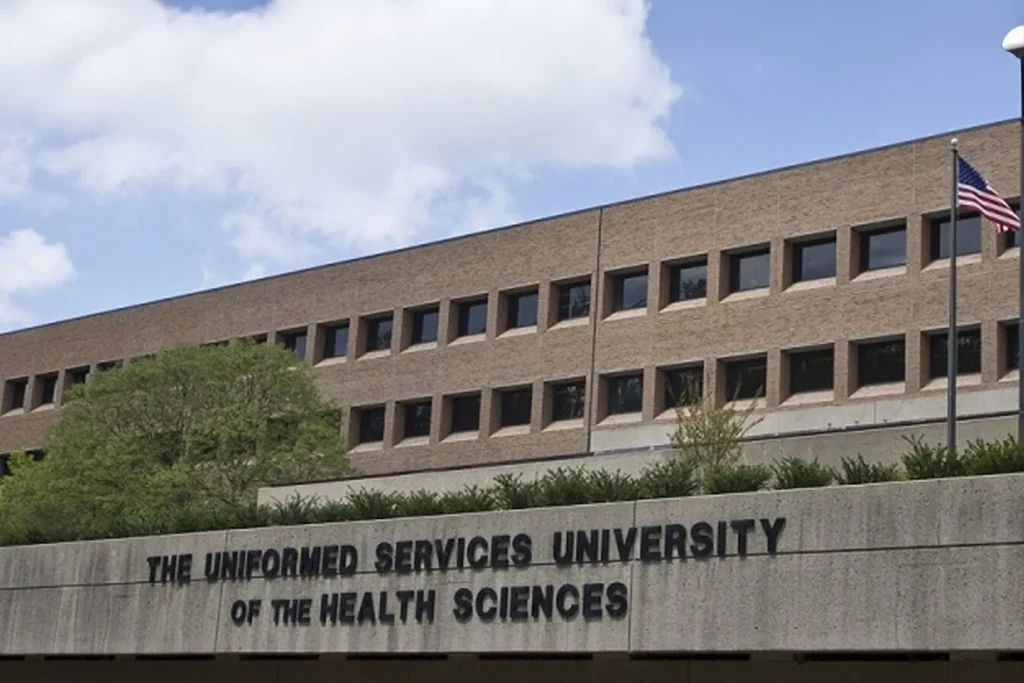
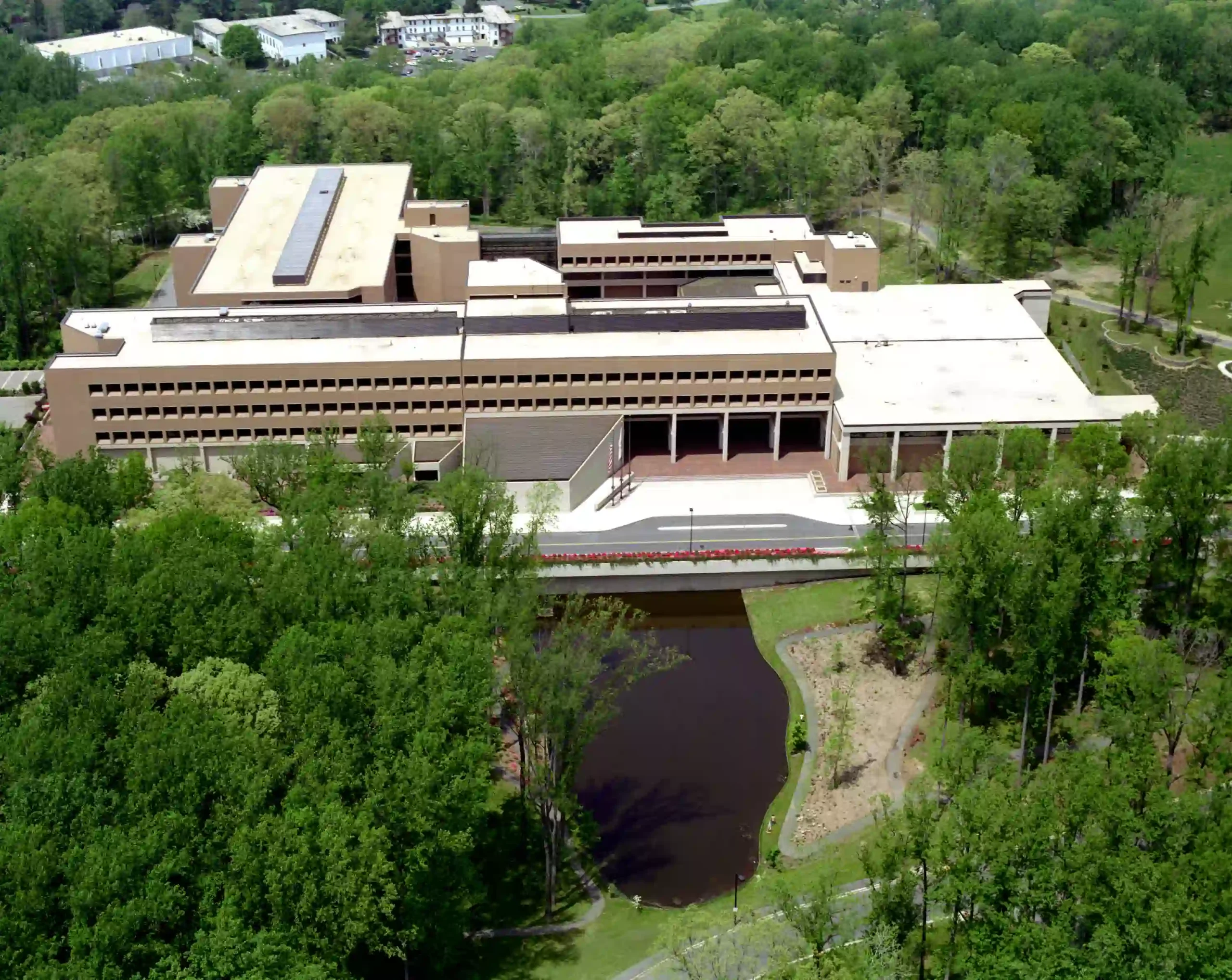
Uniformed Services University of the Health Sciences is the only federal medical school in the country, established by Congress in 1972 to train physicians exclusively for military and public health service. Students earn a standard MD degree, but the curriculum layers in more than 500 hours of military-specific training on top of it. Graduates owe active-duty service in return for a fully funded education and salary.
The nickname “West Point for doctors” gets used a lot, and it’s not far off. Like the service academies, USUHS blends academic rigor with military socialization from day one. Students commission as officers before their first anatomy lecture even starts.
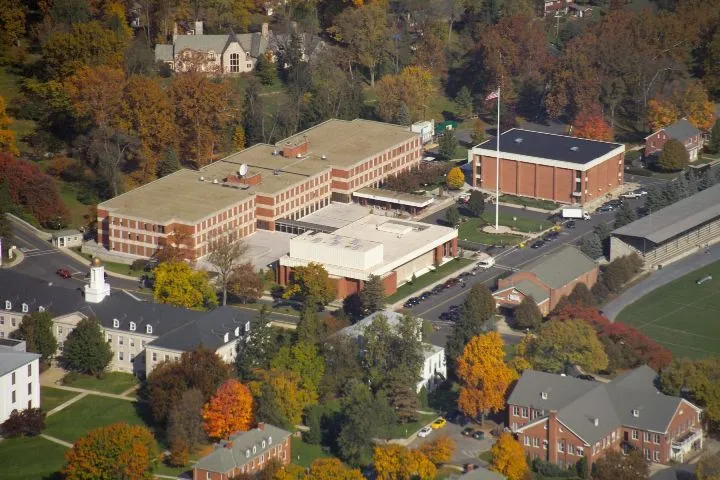
The school sits on the campus of Walter Reed National Military Medical Center in Bethesda, Maryland, and clinical rotations happen at major military hospitals nationwide. That proximity to a real military medical system is part of what separates USUHS from a civilian school with a military scholarship attached. Students aren’t visiting the military health system, they’re already inside it.
What Makes the USUHS Medical School Curriculum Different?
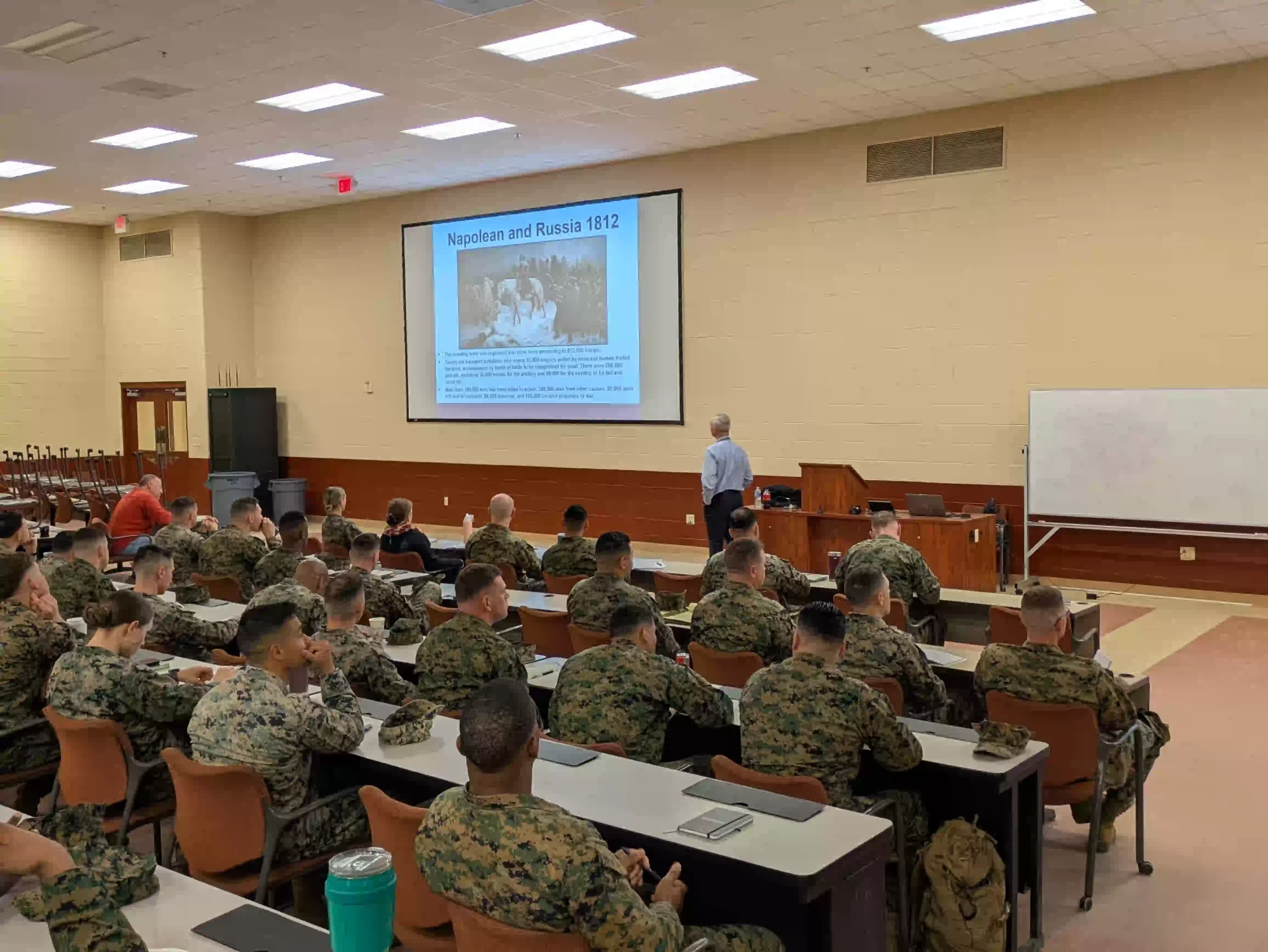
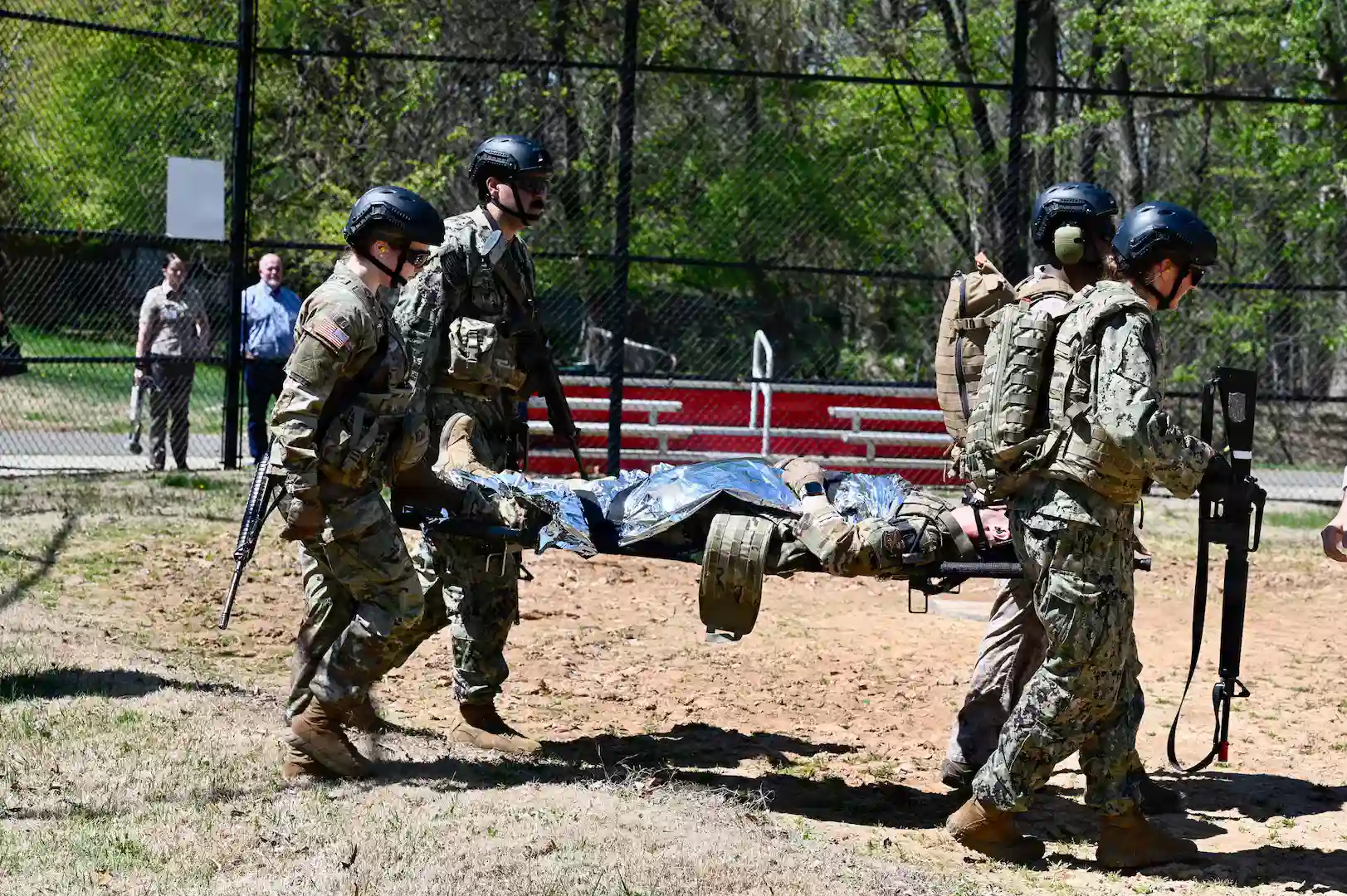
The academic core of the USUHS medical school follows the same organ-systems structure you’d find at any MD program, split into pre-clerkship, clerkship, and post-clerkship years. Layered on top is a track called “Molecules to Military Medicine,” which threads military-specific content through all four years instead of saving it for the end. That includes Tactical Combat Casualty Care training covering hemorrhage control, airway management, and treating shock under simulated combat conditions.
Students also work through four Medical Field Practicums that get progressively harder, from basic field skills to prolonged casualty care in austere settings. The whole sequence builds toward Operation Bushmaster, a five-day field deployment exercise that functions as a kind of final exam for military medicine. Field exercises like Bushmaster have been part of the curriculum for nearly 40 years.
Operation Bushmaster is a field exercise built around a simulated deployment.
Here’s the part most people miss. This isn’t an elective track bolted onto a normal MD curriculum. It’s baked into more than 500 hours of required training, on top of everything a civilian medical student already has to learn.
What Do USUHS Students Get in Pay, Benefits, and Service Obligation?
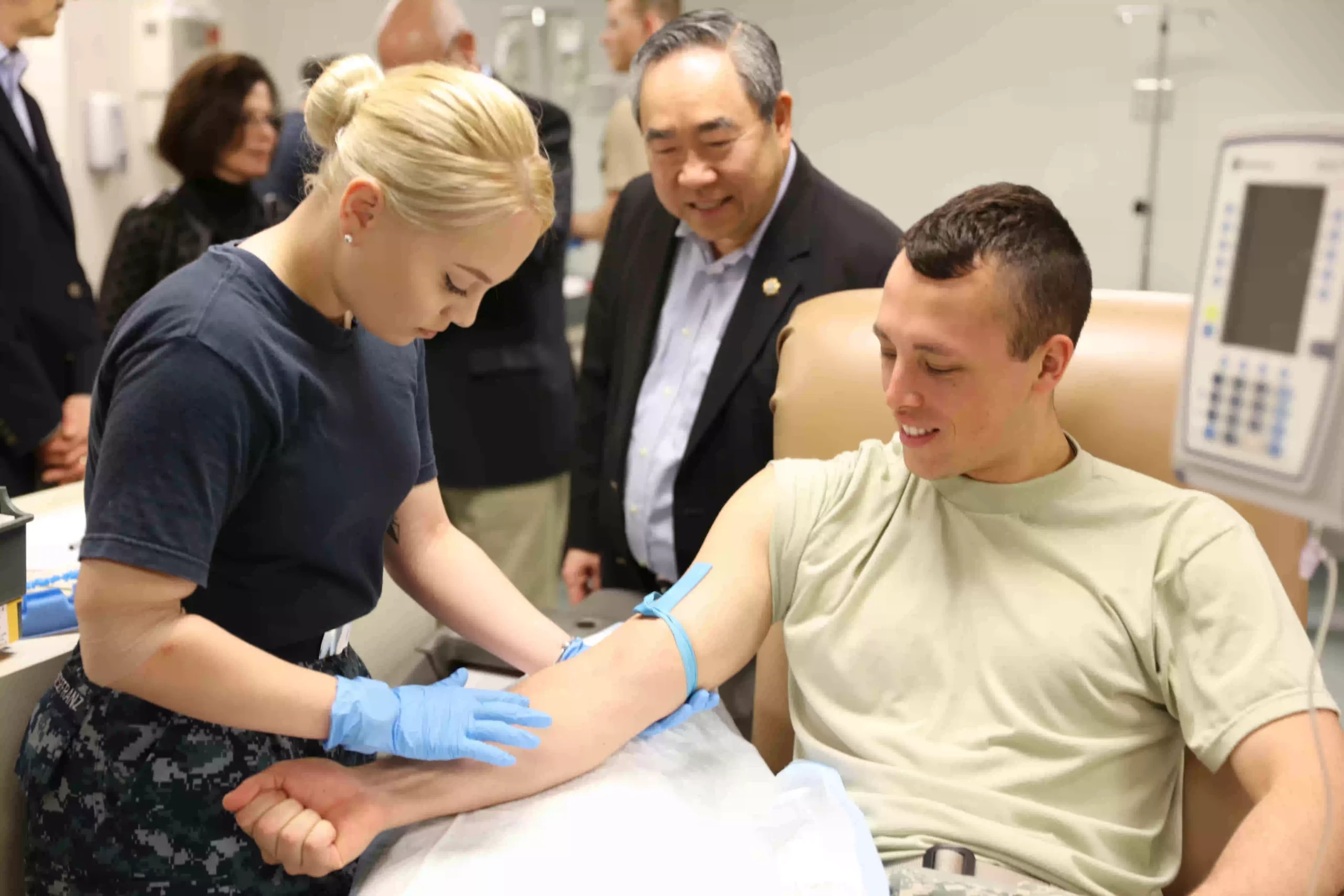
USUHS students commission as O-1 officers on day one, which means second lieutenant pay in the Army and Air Force, or ensign pay in the Navy. That salary comes with full active-duty benefits, including housing and subsistence allowances and free medical care through the military health system. At graduation, students promote to O-3, the rank of captain or lieutenant depending on branch.
- Full O-1 active-duty pay plus BAH and BAS during all four years
- Zero tuition, since USUHS is a federal institution
- Free medical and dental care through the military health system
- Time at USU doesn’t count toward the 20 years needed for retirement eligibility, but the four years are credited when computing retired pay once you reach 20 years of service
The tradeoff is a minimum seven-year active-duty service commitment after residency for the Army, Navy, and Air Force tracks. That’s longer than most funded paths into medicine, and it’s the number applicants tend to underweight the most. About 65% of USUHS graduates end up staying on active duty well past that seven-year mark anyway.
But there’s a catch. Residency training in a military program adds its own year-for-year obligation on top of the initial commitment, though those years typically run concurrently rather than stacking on sequentially. In practice, most physicians land somewhere between seven and ten years of total service after residency, depending on specialty length.
What Is the Current USUHS Acceptance Rate?
For the 2025-2026 admissions cycle, USUHS received 2,238 applications and matriculated 177 students, putting the acceptance rate at 7.91%. That’s tighter than most people assume for a school outside the usual top-tier civilian names, and it’s more selective than it looks once you factor in the military eligibility screen layered on top of academic review.
The interview stage is its own filter. Of those 2,238 applicants, 621 got an invitation to interview, an invite rate of roughly 28%. Getting past the interview and into one of 177 seats is where most of the real competition happens.
Average academic numbers for the incoming class sit at a 3.84 GPA and a 512 MCAT, both up noticeably from cycles just a few years earlier. The minimum MCAT USUHS will even review is 496, but that floor is mostly theoretical since competitive applicants are landing well above 510.
Total enrollment breaks down close to evenly by gender: 373 men (52.6%) and 333 women (47.0%). Geography skews heavily toward out-of-state applicants too, since USUHS draws nationally rather than favoring Maryland residents: just 10.7% of matriculants call Maryland home, against 89.3% from everywhere else. Total enrollment across all four years currently sits around 709 students.
| Admissions Cycle | Avg. GPA | Avg. MCAT | Acceptance Rate |
|---|---|---|---|
| 2021-2022 | 3.64 | ~508 | Not reported |
| 2022-2023 | 3.70 | ~511 | Not reported |
| 2023-2024 | 3.70 | ~511 | Not reported |
| 2025-2026 | 3.84 | 512 | 7.91% |
So what does that actually mean for you? A 3.7-plus GPA and a 510-plus MCAT put you in range, but they won’t carry you alone. USUHS interviewers are looking just as hard at leadership experience and a demonstrated reason for wanting military medicine specifically.
How to Get Into USUHS: A Step-by-Step Guide
Getting into the USUHS medical school starts with the standard AMCAS application, just like any other MD program, but the eligibility bar has military-specific requirements layered on top. You need U.S. citizenship, an age between 18 and 36 at matriculation, and a bachelor’s degree with a minimum 3.0 GPA, though competitive applicants run well above that. The USUHS eligibility requirements also rule out transfer students entirely; all four years happen on the Bethesda campus.
- Take the MCAT within three years of your planned matriculation date. Retakes are fine, and USUHS considers your highest score.
- Submit AMCAS listing USUHS, including transcripts, MCAT scores, activities, and a personal statement.
- Complete the USUHS secondary application, which focuses heavily on your motivation for military medicine and leadership experience.
- If selected, attend a structured interview along with a medical and physical fitness screening through DoDMERB.
- Rank your preferred service branch. USUHS tries to honor first choices, but seats depend on availability. Think carefully before ranking Public Health Service first: PHS carries a ten-year active-duty obligation after graduation, versus seven years for the Army, Navy, and Air Force tracks, and that three-year gap is easy to overlook when you’re focused on getting a seat rather than comparing the fine print between branches.
Here’s where it gets interesting. Roughly 60% of accepted students walk in with no prior military service at all. If you assumed USUHS only wants prior-service applicants or ROTC cadets, that’s not what the numbers show.
Submit AMCAS by October 15 of the year before you plan to start; USU’s secondary is due 21 days after you receive the invitation (5 business days for Early Decision). USU uses rolling admissions, so applying early in the cycle helps.
USUHS vs HPSP: Which Path Actually Makes Sense?
USUHS and HPSP both fund a path to becoming a military physician, but they work almost opposite to each other. USUHS pays you a full officer’s salary while you attend its own school in Bethesda. HPSP pays your tuition at a civilian school of your choice while you stay in reserve status.
The financial shape is different too. USUHS students collect full O-1 pay plus housing and subsistence allowances for four years, with zero tuition and zero debt. HPSP students collect a monthly stipend, currently a $2,999 stipend rate, along with a signing bonus and full tuition coverage at their chosen school.
| Factor | USUHS | HPSP |
|---|---|---|
| Tuition | $0 | Fully covered at civilian school |
| Student status | Active-duty O-1 officer | Reserve status while in school |
| Monthly income | Full O-1 pay plus BAH/BAS | ~$2,999/month stipend |
| Signing bonus | Not applicable | ~$20,000 taxable |
| Service obligation | 7 years minimum after residency (Army/Navy/AF); 10 years if commissioned into Public Health Service | Year-for-year, 2-year minimum |
| Residency track | Military GME system | Military or civilian, board-dependent |
Service obligations diverge sharply as well. USUHS locks you into a minimum seven years of active duty after residency for the Army, Navy, and Air Force, rising to ten years if you commission into the Public Health Service instead. HPSP service obligations run year-for-year against your scholarship years, with a two-year minimum for physicians, which usually lands HPSP grads in the four-year range.
The short answer? It depends. USUHS suits people who want military medicine as a full career and don’t mind the longer runway, while HPSP suits people who want to serve but also want more flexibility to move into civilian practice sooner.
Is USUHS hard to get into?
Yes, by most measures USUHS is hard to get into. The most recent cycle admitted 177 students out of 2,238 applicants, an acceptance rate of 7.91%. That’s more competitive than the average MD school acceptance rate nationally. Add the military eligibility screen on top of typical academic requirements, and the effective bar climbs even higher.
Do you have to have prior military experience to apply to USUHS?
No, prior military experience isn’t required to apply to USUHS. Roughly 60% of accepted students have no prior service background at all. What USUHS does look for is a demonstrated interest in military medicine, whether that comes from ROTC, family history, volunteer work, or something else entirely. Prior service can help an application, but its absence won’t disqualify you.
Can you choose your military branch at USUHS?
You can express a preference, but it isn’t guaranteed. Accepted students complete a preference statement on interview day ranking their interest among Army, Navy, Air Force, and Public Health Service. USUHS makes every effort to honor first choices, but final placement depends on how many seats each branch has available that cycle. Keep in mind that Public Health Service carries a longer active-duty commitment, ten years against seven for the other three branches, so a strong PHS preference should be a deliberate choice, not a fallback.
Is USUHS or HPSP better financially?
It depends on what you’re optimizing for. USUHS pays a full officer’s salary during school and covers tuition entirely, so students graduate with more accumulated income and zero debt. HPSP covers tuition and pays a stipend, currently around $2,999 a month, plus a signing bonus, but take-home pay during school is lower than USUHS. The tradeoff runs the other direction after graduation too, since USUHS carries a longer service obligation than most HPSP contracts, and that obligation runs even longer for the Public Health Service track specifically.
Where This Leaves You
USUHS isn’t a scholarship bolted onto medical school. It’s a different structure entirely, one where you’re an officer first and a student second from your very first day on campus. That structure pays off in zero debt and a full salary during school, but it also locks in a longer commitment than most funded alternatives.
If you’re weighing this path, the acceptance numbers should tell you something: a 7.91% acceptance rate means grades and MCAT scores get you in the door, but they don’t get you a seat. Leadership experience and a clear, specific reason for wanting military medicine carry real weight in that interview room.
Worth pausing on that for a second. Application cycles at USUHS only run once a year, so timing your prerequisites and MCAT date matters as much as the numbers themselves.
For more on the enlistment and officer commissioning paths that feed into programs like this, Servicemembers Opportunity Colleges covers the broader options recruits and their families are navigating.

William Johnson writes about U.S. military training and enlistment for Servicemembers Opportunity Colleges. His work covers topics such as boot camp, ROTC, the ASVAB test, military pay, and what to expect during basic training, with a focus on giving recruits and their families clear, practical information about military life.
Sources
- College Tuition Compare. “Uniformed Services University of the Health Sciences F. Edward Hebert School of Medicine.” College Tuition Compare, 2026.
- Uniformed Services University. “Application Requirements.” USU School of Medicine, 2026.
- Uniformed Services University. “MD Program FAQ.” USU School of Medicine, 2026.
- Wikipedia. “Health Professions Scholarship Program.” Wikipedia, 2026.
- Navy Enlisted. “Navy HPSP: Health Professions Scholarship Program (2026).” Navy Enlisted, 2026.
- Uniformed Services University. “Operation Bushmaster.” USUHS Military Readiness, 2026.
- Veteran.com. “The Uniformed Services University of the Health Sciences (USUHS).” Veteran.com, 2025.