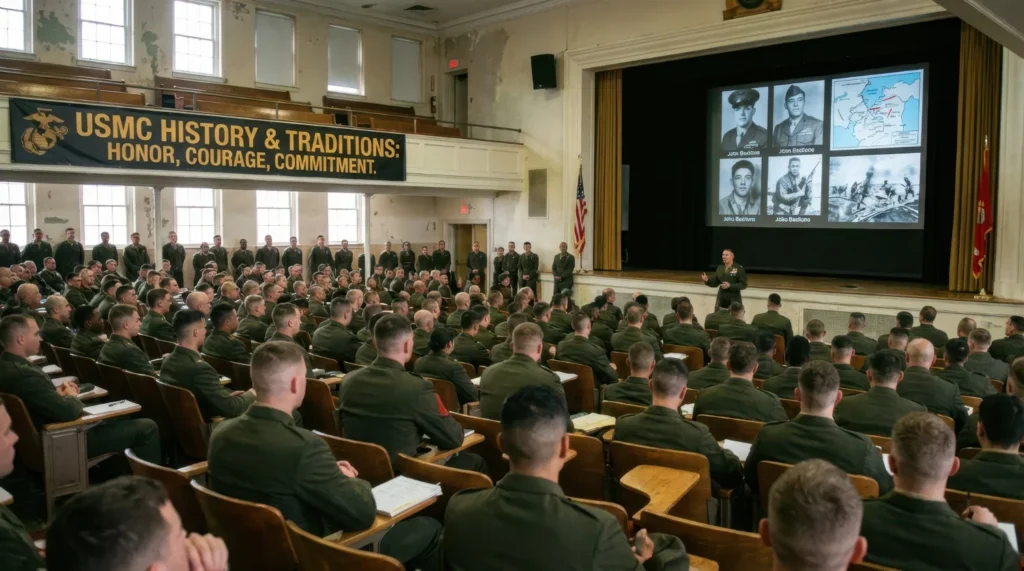


Norwich University in Northfield, Vermont, is the oldest private military college in the United States and the only private Senior Military College. Students can join the Corps of Cadets or live as civilians on the same campus. This guide covers Norwich’s acceptance rate, 2026-27 costs and scholarships, the Rook year, ROTC and commissioning, service obligations, and how Norwich compares with other military colleges and the service academies.
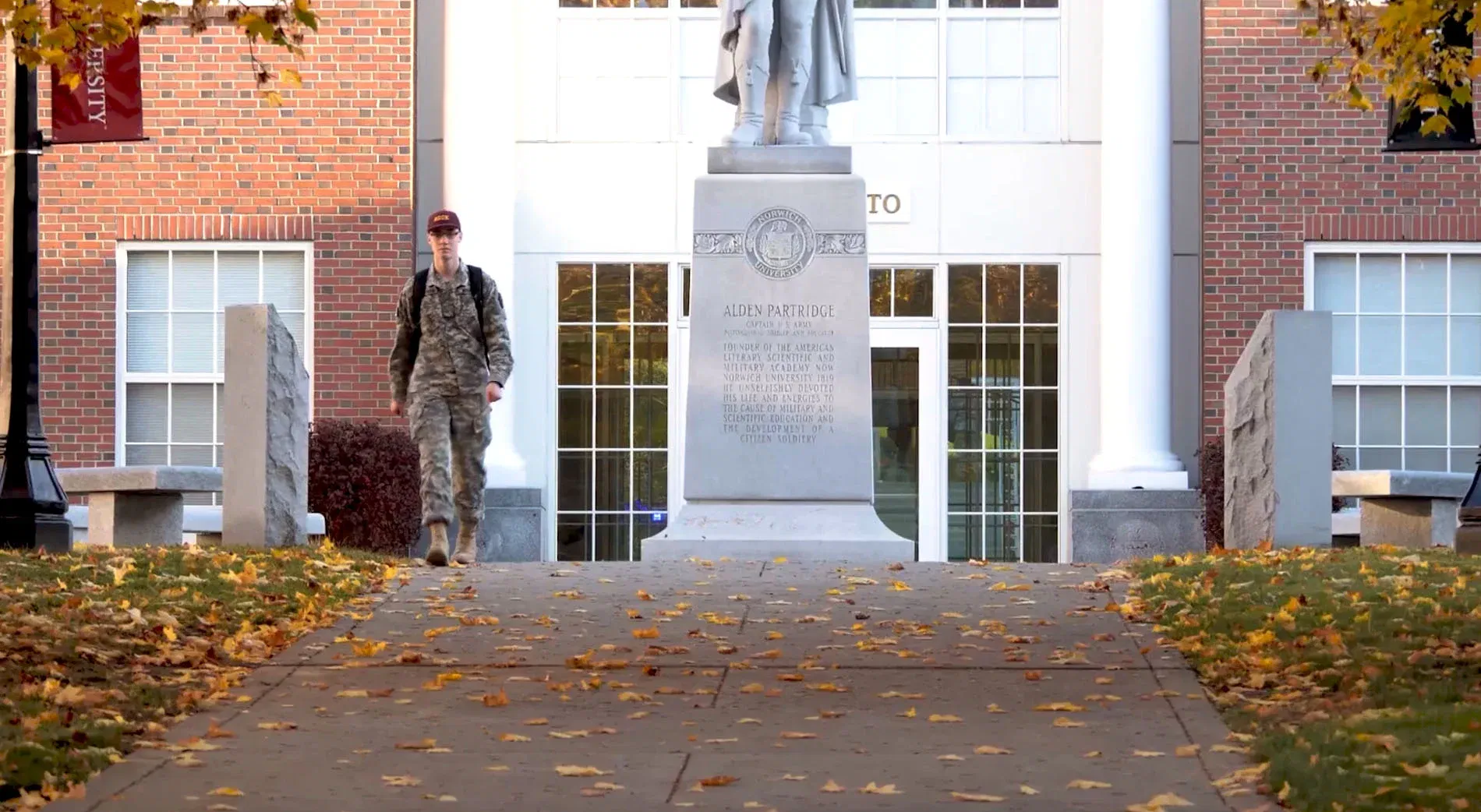
Norwich was founded in 1819 by Capt. Alden Partridge and calls itself the birthplace of the Reserve Officers Training Corps, because Partridge’s model of training citizen-soldiers at a civilian college became the basis for ROTC. Today it is the only private school on the list of six senior military colleges in federal law.
Joining the Corps does not commit you to military service. Cadets take at least two years of ROTC, but only those who contract or accept an ROTC scholarship owe time in uniform. Norwich charges private-college tuition, and most of the work for families is figuring out how much of it scholarships will cover.
In This Article
- Norwich at a Glance
- Admissions and Acceptance Rate
- Cost of Attendance and Scholarships (2026-27)
- Corps of Cadets vs. Civilian Life
- ROTC, Commissioning and Service Obligation
- Academics and Cybersecurity
- How Norwich Compares With Other Military Colleges and the Academies
- Frequently Asked Questions
- Where This Leaves You
Norwich at a Glance
| Item | Figure | Source / year |
|---|---|---|
| Founded | 1819, by Capt. Alden Partridge | Norwich University |
| Location | Northfield, Vermont | Norwich University |
| Type | Private, nonprofit; Senior Military College | 10 U.S.C. 2111a |
| Undergraduates | 2,626 | NCES, fall 2024 |
| Acceptance rate | About 74% | College Scorecard (IPEDS), fall 2024 |
| Tuition, room and board | $64,700 | Norwich Bursar, 2026-27 |
| Newest Rook class | 416 started Aug. 16, 2025; 368 recognized Dec. 4, 2025 | Norwich University |
| ROTC programs | Army; Navy and Marine Corps; Air Force and Space Force | Norwich University |
| Motto | “I Will Try” | Norwich University |
Admissions and Acceptance Rate
Norwich admits most applicants. Federal College Scorecard data, drawn from the Department of Education’s IPEDS survey, put its admission rate at about 74% for fall 2024. Unlike the service academies, Norwich doesn’t require a congressional nomination, a candidate fitness test or a medical review board to get in.
The application process is simple:
- Application: the Norwich Application or the Common App. There’s no application fee.
- Timeline: applications open August 1, and fall decisions are made on a rolling basis. The enrollment deposit for fall is due May 1.
- Testing: test optional. Norwich says no academic program requires the SAT or ACT.
- Choosing a lifestyle: you decide whether to enter as a cadet in the Corps or as a civilian student.
Norwich’s merit awards are based on your GPA, so your transcript matters more than test scores for aid (see the scholarship table below). Corps members must also pass the Corps of Cadets physical fitness test each year or receive a waiver, so start training before you arrive.
Cost of Attendance and Scholarships (2026-27)
As a private university, Norwich charges the same tuition to every student regardless of home state. These are the 2026-27 charges for resident undergraduates, from the Norwich Bursar:
| 2026-27 charge (full year) | Amount |
|---|---|
| Tuition (12-19 credits per semester) | $48,730 |
| Room | $11,250 |
| Board (meal plan) | $4,696 |
| Tuition, room and board | $64,700 |
| Student activities, technology and health services fees | $2,980 |
| Uniform fee, Rook (first-year cadet) class | $2,982 |
| Student medical insurance (listed separately) | $2,928 |
Books, travel and personal costs come on top. The sticker price is high, but Norwich says 99% of its resident undergraduates receive aid from the university.
Norwich merit scholarships
| Award | GPA range | Amount per year (four years) |
|---|---|---|
| Presidential Award | 3.60 or higher | Up to $30,000 |
| Provost Award | 3.40-3.599 | Up to $28,000 |
| Trustee Award | 3.00-3.399 | Up to $27,000 |
| Dean’s Award | 2.550-2.999 | Up to $25,000 |
ROTC scholarships and Norwich’s add-ons
National ROTC scholarships pay tuition and fees but generally not housing and meals. Norwich fills part of that gap. When an ROTC scholarship covers full tuition and fees, Norwich’s General I.D. White Scholarship covers on-campus room and board. Students who win a three-year ROTC scholarship can receive the Alden Partridge Scholarship, which covers all costs (tuition, fees, housing and food) for the first year, before the ROTC award starts.
That combination can make Norwich much cheaper than its list price for cadets who plan to commission. Remember that ROTC scholarships come with a service contract, covered below.
Corps of Cadets vs. Civilian Life
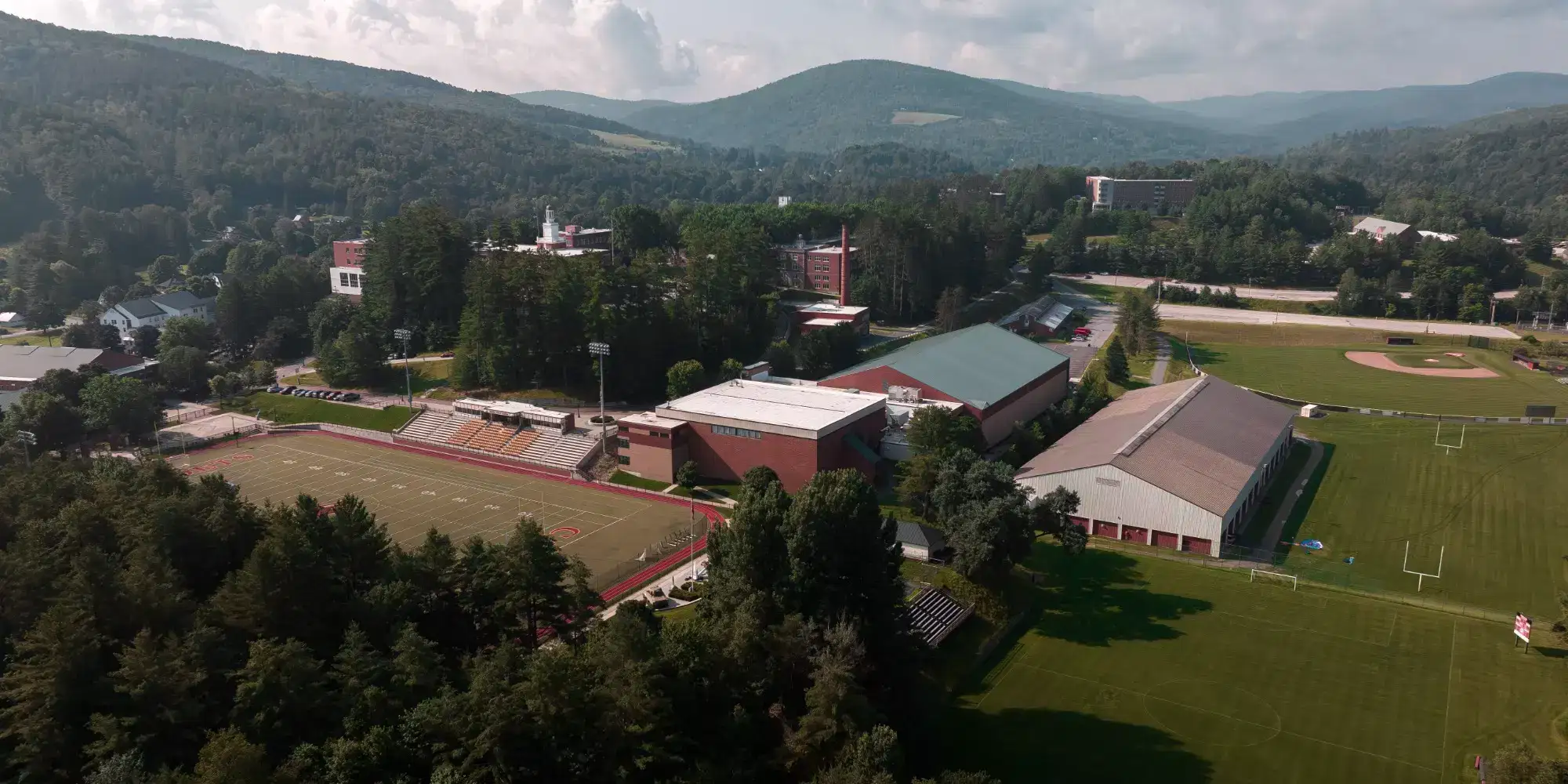
Norwich lets you choose between two lifestyles on one campus. Cadets and civilians take the same classes from the same faculty, but their daily routines and obligations differ.
| Requirement | Corps of Cadets | Civilian students |
|---|---|---|
| Uniform and military structure | Yes, under the cadet chain of command | No |
| ROTC | At least four semesters (two years); four years if contracted | Optional |
| Housing | Must live on campus for eight semesters | Standard university housing rules |
| Fitness | Must pass the Corps fitness test each year (or get a waiver) | Personal choice |
| First year | Rook year, ending with Recognition | Standard first year |
| Uniform fee | $2,982 in the Rook year (2026-27) | None |
The Rook year and Recognition
Every new cadet starts as a “Rook.” Norwich describes the first year as an intentionally demanding introduction built on time management, organization, attention to detail and mental toughness. Rooks are formally recognized as cadets at Recognition, which ends “Rookdom.”
For a sense of scale and attrition: 416 Rooks began on August 16, 2025, and 368 stood at Recognition on December 4, 2025, as the Military College of Vermont Class of 2029.
Beyond the first year
Norwich runs the Corps as a leadership laboratory. Second-year cadets study leadership principles, and juniors and seniors lead other cadets with mentoring from staff. Specialty units include a Cavalry Troop, a Mountain and Cold Weather Company, a drill team and color guard, and the Regimental Band.
Student veterans who were honorably discharged, or who have three years of service, can take ROTC as civilians without joining the Corps if they are no older than 25 as of September 1.
ROTC, Commissioning and Service Obligation
Norwich hosts Army ROTC, Naval ROTC (Navy and Marine Corps) and Air Force ROTC, which also commissions Space Force officers. There is no Coast Guard ROTC, but Norwich seniors can apply for the Coast Guard’s Direct Commission Selected School program or Coast Guard Officer Candidate School. Norwich recommends Naval ROTC for cadets aiming at the Coast Guard. Cadets can also serve in the Vermont National Guard.
Norwich holds a joint commissioning ceremony each May for graduates going into the Army, Navy, Marine Corps, Air Force and Space Force. Norwich does not publish what share of each class commissions, so ask admissions for recent figures if that matters to you.
Do you have to serve?
No. Norwich states plainly that choosing the Corps doesn’t commit you to military service. A non-contracted cadet completes the required ROTC coursework and can graduate straight into a civilian job. Service obligations come only with an ROTC contract or scholarship:
- Army ROTC: four years of active duty and an eight-year total obligation for scholarship and advanced-course cadets
- Navy ROTC: five years of active duty for the Navy option, four for the Marine Corps option
- Air Force ROTC: four years for most career fields; pilots serve 10 years after training
Because Norwich is a Senior Military College, federal law (10 U.S.C. 2111a) requires the Army to assign a graduate to active duty if he or she wants it, is medically and physically qualified, and is recommended by the professor of military science. Army ROTC graduates at most other colleges don’t have that guarantee.
Academics and Cybersecurity
Norwich offers bachelor’s degrees in engineering, the sciences, nursing, criminal justice, business, the humanities and other fields, and both cadets and civilians share the same classes.
Cybersecurity is its best-known strength. The National Security Agency and the Department of Homeland Security have designated Norwich a National Center of Academic Excellence in Cyber Defense since 2001, and the Defense Cyber Crime Center has also recognized it as a Center of Digital Forensics Academic Excellence. Cyber programs are housed in the Senator Patrick Leahy School of Cybersecurity and Advanced Computing.
NCES data show a first-to-second-year retention rate of 79% for full-time students (fall 2023 cohort) and a six-year graduation rate of 60% for students who started in fall 2018. Ask admissions how those numbers look for Corps members specifically.
How Norwich Compares With Other Military Colleges and the Academies
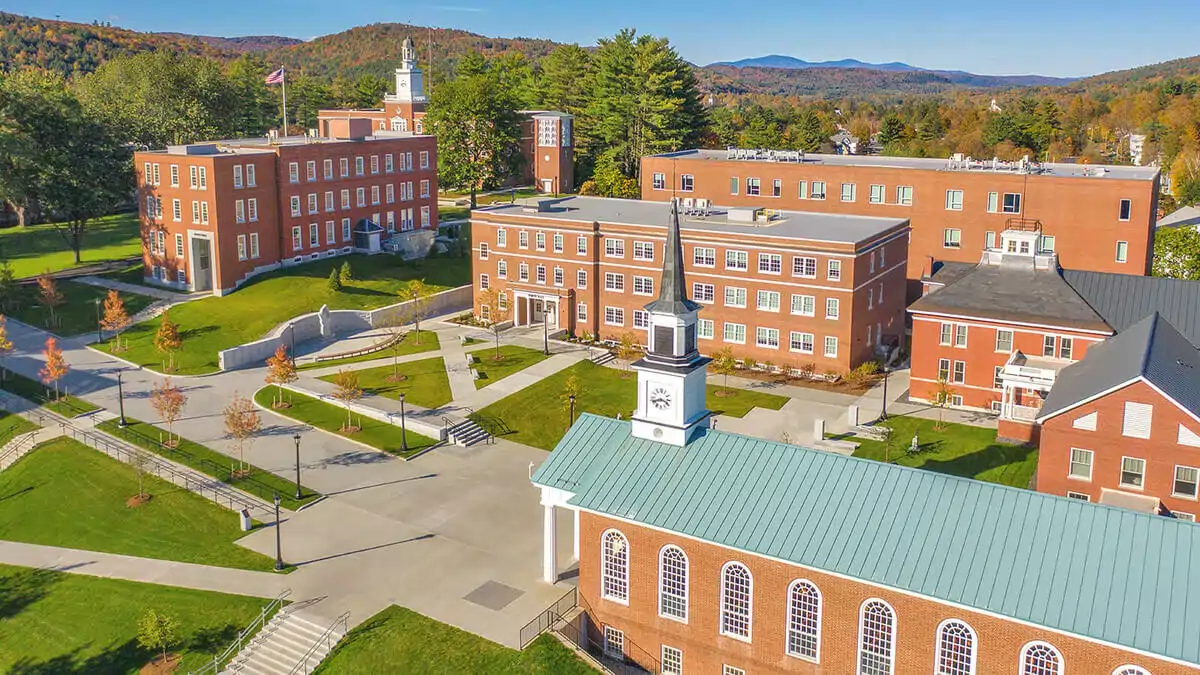
Among the senior military colleges, Norwich is the only private one, so it has no in-state discount. The other five are public. Two of them, the Virginia Military Institute and The Citadel, are all-cadet colleges with no civilian lifestyle option. The other three, including the Texas A&M Corps of Cadets, put a Corps inside a large public university, which is closer to Norwich’s two-lifestyle model but on a much bigger campus.
| Norwich University | Federal service academies | |
|---|---|---|
| Acceptance rate (fall 2024) | About 74% | West Point 12%, Naval Academy 9%, Air Force Academy 14% |
| Nomination | Not required | Required for most applicants |
| Cost | $64,700 tuition, room and board before aid (2026-27) | No tuition, room or board |
| Commissioning | Optional | Required |
| Service obligation | Only if you contract or take an ROTC scholarship (typically 4-5 years active duty) | 5 years active duty plus 3 in the reserve (West Point) |
| Civilian student option | Yes | No |
If cost is the deciding factor and you’re sure you want to serve, the tuition-free academies such as the United States Military Academy are worth a serious look. If you want a military structure without committing to service up front, or want to keep the civilian option open, Norwich and the other senior military colleges fit better. Our comparison of a military college vs. a traditional university covers the day-to-day differences.
Frequently Asked Questions
Is Norwich University hard to get into?
No. Federal College Scorecard data show an admission rate of about 74% for fall 2024. Norwich is test optional and charges no application fee.
Do Norwich cadets have to join the military?
No. Corps members must complete at least four semesters of ROTC, but only cadets who sign an ROTC contract or accept an ROTC scholarship incur a service obligation.
How much does Norwich cost?
For 2026-27, tuition, room and board total $64,700. First-year cadets also pay a $2,982 uniform fee, and all residents pay about $2,980 in student fees. Merit awards of up to $30,000 a year and ROTC-linked scholarships reduce the cost for most students.
Why is Norwich called the birthplace of ROTC?
Founder Alden Partridge built Norwich in 1819 around the idea of training citizen-soldiers at a civilian college, the model ROTC later adopted.
Can I commission into the Coast Guard from Norwich?
There is no Coast Guard ROTC, but Norwich cadets can apply for the Coast Guard’s Direct Commission Selected School program or Officer Candidate School as seniors.
Where This Leaves You
Norwich is a good fit if you want a structured military college in a small-campus setting, a strong cyber or engineering program, and the freedom to decide on military service later. It is easy to get into, but expensive unless you qualify for its GPA-based merit awards or an ROTC scholarship.
Run the numbers early. Apply for a national ROTC scholarship in your senior year if you plan to commission, and ask Norwich admissions for a net-price estimate that includes merit aid and the Corps uniform fee before you put down a deposit.

William Johnson writes about U.S. military training and enlistment for Servicemembers Opportunity Colleges. His work covers topics such as boot camp, ROTC, the ASVAB test, military pay, and what to expect during basic training, with a focus on giving recruits and their families clear, practical information about military life.
Sources
- Norwich University. “Bursar: 2026-27 Tuition and Fees.” Norwich University, 2026.
- Norwich University. “Scholarships, Awards and Military Benefits.” Norwich University.
- Norwich University. “Apply to Norwich.” Norwich University.
- Norwich University. “Corps of Cadets.” Norwich University.
- Norwich University. “Corps of Cadets and ROTC.” Norwich University Catalog.
- Norwich University. “Inspired by Tradition, Bound by Values.” Norwich University News, 2025.
- Norwich University. “U.S. Coast Guard: How to Commission.” Norwich University.
- Norwich University. “Center for Cybersecurity and Forensics Education and Research.” Norwich University.
- National Center for Education Statistics. “College Navigator: Norwich University.” NCES, 2026.
- U.S. Department of Education. “College Scorecard.” ed.gov, 2026.
- Legal Information Institute. “10 U.S. Code 2111a: Support for senior military colleges.” Cornell Law School.
- U.S. Military Academy. “Tuition and Service Commitment.” West Point.
- U.S. Army. “Army ROTC Scholarships.” GoArmy.com.
- Naval Service Training Command. “NROTC FAQ.” U.S. Navy.
- Air Force ROTC. “What It Takes.” AFROTC.com.