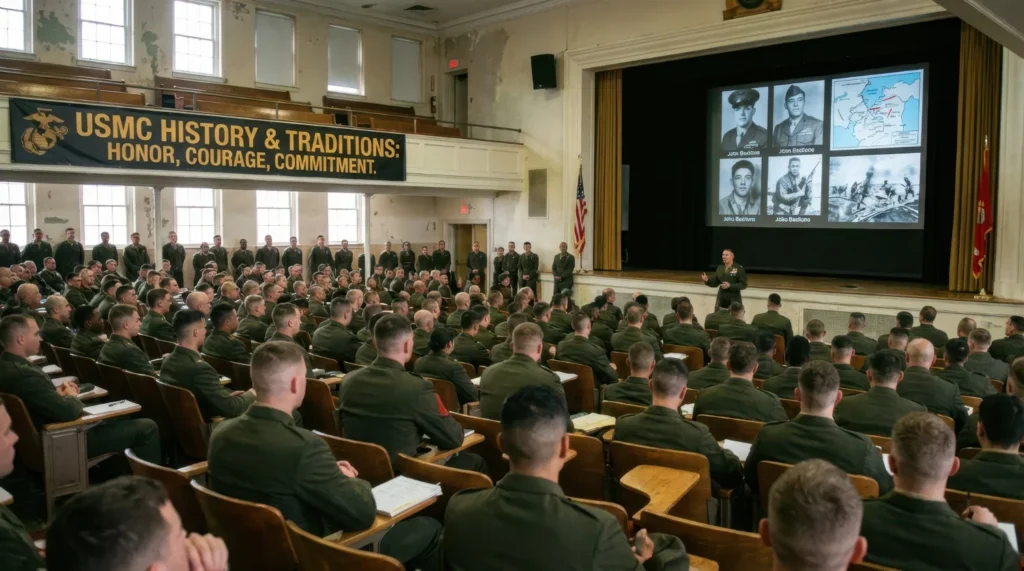


The Virginia Tech Corps of Cadets is a military-style leadership program of about 1,400 cadets inside Virginia Tech, a large public university in Blacksburg and one of the six Senior Military Colleges. Cadets choose a Military-Leader Track that leads to an ROTC commission or a Citizen-Leader Track with no military obligation. This guide covers how to join, admission odds, 2026-27 costs, scholarships, cadet life, commissioning and how the Corps compares with other military colleges and the academies.
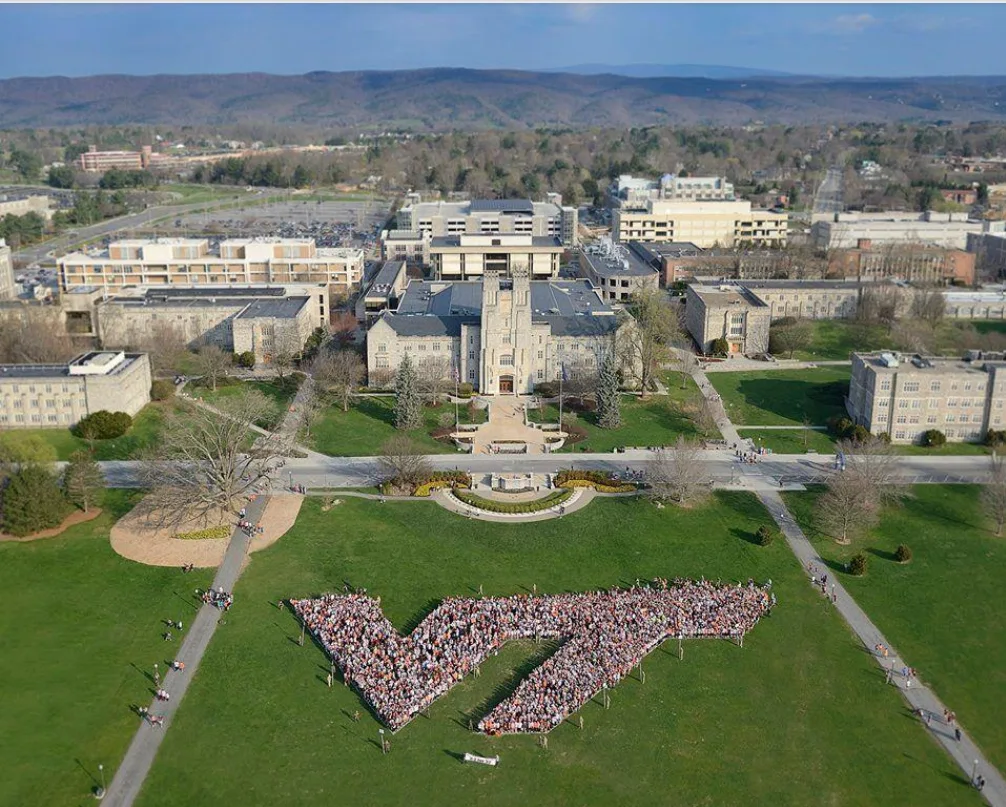
Most of Virginia Tech’s roughly 31,000 undergraduates are civilians. The Corps of Cadets, founded in 1872, lives on the Upper Quad, wears the uniform to class and follows a military chain of command, while sharing classrooms, labs and sports with the rest of the university. That mix gives cadets a large research university’s majors with a military college’s structure.
Joining is part of your Virginia Tech application, not a separate admissions process, and cadets who don’t want to serve can still be full members of the Corps.
In This Article
- The Virginia Tech Corps of Cadets at a Glance
- How to Join and Admission Odds
- Cost and Scholarships (2026-27)
- Military-Leader Track vs. Citizen-Leader Track
- Cadet Life and Rules
- Commissioning, ROTC and Service Obligation
- Academics and Leadership Programs
- How the Corps Compares With Other Military Colleges and the Academies
- Frequently Asked Questions
- Where This Leaves You
The Virginia Tech Corps of Cadets at a Glance
Virginia Tech is one of the six Senior Military College schools named in federal law. The Corps has been part of the university since it opened in 1872, and the university motto, Ut Prosim (“That I May Serve”), is one of the Corps’ core values.
| Item | Figure | Source / year |
|---|---|---|
| Corps size | About 1,400 cadets | Virginia Tech News, spring 2026 |
| Newest class (Class of 2030) | 494 cadets, the second-largest first-year cadet class since 1965 | VTCC, fall 2026 |
| Track split, Class of 2030 | 81% Military-Leader Track, 19% Citizen-Leader Track | VTCC, fall 2026 |
| Women, Class of 2030 | 25.7% | VTCC, fall 2026 |
| Average high school GPA / SAT, Class of 2030 | 3.97 / 1276 | VTCC, fall 2026 |
| Virginia Tech acceptance rate | 55% of 52,498 applicants | NCES, fall 2024 |
| Tuition and mandatory fees | $17,087 in-state / $40,180 out-of-state | Virginia Tech, 2026-27 |
| ROTC units | Army, Navy/Marine Corps, Air Force/Space Force | VTCC |
How to Join and Admission Odds
You join the Corps through your Virginia Tech application. If you answer “Yes” to the question about enrolling in the Corps of Cadets and then accept your offer of admission, you are enrolled as a cadet. There’s no separate cadet application, interview or nomination.
That means the real hurdle is getting into Virginia Tech. According to NCES, Virginia Tech received 52,498 first-year applications for fall 2024 and admitted 55%. Enrolled students had middle-50% SAT scores of 640-710 in reading and writing and 640-740 in math. Admission to some majors, such as engineering, is more competitive than the university-wide rate.
The cadets who enrolled in fall 2026 averaged a 3.97 high school GPA and a 1276 SAT, and they came from 33 states and five countries.
No prior military experience needed
You don’t need JROTC. Training starts the week before fall classes: for 2026, new cadets moved in on August 14, went through “Forge Week” from August 14 to 22 (early-morning fitness, drill and orientation), and marched in the New Cadet Parade on August 22. New cadets also complete paperwork and uniform fittings over the summer.
If you also want an ROTC scholarship, apply for it separately through the Army, Navy or Air Force during your senior year of high school. Our guide to federal ROTC scholarships walks through the timelines.
Cost and Scholarships (2026-27)
Cadets pay the same tuition, fees, housing and meal rates as other Virginia Tech students, plus a Corps uniform fee. The Board of Visitors approved these 2026-27 rates in April 2026:
| 2026-27 (full year) | Virginia resident | Out-of-state |
|---|---|---|
| Tuition and mandatory fees | $17,087 | $40,180 |
| Room and board | $15,032 | $15,032 |
| Total direct charges | about $32,119 | about $55,212 |
| Corps uniform fee | Billed annually; the Corps last published about $1,150 (fall 2022) | |
Books, travel and personal expenses are extra. If you leave the Corps during the academic year, the annual uniform fee is billed to you immediately.
Corps scholarships
- Corps Named Scholarship: every cadet with a current FAFSA on file is considered. It pays at least $1,000 a year (at least $4,000 over four years), with more possible based on FAFSA information. You must keep a 2.0 GPA and good standing.
- Highty-Tighties band stipend: $1,000 a year for the first two years ($500 a semester) for cadets in the regimental band. Marching or musical experience is required.
- Fullhart Horizon Fund: for rising juniors and seniors in Corps leadership positions with at least a 3.0 GPA; amounts vary by position.
Corps scholarships don’t require a military commitment. ROTC scholarships, which come in two-, three-, three-and-a-half- and four-year versions, do. If you’re comparing these costs with a tuition-free school, the United States Naval Academy and the other federal academies charge no tuition, room or board, but require service after graduation.

Military-Leader Track vs. Citizen-Leader Track
| Military-Leader Track | Citizen-Leader Track | |
|---|---|---|
| Goal | Commission as a military officer | Leadership for civilian, public-sector or undecided careers |
| ROTC | Army, Naval (Navy or Marine option) or Air Force ROTC | Not required |
| Eligible for ROTC scholarships | Yes | No |
| Military obligation | Yes, once contracted or on scholarship | None |
| Corps life (uniform, Upper Quad, chain of command) | Yes | Yes |
| Share of Class of 2030 | 81% | 19% |
Both tracks live the same cadet life. The difference is what happens after graduation. In the Class of 2030, Military-Leader Track cadets split almost evenly between ROTC programs: 27% Army, 26% Navy (including Marine option) and 28% Air Force.
Cadet Life and Rules
Cadets live together on the Upper Quad, in Pearson Hall East, Pearson Hall West and Upper Quad Hall North. All cadets wear the Corps uniform whenever they attend classes, generally from 7 a.m. to 5 p.m. on weekdays, and ROTC cadets also wear their service uniform one day a week during the spring semester.
The Corps runs on a cadet chain of command, with upper-class cadets leading companies and battalions. Cadets live under the Cadet Honor Code: “A cadet will not lie, cheat or steal, nor tolerate those who do.” The Corps reports that its combined GPA has been above 3.0 for more than a decade.
Cadets can join specialty units, including the Highty-Tighties regimental band and the Gregory Guard, which renders rifle salutes. The Corps also offers the Defense Civilian Training Corps for students interested in civilian defense careers.
If you’re deciding between this blend of military and civilian campus life and a larger version of the same model, the Texas A&M Corps of Cadets is the closest comparison.
Commissioning, ROTC and Service Obligation
Virginia Tech hosts the Army ROTC New River Battalion, a Naval ROTC unit for Navy and Marine Corps officers, and Air Force ROTC Detachment 875, which commissions Air Force and Space Force officers.
The Corps’ most recent published commissioning figures are for spring 2023: 91 cadets commissioned into the Army, 38 into the Air Force, 30 into the Navy and 10 into the Marine Corps, for 169 officers in total. Another 55 graduated from the Citizen-Leader Track.
What you owe if you commission
- Army ROTC: four years of active duty within an eight-year total obligation for scholarship and advanced-course cadets
- Navy ROTC: five years of active duty for the Navy option, four for the Marine Corps option
- Air Force ROTC: four years for most career fields; 10 years for pilots after training
- Citizen-Leader Track: no obligation
As a Senior Military College, Virginia Tech is covered by 10 U.S.C. 2111a(e): an Army ROTC graduate who wants active duty, is medically and physically qualified, and is recommended by the professor of military science must be assigned to active duty.
Academics and Leadership Programs
Cadets can major in anything Virginia Tech offers, including its large engineering, computer science, business and agriculture programs. The university’s first-to-second-year retention rate is 93% and its six-year graduation rate is 86%, according to NCES.
On top of their majors, cadets can earn a minor in leadership through the Maj. Gen. W. Thomas Rice Center for Leader Development, which runs the Corps’ leadership education. The Corps also offers a Global Scholars Program and recognizes top performers on the Commandant’s List.
How the Corps Compares With Other Military Colleges and the Academies
Virginia Tech, Texas A&M, Norwich and the University of North Georgia all put a Corps of Cadets inside a university where civilians are the majority. The Virginia Military Institute in Lexington and The Citadel are all-cadet colleges. VMI also requires every cadet to take ROTC, while Virginia Tech’s Citizen-Leader Track lets you skip ROTC entirely.
| Virginia Tech Corps of Cadets | Federal service academies | |
|---|---|---|
| Acceptance rate (fall 2024) | 55% (university-wide) | West Point 12%, Naval Academy 9%, Air Force Academy 14% |
| How you apply | Check the Corps box on the Virginia Tech application | Separate application plus nomination, medical exam and fitness test |
| Cost (2026-27) | About $32,100 in-state / $55,200 out-of-state before aid | No tuition, room or board |
| Commissioning | Optional (Citizen-Leader Track available) | Required |
| Service obligation | Only with an ROTC contract or scholarship | 5 years active duty plus 3 in the reserve (West Point) |
| Campus | About 31,000 undergraduates, mostly civilians | All students are cadets or midshipmen |
For a broader look at the trade-offs, see our guide to military college vs. a traditional university.
Frequently Asked Questions
Is it hard to get into the Virginia Tech Corps of Cadets?
Getting into the Corps means getting into Virginia Tech, which admitted 55% of applicants for fall 2024. There’s no separate cadet selection: you indicate on your application that you want to join and enroll as a cadet once you accept your offer.
Do Virginia Tech cadets have to join the military?
No. Cadets on the Citizen-Leader Track have no military obligation. Only cadets who contract with ROTC or accept an ROTC scholarship owe service after graduation.
Do cadets wear uniforms every day?
Cadets wear the Corps uniform whenever they attend classes, generally between 7 a.m. and 5 p.m. on weekdays.
What scholarships do Virginia Tech cadets get?
Every cadet with a current FAFSA is considered for the Corps Named Scholarship of at least $1,000 a year. Band members get a $1,000 stipend in their first two years, and Military-Leader Track cadets can compete for Army, Navy and Air Force ROTC scholarships.
How big is the Virginia Tech Corps of Cadets?
About 1,400 cadets as of spring 2026. The Class of 2030 that arrived in August 2026 had 494 cadets.
Where This Leaves You
The Virginia Tech Corps of Cadets works best for students who want a major research university and a structured military lifestyle at the same time, with the option to commission or not. Getting in depends on your Virginia Tech application, and the cost is public-university tuition plus a uniform fee.
If you plan to commission, apply for an ROTC scholarship early and check the Corps box on your application. If you’re undecided, the Citizen-Leader Track lets you experience Corps life without signing a contract, and you can talk with ROTC staff about contracting later.

William Johnson writes about U.S. military training and enlistment for Servicemembers Opportunity Colleges. His work covers topics such as boot camp, ROTC, the ASVAB test, military pay, and what to expect during basic training, with a focus on giving recruits and their families clear, practical information about military life.
Sources
- Virginia Tech Corps of Cadets. “First-Year Cadet Class Profile.” VTCC, 2026.
- Virginia Tech Corps of Cadets. “About the Corps.” VTCC.
- Virginia Tech Corps of Cadets. “FAQs.” VTCC.
- Virginia Tech Corps of Cadets. “Scholarships.” VTCC.
- Virginia Tech Corps of Cadets. “2026 Quick Start Guide for New Cadets.” VTCC, 2026.
- Virginia Tech News. “Meet This Spring’s Corps of Cadets Leaders.” Virginia Tech, 2026.
- Owczarski, Mark. “Virginia Tech Board of Visitors Sets Tuition and Fees for the 2026-27 Academic Year.” Virginia Tech News, 2026.
- National Center for Education Statistics. “College Navigator: Virginia Polytechnic Institute and State University.” NCES, 2026.
- U.S. Department of Education. “College Scorecard.” ed.gov, 2026.
- Legal Information Institute. “10 U.S. Code 2111a: Support for senior military colleges.” Cornell Law School.
- U.S. Military Academy. “Tuition and Service Commitment.” West Point.
- U.S. Army. “Army ROTC Scholarships.” GoArmy.com.
- Naval Service Training Command. “NROTC FAQ.” U.S. Navy.
- Air Force ROTC. “What It Takes.” AFROTC.com.