
Military school covers a lot more ground than most people think: five federal academies, six senior military colleges, junior colleges with two-year commissioning tracks, maritime academies, and boarding schools serving boys as young as twelve. This guide breaks down what each path actually requires, what a cadet’s day looks like, and why military school isn’t built for treating a teen in crisis.
Type “military school” into Google and you’ll get two completely different worlds. One is West Point. The other is a 7th grade boarding academy in Virginia.
Both get called the same thing, and that’s exactly why so many parents end up confused. The confusion only grows once you start comparing tuition, admissions requirements, and what graduates actually go on to do.
I’m William Johnson, and I write about military education pathways at Servicemembers Opportunity Colleges. Parents email me constantly asking which kind of military school fits their son or daughter, and the honest answer depends on the goal: a commission, a degree, or just structure during a hard stretch of adolescence.
This guide walks through every major type, from the five federal academies down to the boarding schools built for teenagers, plus exactly when a military school stops being the right tool for the job.
In This Article
- What Does It Mean to Attend a Military School?
- How Do the Five Federal Service Academies Actually Work?
- What’s the Difference Between a Senior Military College and a Military Junior College?
- What Do Maritime Academies Actually Train Cadets For?
- Why Are Private Military Boarding Schools Shrinking While Public Ones Grow?
- What Does a Typical Day Look Like at a Military School?
- Is Military School the Right Fit for a Struggling Teen?
- Frequently Asked Questions
- Where This Leaves You
What Does It Mean to Attend a Military School?
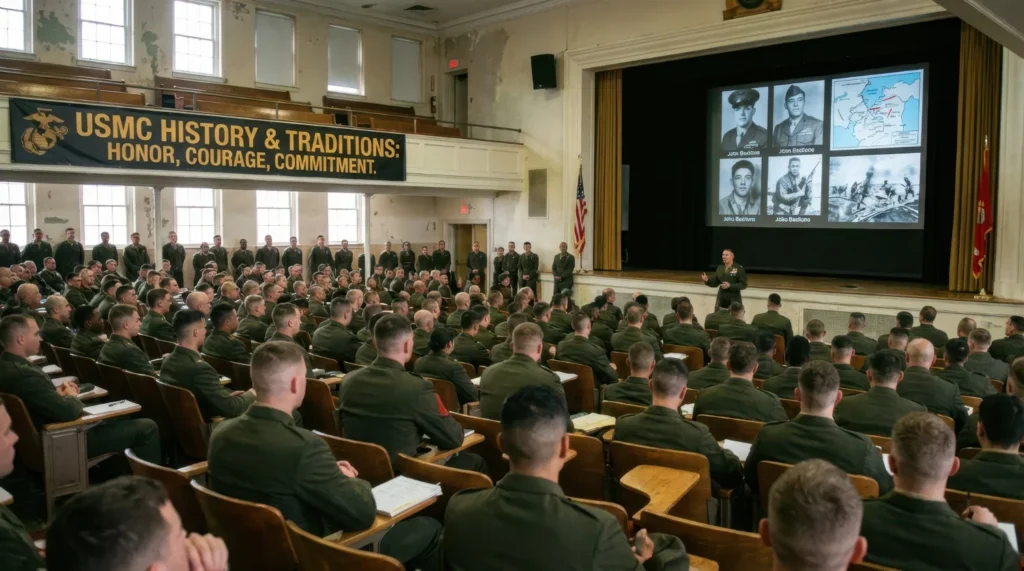
A military school is any school built around a chain of command, from a 7th grade boarding academy to a federal university. Students wear uniforms, hold ranks, and answer to instructors and older cadets alike. Close to 850 of these schools have opened in the U.S. since the country’s founding.
That number used to be much higher. Active military schools peaked around 280 institutions between 1865 and 1914, fueled by the Civil War’s combat record and the nation’s rapid industrialization. By the late 20th century, after the Vietnam War gutted enrollment nationwide, that number had fallen to roughly 75.
But here’s the thing. Most graduates never serve a day in uniform. The American model was built as a citizenship tool, blending Athenian intellect with Spartan discipline, and that civilian leadership goal still drives most programs today.
The Association of Military Colleges and Schools of the United States, founded in 1914, now represents close to 40 member institutions. That group spans everything from four year universities to small junior colleges, all held to the same Department of Defense standards.
Inside that structure sits what researchers call the hidden curriculum: implicit lessons about command, obedience, and conformity that run alongside the official class schedule. Older cadets hold real authority over younger ones, often before any of them are old enough to vote.
Historically, most military schools enrolled only boys, and many stayed all-male through most of the 20th century. That’s changed: several academies and nearly every public program now enroll girls too.
That range matters. A federal service academy and a 7th grade boarding school both call themselves military schools, but they share almost nothing beyond the uniform. The sections below break down each tier separately, starting with the most selective.
How Do the Five Federal Service Academies Actually Work?
Five federal academies offer a fully funded bachelor’s degree in exchange for service afterward. Tuition, room, board, and a monthly stipend are covered. Four of the five, West Point, the Naval Academy, the Air Force Academy, and the Coast Guard Academy, require at least five years on active duty after graduation, followed by three years in the reserve (an eight-year total obligation); pilots and some other specialties owe more. The Merchant Marine Academy works differently: graduates either work five years in the U.S. maritime industry while keeping a Coast Guard license for six years and a reserve commission for eight, or serve five years on active duty in any armed force or the NOAA Corps.
- United States Military Academy, West Point, New York (Army)
- United States Naval Academy, Annapolis, Maryland (Navy and Marine Corps)
- United States Air Force Academy, Colorado Springs, Colorado
- United States Coast Guard Academy, New London, Connecticut
- United States Merchant Marine Academy, Kings Point, New York
| Academy | Total Enrollment | Admissions Per Year | Percent Female |
|---|---|---|---|
| West Point (Army) | 4,473 | 1,244 | 22% |
| Naval Academy | 4,474 | 1,100 | 30% |
| Air Force Academy | 4,094 | 1,100 | 30% |
| Coast Guard Academy | 1,065 | 369 | 37% |
| Merchant Marine Academy | 962 | 452 | 18% |
Getting in starts with congressional approval, not just grades. Four of the five academies require a formal nomination, usually from a senator or representative, before an application even gets reviewed by admissions. Each member of Congress can have up to five cadets enrolled per academy at once, which sets real congressional nomination quotas on how many local nominations exist in a given year.
Beyond the nomination, applicants face a Candidate Fitness Assessment and a medical screening through the Department of Defense Medical Examination Review Board. Neither one is optional, and either can disqualify an otherwise strong candidate on paper.
The Coast Guard Academy skips the nomination step entirely and accepts purely on its own criteria. Either way, expect Ivy League level competition: West Point’s acceptance rate sits in the 9 to 13 percent range, with SAT scores typically landing between 1300 and 1450.
Candidates who get a nomination but don’t yet meet academic standards aren’t necessarily done. Each academy runs a one year preparatory program for exactly this group, and most prep school graduates go on to receive a full appointment the following year.

What’s the Difference Between a Senior Military College and a Military Junior College?
A senior military college is a four year university with an embedded Corps of Cadets. A military junior college is a two year school built around one specific shortcut: commissioning as an Army officer in half the usual time.
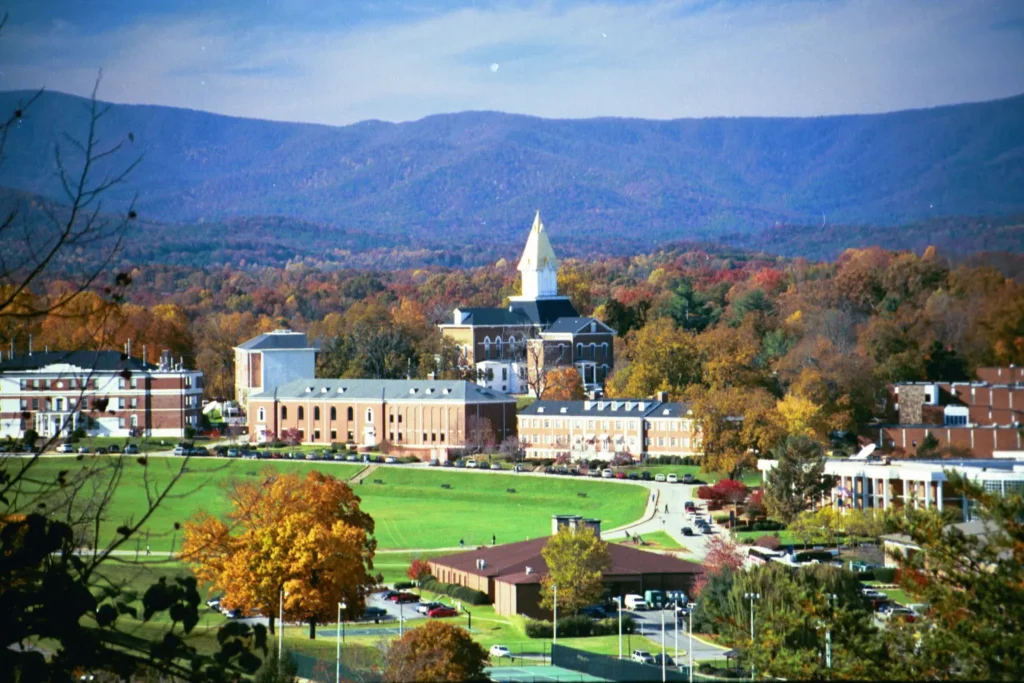
Six schools hold the SMC designation, and all six sit on the AMCSUS member roster: Norwich University, Virginia Military Institute, The Citadel, Texas A&M, Virginia Tech, and the University of North Georgia. Federal law protects their ROTC programs from closure, even during budget cuts.
Commissioning rates vary widely across that group. VMI sends roughly half its graduating class into active duty, while Texas A&M and The Citadel run closer to 30 to 40 percent. The rest pursue civilian careers with the same degree, just without the service obligation.
That’s still meaningfully lower than the near universal commissioning expectation at a federal academy, which is exactly the trade-off families weigh when choosing between the two tiers.
Mary Baldwin University runs a related program worth knowing about: the Virginia Women’s Institute for Leadership, created in 1995 as Virginia’s proposed alternative to admitting women at VMI, a plan the Supreme Court rejected in United States v. Virginia (1996). It’s the only all female cadet corps in the country, and its cadets train inside VMI’s ROTC network even though VWIL isn’t one of the six official SMCs.
Military junior colleges work differently. Four schools, Georgia Military College, Marion Military Institute, New Mexico Military Institute, and Valley Forge Military College, run the Early Commissioning Program, letting cadets earn a Second Lieutenant commission in the Army National Guard or Reserve after just two years.
Here’s where it gets interesting. Those new officers still owe a bachelor’s degree. They transfer to a four year school and finish within 24 months, often while drawing a stipend that can top $9,000 a semester at partner universities like Syracuse.
What Do Maritime Academies Actually Train Cadets For?
Maritime academies train officers for the commercial shipping industry, not the armed forces. Cadets earn a U.S. Coast Guard unlimited tonnage license, qualifying them to operate vessels of any size, anywhere in the world. Six state academies offer this path.
SUNY Maritime, Cal Poly Maritime, Massachusetts Maritime, Maine Maritime, Texas A&M Maritime, and Great Lakes Maritime Academy each run the program, ranging from a couple hundred students at Great Lakes to over two thousand at Texas A&M.
Most programs require a sea term, months spent training aboard a working ship, before graduation. It’s the part of the curriculum that turns a classroom understanding of navigation into something a licensing board will actually sign off on.
Graduates aren’t required to commission into the military, though many do through the Strategic Sealift Midshipman Program or standard Naval ROTC. Starting salaries in the maritime industry commonly land between $70,000 and $80,000, which is high for a fresh graduate in any field.
Tuition runs closer to a typical state university than a federal academy, since these are state supported schools rather than fully funded ones. Financial aid and ROTC scholarships can offset a meaningful chunk of that cost for cadets who qualify.
So what does that actually mean for you? If your kid loves engines, navigation, or the idea of working at sea instead of a desk, this tier is worth a serious look, even if a federal commission was never the goal.
Why Are Private Military Boarding Schools Shrinking While Public Ones Grow?
Private military boarding schools are closing at a pace that would have seemed impossible a generation ago, while public military academies are opening new campuses almost every year. Both trends are happening at once, and they’re connected.
Valley Forge Military Academy is the clearest example. After 98 years and a final graduating class in May 2026, the academy shut its doors for good. Rising tuition, falling enrollment, and a change in Pennsylvania insurance law drove the school’s own official closing announcement.
“The Academy is no longer viable.”
Valley Forge Military Academy Board of Trustees, closure announcement, 2026
Valley Forge Military College shares the same 70 acre campus and stayed open, since it operates under a completely separate board. That split shows up across the private sector: boarding tuition commonly runs $40,000 to over $60,000 a year, and fewer families can absorb that cost than a decade ago.
Valley Forge isn’t an isolated case either. Wentworth Military Academy (closed 2017) and Howe Military Academy (closed 2019) went before it, part of a longer squeeze on private military boarding schools.
Public military academies are moving the opposite direction. Chicago Public Schools alone runs six tuition-free military high schools, about a third of all such schools nationwide, using JROTC curriculum instead of a discipline-first sales pitch. One of those six, the Chicago Military Academy at Bronzeville, sits inside the historic 8th Regiment Armory, home to the first African American commanded regiment in the country.
I’ve talked to enough families choosing between these two models to know cost is rarely the only factor, but it’s almost always the first one parents bring up. Most of these public programs are day schools too, not the residential boarding model that Fork Union or Valley Forge built their reputations on, and that residential piece changes the experience as much as the price tag does.
But there’s a catch. Public day programs can’t replicate the round-the-clock mentorship of a traditional boarding school, the kind where staff supervise cadets seven days a week. For some families, that trade-off matters as much as tuition.
What Does a Typical Day Look Like at a Military School?
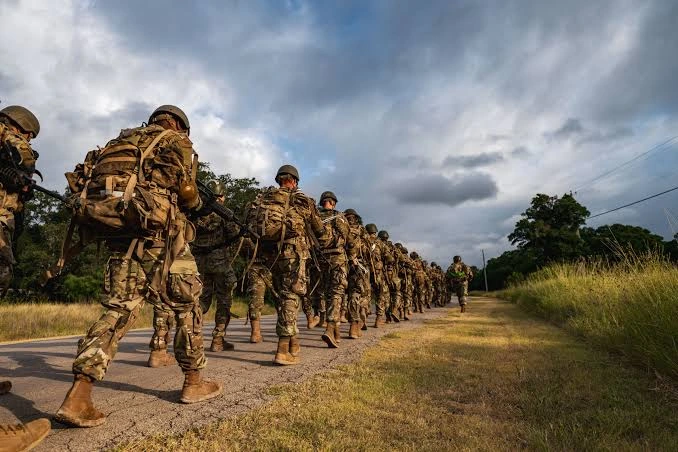
A cadet’s day starts before 6 a.m. and runs on a fixed schedule built to eliminate idle time. Reveille, physical training, room inspection, and formation all happen before most students elsewhere have eaten breakfast. Evenings end with mandatory study hall, then lights out.
- Reveille and accountability formation, 5:30 to 6:00 a.m.
- Morning physical training or room inspection
- Classes, military science instruction, and meals taken in formation
- Afternoon athletics, drill, and ceremony
- Call to Quarters study hall, two to three hours, closely monitored
- Taps and lights out
Underneath that schedule sits something less visible: the honor code. Nearly every academy and senior military college uses some version of the same line, first formalized at West Point’s Cadet Honor Code: a cadet will not lie, cheat, steal, or tolerate those who do.
Here’s the part most people miss. The code isn’t enforced by faculty watching for violations. Cadets are tried by juries of their own peers, and the non-toleration clause requires reporting a friend’s violation, not just avoiding your own.
The code has been tested more than once. In 1976, more than half of West Point’s junior class was investigated for cheating on a take home exam. A similar scandal hit during remote learning in 2020, and the academy ended its leniency program the following year rather than soften the standard.
Some schools have started adjusting the rigid daily model itself. Culver Academies recently added a 55 minute morning break for students to meet with faculty, shortened class periods, and capped homework at 45 minutes per class to avoid burning kids out.
At schools built on this model, that peer pressure runs both directions. It builds trust fast, since an unproctored exam or an open dorm only works if everyone actually follows the rule. It also means a single mistake carries more social weight than it would at a regular high school.
Is Military School the Right Fit for a Struggling Teen?
No, not if “struggling” means a mental health crisis, addiction, or trauma. Military schools are college prep institutions built for capable students who need structure, not clinical treatment for psychiatric issues. That distinction gets lost constantly in casual conversation.
I get calls from parents convinced a military academy for teens will reset a kid who’s spiraling at home. The short answer? It depends.
What’s actually driving the behavior matters most here, since defiance and disorganization are very different problems than depression or substance abuse. A school built around rank and routine can address the first set. It generally can’t touch the second.
Even schools that run this model say so themselves. One California military academy lays it out plainly on its own admissions blog: these programs aren’t equipped or licensed to treat psychiatric crises, and they will deny or expel students who need that level of care.
| Feature | Military School | Therapeutic Boarding School |
|---|---|---|
| Primary Mission | College prep and leadership | Clinical treatment and stabilization |
| Core Staff | Teachers, TAC officers, retired military | Licensed therapists, psychiatrists, social workers |
| Handling of Crisis | Disciplinary action, possible expulsion | De-escalation, therapeutic processing |
That doesn’t mean military school can’t help with milder, garden variety teenage struggles. Plenty of programs report real gains with attention issues, poor time management, or a general lack of direction, since the structure itself does a lot of the work. The line is crisis versus inconvenience, and admissions offices screen for that line carefully.
Independent placement consultants and adolescent psychologists tend to agree on this point too, regardless of which specific program they’re discussing.
None of this means structure doesn’t help kids who are anxious, unfocused, or acting out in milder ways. It just means the label military school was never meant to replace a licensed clinician. Treating it like one can do real harm to a kid who needed therapy instead of discipline.
Frequently Asked Questions
What’s the Best Military High School for My Teen?
There’s no single best military high school, because the right fit depends on your goals and your son or daughter’s temperament. Families chasing a federal academy appointment later often look at schools like Fork Union or Fishburne for the academic rigor and ROTC-style culture. Families who want a tuition-free option closer to home often look at public JROTC academies instead, especially in cities like Chicago that run several. The honest answer is to tour two or three schools in person before deciding, since brochures rarely capture the actual daily culture.
How Much Does Military School Cost?
Costs vary enormously by type. Federal service academies are fully funded, covering tuition, room, board, and even a stipend, in exchange for a service commitment. Private military boarding schools sit at the other extreme, with annual tuition commonly running $40,000 to over $60,000 a year. Public military academies and charter schools, by contrast, are tuition-free, since they’re funded like any other public school.
Do You Have to Join the Military After Attending a Service Academy or Senior Military College?
At a federal service academy, yes: graduation comes with a mandatory service commitment, typically five years of active duty for four of the five academies, though the Merchant Marine Academy’s obligation works differently: graduates either work five years in the U.S. maritime industry while keeping a reserve commission, or serve five years on active duty. At a senior military college, it depends. Only cadets who sign an ROTC contract (with or without a scholarship) are obligated to commission, while the rest of the corps can pursue a civilian career with the same degree. That flexibility is one of the main reasons SMCs draw a different kind of applicant than the federal academies do.
What Age Can a Student Start at a Military Boarding School?
Most private military boarding schools accept students starting in 7th grade, around age 12, through 12th grade and sometimes a postgraduate year. A handful of academies start as early as kindergarten, though that’s unusual. Public and charter military academies typically follow standard high school grade bands, starting in 9th grade. Either way, age requirements are set by each school individually, so it’s worth checking directly before assuming your child qualifies.
Where This Leaves You
Military school isn’t one thing. It’s a federal academy with a 9 percent acceptance rate, a two-year college with a fast-track commission, a state maritime program, a shrinking private boarding sector, and a growing public one, all wearing the same label.
So why does this matter? Because picking the wrong tier wastes money, time, and in the worst cases, does real harm to a kid who needed something completely different.
A capable teen who thrives on structure and rank can do well in almost any tier. A teen in genuine crisis needs a therapist, not a drill sergeant, regardless of how strong the school’s reputation is.
If you’re trying to map this out for your own family, our military education guides go deeper into eligibility, applications, and what admissions boards actually look for.
In my experience, the families who end up happiest are the ones who start with the goal, not the brand name. Once you know whether you’re chasing a commission, a degree, or just a structured year or two, the right tier usually narrows itself down fast.

William Johnson writes about U.S. military training and enlistment for Servicemembers Opportunity Colleges. His work covers topics such as boot camp, ROTC, the ASVAB test, military pay, and what to expect during basic training, with a focus on giving recruits and their families clear, practical information about military life.
Sources
- Congressional Research Service. “Congressional Nominations to U.S. Service Academies.” Congress.gov, Library of Congress, 2026.
- Valley Forge Military Academy. “Valley Forge Military Academy to Close Following 2025-2026 Academic Year.” VFMA, 2026.
- Wikipedia. “Association of Military Colleges and Schools of the United States.” 2026.
- Army and Navy Academy. “Why Boarding Schools Are Not for Troubled Youth.” Army and Navy Academy Blog, 2026.
- United States Military Academy. “Cadet Honor Code.” West Point, 2026.
- Virginia Military Institute. “Honor System.” VMI Cadet Life, 2026.
- United States Merchant Marine Academy. “Service Obligation.” USMMA Admissions, 2025.