
The Merchant Marine Academy at Kings Point trains midshipmen for licensed careers at sea and a reserve commission, tuition-free. Getting in takes more than good grades: a congressional nomination, a medical clearance, and a fitness test all stand between you and an appointment. Here’s what the process actually requires, what it costs, and where most applicants stumble.
If you’ve been researching the merchant marine academy, you’ve probably already noticed the numbers don’t line up. One site says the acceptance rate is 24%. Another says 34%. A third tells you it’s somewhere in between. None of them are lying exactly, but none of them are telling you the whole story either.
Here’s the thing: USMMA doesn’t publish one clean acceptance rate the way a typical college does, because getting in isn’t really a two-step process of applying and waiting. There’s a nomination requirement layered on top of the academic review, and that changes how you should think about your odds from day one. This guide walks through the requirements, the real cost, the timeline, and the parts of the process that trip up otherwise strong applicants.

In This Article
- What Is the Merchant Marine Academy, Exactly?
- What Are the Merchant Marine Academy Requirements?
- How Competitive Is the Merchant Marine Academy Acceptance Rate?
- What Does the Congressional Nomination Process Involve?
- What Does Merchant Marine Academy Tuition Actually Cost?
- What Happens During the Medical and Fitness Screening?
- What Is Life Like as a Midshipman After Acceptance?
- Merchant Marine Academy FAQ
- Where This Leaves You
What Is the Merchant Marine Academy, Exactly?
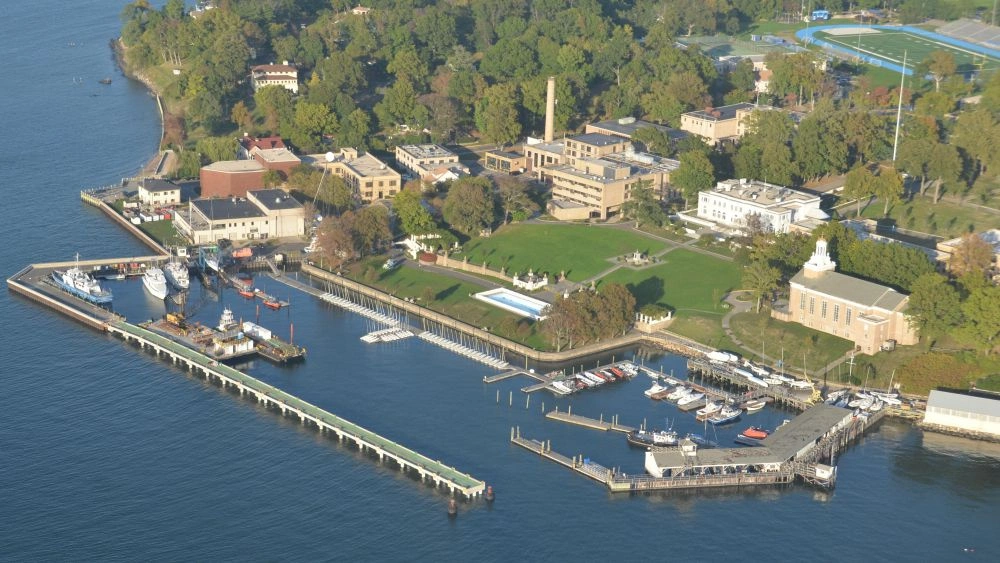
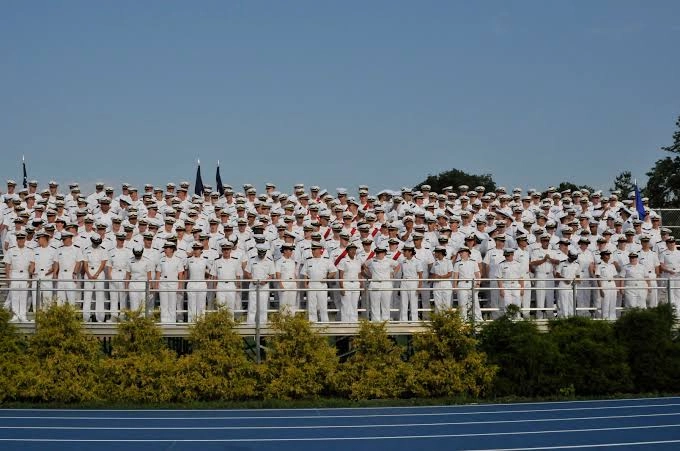
The United States Merchant Marine Academy is one of five federal service academies, and it’s the only one that sends its graduates into a civilian industry as a first career. Students, called midshipmen, spend four years training in Kings Point, New York, and come out with a Bachelor of Science degree, a U.S. Coast Guard merchant mariner license, and a commission, usually in the Navy Reserve.
Congress created the academy in 1943, partly in response to a string of wartime shipping disasters that made it clear the country needed trained officers for its merchant fleet. That founding mission hasn’t really changed. Today’s graduates run the engine rooms and navigation stations of commercial ships while remaining on call for military sealift if the country needs it.
What makes USMMA different from West Point or Annapolis is the “Sea Year.” Midshipmen spend roughly a year of their four-year program actually working aboard commercial vessels, often traveling to multiple continents before they graduate. So this isn’t a campus-only experience. Because of that hybrid structure, admissions officers are looking for candidates who can handle both a rigorous technical curriculum and extended time away from a traditional campus.
What Are the Merchant Marine Academy Requirements?
The merchant marine academy requirements start with the basics: you need to be a U.S. citizen, of good moral character, and between 17 and 25 years old, with the requirement that you haven’t passed your 25th birthday by July 1 of the year you’d enter. From there, the academic bar gets specific fast.
USMMA asks for at least 15 accredited high school credit units, including three in English, three in math covering algebra, geometry, and trigonometry, and one lab science in physics or chemistry. Those are floors, not targets. The academy openly says it wants four years of math including calculus, plus both physics and chemistry, and most admitted midshipmen rank in the top 20% of their graduating class.
Because I’ve spent years covering enlistment and academy pipelines for prospective service members, I can tell you the applicants who struggle most aren’t the ones with weak transcripts. They’re the ones who wait too long to start the paperwork. Between transcripts, teacher evaluations, a required essay, and a nomination application running on its own timeline, USMMA’s own admissions process takes months to complete properly.
A quick checklist of what your file needs before the February 1 deadline:
- Completed online application with self-reported GPA, class rank, and test scores
- Official SAT or ACT scores sent directly from the testing agency
- Transcripts and a school profile from your counselor
- Three teacher evaluations, in English, math, and lab science
- A required essay of at least 500 words on why you want to attend and your understanding of the service obligation
- A completed congressional nomination application
Miss any one of these and your file sits incomplete, which is worse than a weak file. So build a checklist early and treat the nomination step as its own project, not an afterthought.
How Competitive Is the Merchant Marine Academy Acceptance Rate?
The honest answer is that the merchant marine academy acceptance rate depends heavily on which year and which data source you’re looking at. Recent figures put it anywhere from the mid-20s to the mid-30s in percentage terms, and the trend over the last decade has actually moved toward less selectivity, not more.
According to data drawn from College Board’s admissions figures, the usmma acceptance rate sits around 24%, with admitted students typically posting ACT scores between 23 and 29. But that’s a snapshot, not the full trend line, and the fuller picture tells a different story.
Here’s what the data actually shows over a longer window. Looking at a decade of enrollment data, the average acceptance rate across the past 10 years comes out to roughly 25%, but the most recent cycle jumped to just over 34%. Selectivity has actually eased for four straight years.
| Metric | 10-Year Average | Most Recent Cycle |
|---|---|---|
| Acceptance rate | ~25.4% | ~34.2% |
| Average applicants | ~1,679 | ~1,700-1,800 |
| Average admitted | ~419 | Several hundred |
| Yield (enrolled of admitted) | ~66% | ~64% |
But there’s a catch that raw percentages hide completely: none of this matters if you don’t secure a nomination first. A 34% admit rate among nominated, fully reviewed candidates is a very different number than your odds as a random applicant off the street, because the nomination step filters out a huge share of interest before the academic review even starts.
What Does the Congressional Nomination Process Involve?
Every candidate needs a congressional nomination before an appointment is possible, full stop. You apply separately to your two U.S. Senators and your Representative, and each office runs its own process, on its own timeline, often including a local interview.
This is the part most applicants underestimate. USMMA draws nominations statewide rather than by congressional district, which is actually a small advantage since it widens your pool of eligible nominators compared to some other academies. Still, each office typically only forwards a handful of names per year.
Think about it this way: your GPA and test scores get you through the academic door, but the nomination panel is a separate audition entirely, judging leadership, service interest, and how you present yourself in an interview.
Kings Point nominations come only from Members of Congress, allocated by state; there is no Vice Presidential or service-connected nomination route.
A rough sequence for how the nomination process usually unfolds:
- Request nomination applications from your Senators’ and Representative’s offices, ideally by June 1 of your junior year
- Submit each office’s required forms, often including a personal statement
- Complete any requested interviews with nominating committees
- Wait for notification of nomination, which can arrive months before USMMA’s own decision
And it gets more complicated if you’re applying from a state with heavy competition for nomination slots. Start earlier than you think you need to. There’s no substitute for that.
What Does Merchant Marine Academy Tuition Actually Cost?
Merchant marine academy tuition is, in practical terms, free. The federal government covers tuition, room, board, uniforms, and textbooks for every midshipman, which is a real financial difference compared to attending a private maritime college or even a state school.
That doesn’t mean the experience is entirely without cost. According to the Academy’s official fee schedule, midshipmen are responsible for Midshipman Fees covering personal services like laundry and tailoring, plus a handful of one-time expenses before arrival: a passport, a Transportation Worker Identification Credential, and a plebe kit that runs several hundred dollars.
The current tuition and fee schedule in the Academy catalog lays these charges out year by year, and they’re modest compared to almost any other four-year degree program. So what does that actually mean for you? If the money is the only thing holding you back from applying, it probably shouldn’t be. The bigger costs here are time and commitment, not dollars.
The trade-off, and it’s a real one, is the service obligation. Under federal law, graduates must serve at least five years after graduation in the U.S. maritime industry or a related service (or as an active-duty officer in an armed force or NOAA), keep their merchant mariner license, and hold a reserve commission, usually in the Navy Reserve’s Strategic Sealift Officer program, for at least eight years. That obligation is part of what makes the free tuition possible in the first place.
What Happens During the Medical and Fitness Screening?
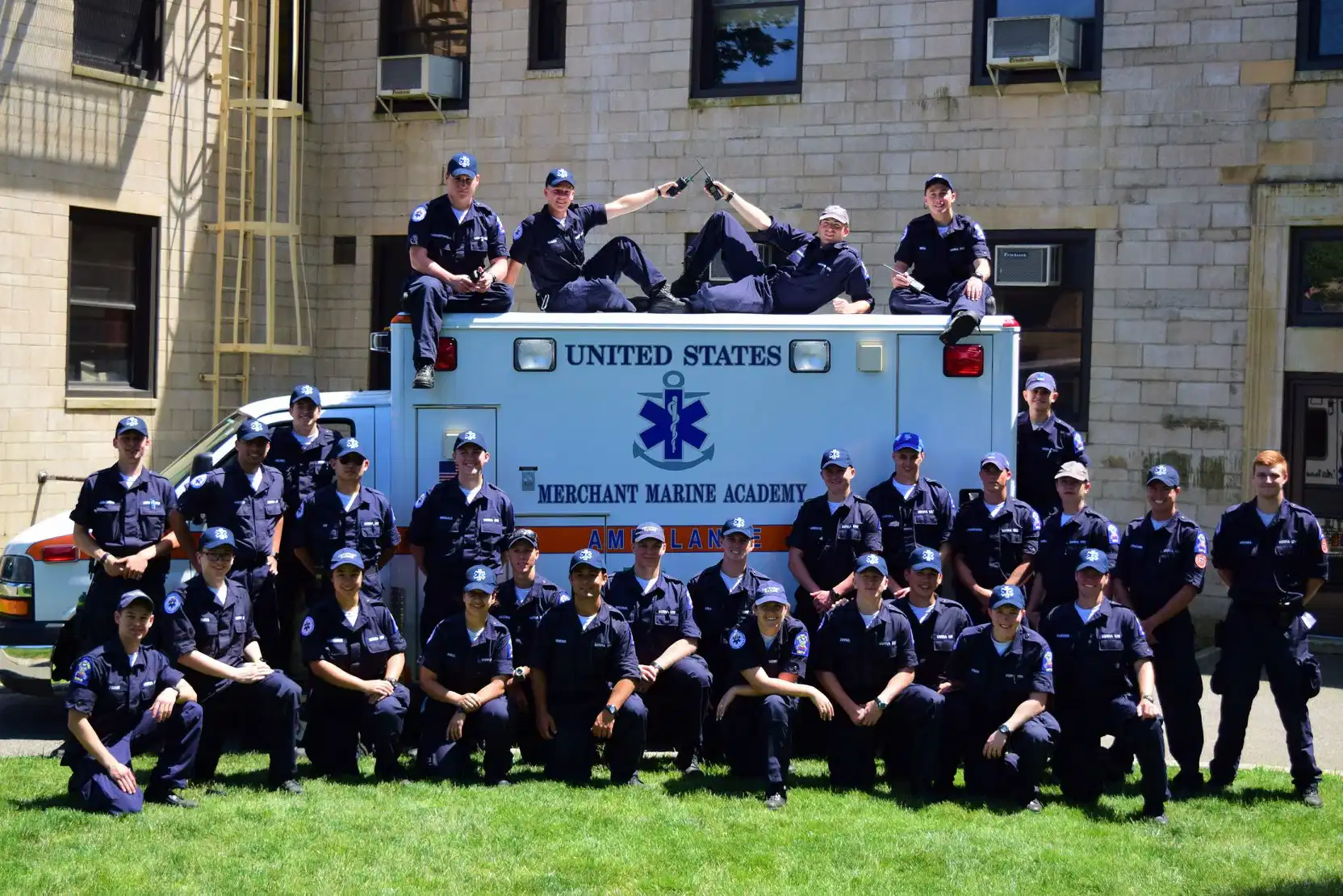
Once your application is far enough along, USMMA schedules you for a physical exam reviewed by the Department of Defense Medical Examination Review Board, known as DoDMERB. This board decides whether you meet the medical standards required for a federal service academy, and it can request follow-up tests or documentation if something in your file needs a closer look.
Alongside DoDMERB, you’ll also complete the Candidate Fitness Assessment, a physical test covering events like running, push-ups, sit-ups, and a basketball throw. An authorized evaluator has to administer and certify it, and that evaluator can’t be a parent.
How smoothly this part goes depends on your health history, but there’s a practical takeaway either way. Train specifically for the CFA events well ahead of time, and schedule your appointment early enough to leave room for a retest if your first attempt falls short. Waiting until the deadline crunch to book a physical exam is one of the more avoidable mistakes applicants make.
What Is Life Like as a Midshipman After Acceptance?
Getting the appointment letter is a huge milestone, but it’s really the start of a demanding four years. Midshipmen live under a regimented, military-style structure on campus, on top of the same technical coursework you’d find at a rigorous engineering or maritime program.
Then there’s Sea Year, which sets USMMA apart from a typical college experience. Midshipmen spend roughly a year training aboard commercial vessels, often visiting multiple countries and working alongside licensed merchant mariners in real operating conditions. It’s genuinely unlike anything most college students will ever do.
In my experience talking with families going through military and academy pipelines, the students who thrive at Kings Point are the ones who understood, going in, that this isn’t a normal college. It’s a service commitment wrapped inside a degree program, and treating it as anything less tends to catch people off guard around sophomore year.
Graduation brings a Bachelor of Science degree, a Coast Guard license, and a commission, plus that service obligation in the maritime industry or military. For the right candidate, it’s one of the most direct paths into a licensed, well-compensated maritime career in the country.
Merchant Marine Academy FAQ
Is the Merchant Marine Academy really tuition-free?
Yes, for the core costs. The federal government pays tuition, room, board, uniforms, and textbooks for every midshipman. You’ll still cover Midshipman Fees for personal services and a handful of one-time items before arrival, like a passport, a TWIC card, and a plebe kit. Compared to almost any other four-year degree, the out-of-pocket cost is small. The bigger commitment isn’t financial, it’s the service obligation you take on after graduation.
Do you need a nomination even if your test scores are excellent?
Yes, without exception. Strong academics get your file through USMMA’s own review, but the congressional nomination is a completely separate requirement handled by your Senators’ and Representative’s offices. No amount of GPA or SAT score substitutes for it. Applicants sometimes assume a nomination is a formality once their academics are strong, and that assumption causes real problems when they start the process too late.
What happens if you don’t get a congressional nomination?
Without a nomination, USMMA cannot offer you an appointment, regardless of how strong the rest of your file is. Because each office only forwards a limited number of names, it’s worth applying to all three of your eligible nominators, your two Senators and your Representative, to maximize your chances. If a nomination doesn’t come through in one cycle, some candidates reapply the following year with a stronger file and an earlier start.
Can prior-service members or college students apply to USMMA?
College students can apply if they maintain at least a 2.5 GPA, carry a full-time course load, and complete specific math, science, and English coursework, along with recommendations from college instructors. The core age and citizenship requirements still apply. If you’re weighing USMMA against enlisting first or attending a different program, it’s worth talking through your specific situation with an academy admissions counselor or a nominating office directly, since individual circumstances vary quite a bit.
Service Academy Admissions, Step by Step
- Secure a congressional nomination
- Pass the Candidate Fitness Assessment
- Clear the DoDMERB medical exam
- Compare acceptance rates: West Point, Naval Academy, Air Force Academy, Coast Guard Academy, Merchant Marine Academy
Where This Leaves You
The merchant marine academy isn’t a hard school to find information about, but it is an easy one to misjudge from the outside. The acceptance rate headline number matters less than most applicants think, and the nomination process matters more.
If you’re serious about applying, start the nomination conversations with your Senators and Representative now, not after your USMMA application is polished. Build your academic file around the calculus, physics, and chemistry the Academy explicitly wants, and schedule your medical exam and fitness assessment early enough to handle a retest if you need one.
For more resources on preparing for military academies, ROTC programs, and the broader enlistment process, our military education resource hub covers the steps that come before and after this one. Worth pausing on that for a second: the path into Kings Point runs through several offices outside the Academy itself, and treating the whole process as one application is the single most common mistake families make.

William Johnson writes about U.S. military training and enlistment for Servicemembers Opportunity Colleges. His work covers topics such as boot camp, ROTC, the ASVAB test, military pay, and what to expect during basic training, with a focus on giving recruits and their families clear, practical information about military life.
Sources
- U.S. Merchant Marine Academy. “Admissions.” USMMA.edu, 2026.
- U.S. Merchant Marine Academy. “Fees and Expenses.” USMMA.edu, 2025.
- College Board. “United States Merchant Marine Academy Admissions.” BigFuture, 2026.
- College Tuition Compare. “USMMA Acceptance Rate: Trends & Admission Statistics.” CollegeTuitionCompare.com, 2026.
- Gain Service Academy Admission. “Merchant Marine Academy (USMMA) Admissions & Requirements.” GainServiceAcademyAdmission.com, 2026.
- U.S. Merchant Marine Academy. “Tuition and Related Fees.” USMMA Academic Catalog, 2026.