
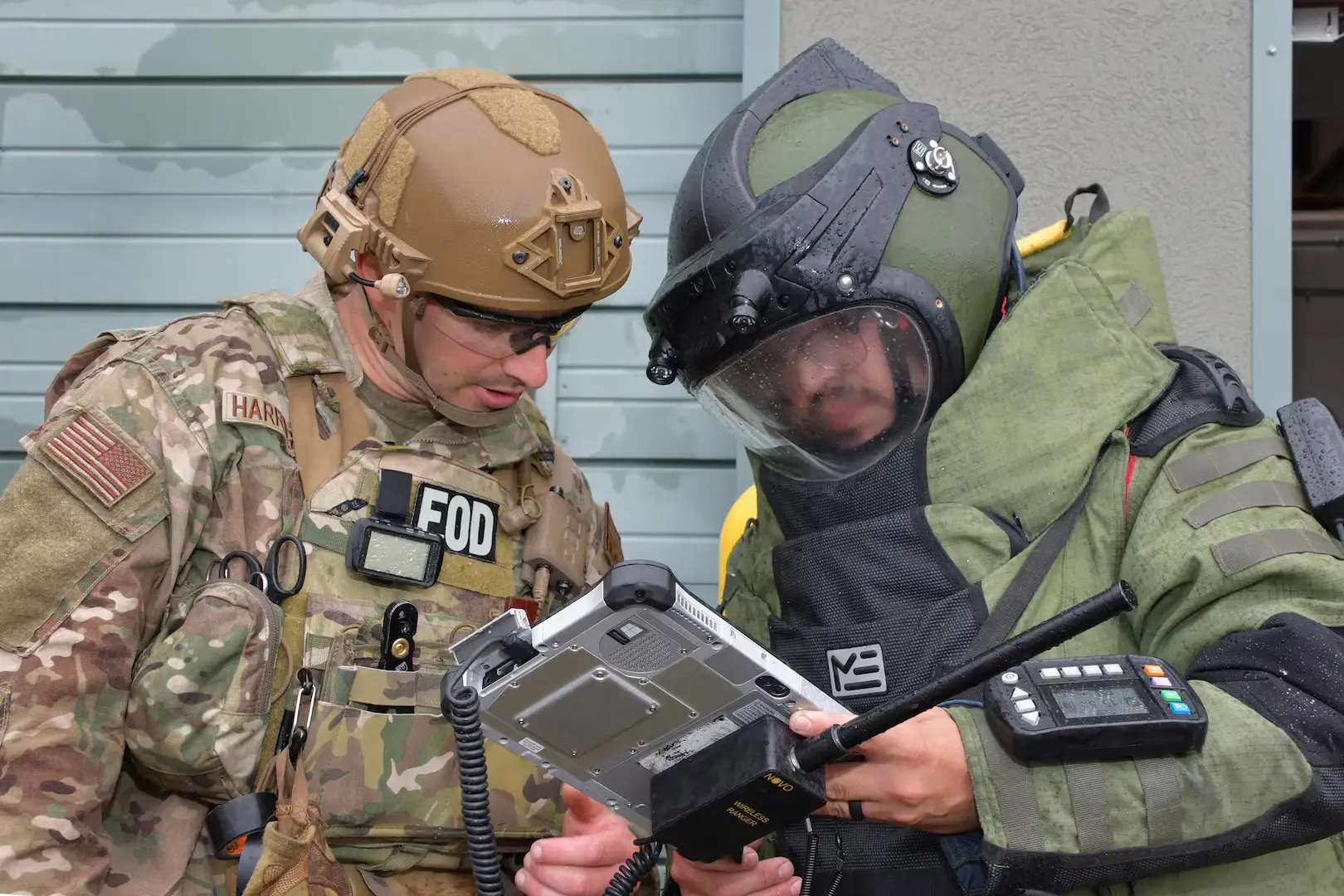
EOD stands for Explosive Ordnance Disposal, the military specialty responsible for finding, identifying, and safely disposing of bombs, mines, and other explosive threats. The Army, Navy, Air Force, and Marine Corps each have EOD technicians, and they all train together at one joint school. This article breaks down the official definition, what the job actually involves, and how it differs from a civilian bomb squad.
If you’ve seen the term EOD attached to a military job listing or a news story about a roadside bomb, you’ve probably wondered what it actually means. The short answer: EOD stands for Explosive Ordnance Disposal, and it’s one of the most demanding specialties in the U.S. military.
In my work covering military careers for recruits and their families, EOD comes up constantly because people confuse it with the local police bomb squad. It’s related, but it’s not the same thing. Let’s clear that up.
This guide walks through the official definition, what the job covers day to day, where the training happens, and how EOD is organized across each branch. By the end, you’ll know exactly what someone means when they say EOD, and why the term carries so much weight inside the military.
In This Article
- What Does EOD Actually Mean?
- What Is the Official EOD Definition?
- What Do EOD Technicians Actually Do?
- Where Is EOD Training Conducted?
- How Is EOD Organized Across the Four Branches?
- How Is EOD Different From a Civilian Bomb Squad?
- Why Has the EOD Mission Expanded Over Time?
- Frequently Asked Questions
- Where This Leaves You
What Does EOD Actually Mean?
What is EOD? It’s the abbreviation for Explosive Ordnance Disposal, the military job field that finds, identifies, and safely disposes of bombs, mines, artillery shells, and improvised devices. That’s the whole term spelled out, and every letter matters.
Ordnance means military munitions of any kind: bombs, missiles, grenades, mines, and anything else designed to explode. Disposal means getting rid of the threat safely, whether that’s a controlled detonation or carefully disarming the device by hand.
So the eod meaning boils down to this: it’s the people and the process behind making explosive threats stop being threats. But here’s the thing. That single sentence hides an enormous amount of training, risk, and technical skill.
The letters also show up outside a military context, like in a news headline about a suspicious package downtown. Usually that’s shorthand borrowed from the military term, even when the responding unit is technically a civilian bomb squad rather than military EOD.
The abbreviation itself has stayed consistent for decades. What’s changed is the scope of what EOD technicians are trained and equipped to handle, which we’ll get into further down.
What Is the Official EOD Definition?
Here’s the eod definition straight from the source. The Army’s official EOD mission definition lays out a six-step process: find the threat, confirm what it is, assess the danger it poses, neutralize it, learn what you can from it, and get rid of it. That mission runs during both peace and war.
Each branch with an EOD career field uses nearly identical language to define EOD, just with small wording differences. The Navy’s version emphasizes conventional, chemical, biological, nuclear, and underwater ordnance. The Marine Corps version adds neutralizing hazards from foreign and domestic devices.
Worth pausing on that for a second. This isn’t marketing copy written for recruiters. It’s the operational definition used to train, staff, and deploy EOD units worldwide.
“Responsible for detecting, identifying, evaluating, rendering safe, exploiting, and disposing of explosive ordnance.”
Office of the EOD Commandant, U.S. Army Ordnance Corps
That render-safe language is doing a lot of work in the official definition. It’s not just about blowing things up. Technicians are trained to disarm devices intact whenever possible, since intact ordnance can be studied to protect future teams.
The word exploiting matters too. When EOD teams recover an intact improvised device, they often preserve it for forensic analysis, which can reveal who built it and how. That intelligence gets passed along to counter-IED task forces, not just filed away.
None of this is optional or improvised on the spot. Every step follows written technical procedures, reviewed and updated as new threats show up in the field.
What Do EOD Technicians Actually Do?
EOD technicians handle a wider range of threats than most people assume. The job isn’t limited to old landmines or artillery duds left over from past wars.
The Army’s 89D specialist description paints a job built around finding, defusing, and destroying ordnance, everything from conventional shells to chemical and nuclear devices, both American and foreign-made. It also lists support for VIP protection details tied to the Secret Service and State Department. That’s a much bigger scope than a typical bomb squad call.
Day to day, the work usually falls into a few core categories:
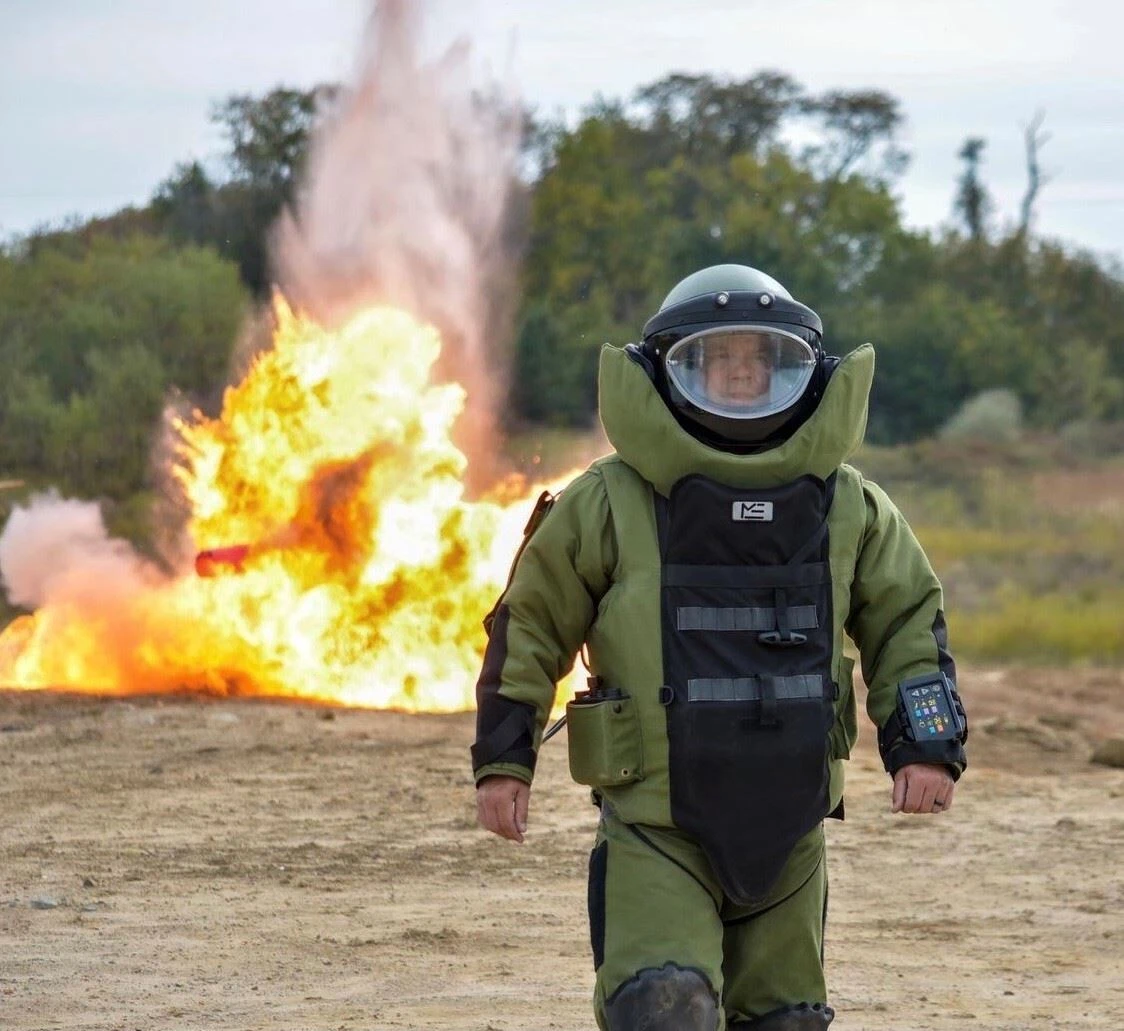
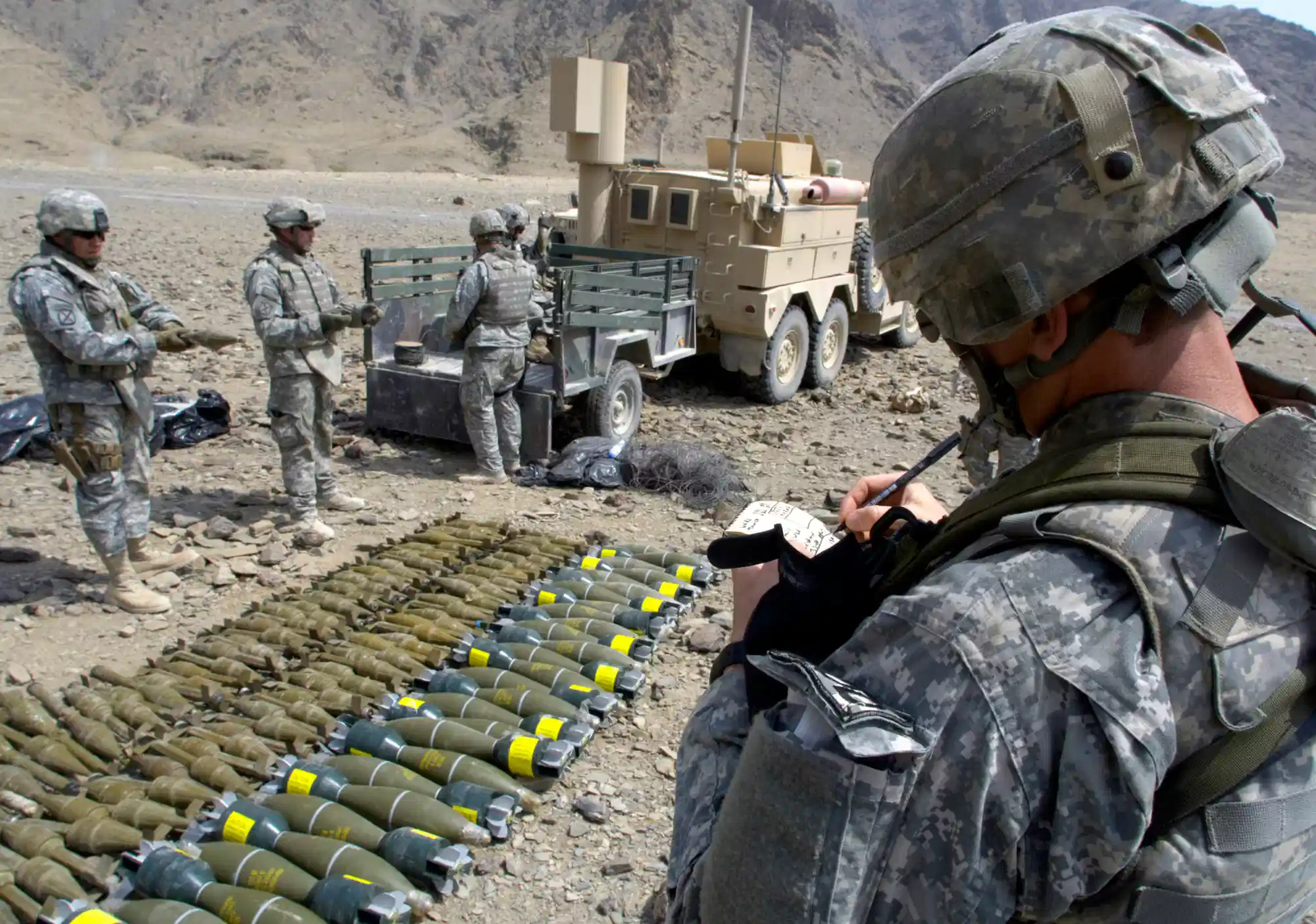
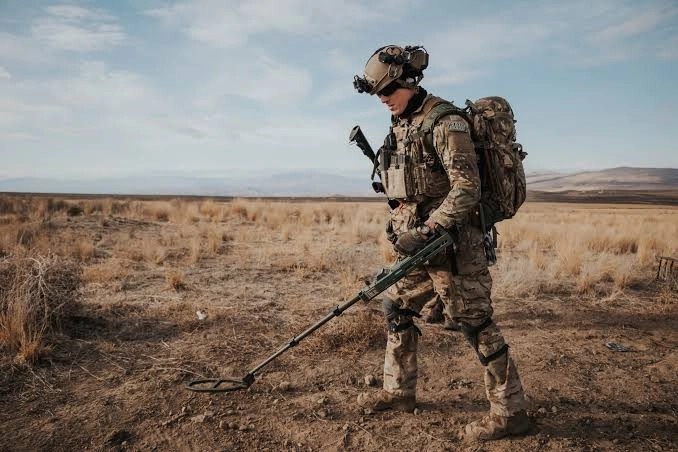
- Locating and identifying unexploded ordnance, from old artillery shells to modern precision munitions
- Rendering safe improvised explosive devices, often using remote-controlled robots
- Disposing of chemical, biological, radiological, and nuclear (CBRN) threats
- Supporting dignitary protection and special events alongside civilian law enforcement
- Conducting underwater ordnance recovery, mostly a Navy EOD responsibility
And it gets more complicated. Many EOD technicians also deploy alongside special operations units, providing route clearance and post-blast analysis in combat zones. That’s a separate skill set from the disposal work most people picture.
Post-blast analysis means examining what’s left after an explosion to figure out the device type, the materials used, and sometimes the network behind it. It’s closer to forensic investigation than demolition work, and it takes a very different kind of patience.
Not every mission involves combat. A lot of EOD work is domestic: clearing unexploded ordnance on old training ranges, supporting Secret Service details, or responding to a homeowner who dug up an old artillery shell in the backyard.
Where Is EOD Training Conducted?
Almost every EOD technician in the U.S. military, regardless of branch, ends up at the same school. That’s the Naval School Explosive Ordnance Disposal, known as NAVSCOLEOD, at Eglin Air Force Base in Florida.
NAVSCOLEOD runs under Navy leadership as a joint EOD training center, but instructors and students come from all four branches. The curriculum spans entry-level basic courses through advanced technical training, and it’s open to selected partner-nation personnel too. The school moved to Eglin from Indian Head, Maryland, and officially opened there on June 24, 1988.
Before reaching NAVSCOLEOD, candidates usually complete a service-specific prep course first. Army candidates go through Phase 1 at Fort Lee, Virginia, roughly seven weeks of bomb suit testing, explosives fundamentals, and munitions identification, before moving on to the joint school.
The basic course itself runs around eight months, though Navy students train longer, about 200 academic days compared to 143 for the other three services. That extra time covers underwater ordnance disposal, a Navy-specific requirement.
Air Force candidates follow a similar pattern: basic training, then a preliminary course at Sheppard Air Force Base, then NAVSCOLEOD. Adding that prep course cut down on washout rates significantly, since candidates arrive at the joint school already familiar with the pace and expectations.
Let me explain why the joint format matters. Training every branch together means an Army EOD tech and a Marine EOD tech learn the exact same render-safe procedures, which makes it easier to combine units during real-world operations.
How Is EOD Organized Across the Four Branches?
Every branch runs its own EOD career field with its own job code, even though the training pipeline overlaps. Here’s how the designations break down.
| Branch | Job Code | Common Entry Path |
|---|---|---|
| Army | MOS 89D (enlisted), 89E (officer) | Basic training, then EOD Phase 1 at Fort Lee |
| Navy | EOD Technician rating | Recruit training, physical screening, then dive prep before NAVSCOLEOD |
| Air Force | AFSC 3E8X1 | Basic training, then a preliminary course at Sheppard AFB |
| Marine Corps | MOS 2336 | Lateral move as a corporal or sergeant from another MOS, then EOD screening and NAVSCOLEOD |
Navy EOD technician duties center on finding and neutralizing ordnance underwater as much as on land, covering conventional, chemical, biological, and nuclear threats alongside mines, while working closely with Naval Special Warfare and Army Special Forces. That underwater piece is unique to the Navy program.
The Marine Corps EOD role folds in everything from finding and accessing a device to defusing and destroying it, whether the ordnance is foreign or domestic. Marines can’t enter it straight from recruit training: they reach EOD by lateral move after serving as a corporal or sergeant in another MOS, so the path takes several years of prior service before EOD school starts.
Air Force EOD falls under career field 3E8X1, and airmen in that specialty support both conventional operations and installation security back home. Explosive threats on a domestic Air Force base still fall under EOD jurisdiction, not just deployed missions overseas.
Entry requirements are similar across branches too. Most services want a General Technical score of 110 or higher, normal color vision, and eligibility for at least a Secret clearance, since the job regularly touches classified munitions data.
How Is EOD Different From a Civilian Bomb Squad?
Here’s where it gets interesting. A civilian bomb squad and military EOD share the same core skill set, but they’re not interchangeable, and they don’t operate under the same authority.
Local bomb squads are made up of sworn police officers. Their scope is generally domestic: suspicious packages, fireworks seizures, and support for local law enforcement operations.
Military EOD, by contrast, deploys worldwide and handles a far broader threat category. The Army’s official mission language covers conventional, chemical, biological, radiological, and nuclear ordnance, plus support to allies, federal agencies, and even local law enforcement when the situation calls for it.
So why does this matter? Civilian bomb techs actually train at some of the same joint facilities as military EOD, and some are trained directly by military instructors. Still, the mission, the equipment budget, and the geographic reach are not the same.
Jurisdiction is the other big difference. A city bomb squad answers to local police leadership and works within city or county lines. Military EOD answers up a chain of command that can send a team overseas on short notice.
Funding and equipment access differ too. Military EOD units typically have access to heavier robotics, dedicated bomb disposal vehicles, and CBRN-specific gear that most local police budgets simply can’t support.
Why Has the EOD Mission Expanded Over Time?
The eod definition you read today isn’t the one the military started with. This EOD mission history shows the scope grew by policy decision, not by accident, and it’s worth knowing why.
- 1949: Army bomb disposal squads are formally redesignated as Explosive Ordnance Disposal units
- 1954: The Army’s EOD mission expands to include render-safe and disposal of nuclear weapons
- 1962: The mission expands again to cover chemical and biological munitions
- 1988: NAVSCOLEOD opens at Eglin Air Force Base, Florida, after moving from Indian Head, Maryland
The short answer? EOD kept absorbing new categories of danger as warfare changed. The counter-IED fight in Iraq and Afghanistan pushed the mission even further, turning small EOD detachments into full companies with battalion and group headquarters.
Formation size grew right alongside the mission. Army EOD units went from eight-soldier squads in World War II to twelve-person detachments by the Vietnam era, and eventually to company and battalion structures during the counter-IED years.
Families researching this specialty on military career resources often ask whether the job is still growing. Based on the trend line, yes. Every major conflict since World War II has added responsibility to the EOD mission, not taken it away.
Frequently Asked Questions
What does EOD mean?
EOD stands for Explosive Ordnance Disposal, the U.S. military specialty responsible for locating, identifying, and safely disposing of bombs, mines, and other explosive threats. Every branch of the military, Army, Navy, Air Force, and Marine Corps, has its own EOD career field. Technicians handle everything from old unexploded ordnance to modern improvised explosive devices. The role also includes chemical, biological, and nuclear disposal missions in some cases.
What’s EOD stand for in everyday use?
Outside official documents, people often use EOD loosely to describe anyone who defuses bombs, including civilian police bomb squads. That’s not technically accurate, since EOD is a specific military designation with its own training pipeline and job codes. Civilian units usually go by names like bomb squad or hazardous devices unit instead. Still, the shorthand sticks because the core mission looks similar from the outside.
How long does it take to become an EOD technician?
Most service members spend roughly a year in formal EOD schooling once they enter the pipeline, on top of basic training and any service-specific prep courses. Army candidates complete Phase 1 training before moving on to the basic course at the joint school. Marine Corps EOD is open only by lateral move to corporals and sergeants already serving in another MOS, so Marines spend several years in another job first. After graduation, most technicians spend several more years gaining field experience before they’re considered fully seasoned.
Where This Leaves You
So what does that actually mean for you? If you came here wondering what EOD means in a headline or job posting, now you know: it’s Explosive Ordnance Disposal, one of the most technically demanding and dangerous specialties across the U.S. military.
The definition is consistent across every branch, but the training path, job code, and day-to-day mission vary quite a bit depending on where you serve. What EOD looks like in practice depends heavily on which branch you’re asking about.
The way I look at it, this is a field built on precision, not bravado. Every procedure, every checklist, every render-safe protocol exists because someone paid a steep price to learn it. That’s the setup: understanding the real definition helps you separate the Hollywood version of this job from what EOD technicians actually train and deploy to do.
If you’re researching this specialty for yourself or for a family member weighing enlistment options, start with the official branch pages linked below. They’ll give you the exact entry requirements, current job codes, and training timelines for whichever branch you’re considering.
Sources
- U.S. Army Ordnance Corps. “About EOD.” Office of the EOD Commandant, 2026.
- Department of Defense. “89D – Explosive Ordnance Disposal Specialist MOS.” Army COOL, 2026.
- Department of Defense. “EOD – Explosive Ordnance Disposal Technician.” Navy COOL, 2026.
- Department of Defense. “2336 – Explosive Ordnance Disposal (EOD) Technician MOS.” Marine Corps COOL, 2026.
- Wikipedia. “Center for Explosive Ordnance Disposal & Diving.” 2025.
- U.S. Army Ordnance Corps. “History of EOD.” Office of the EOD Commandant, 2026.

William Johnson writes about U.S. military training and enlistment for Servicemembers Opportunity Colleges. His work covers topics such as boot camp, ROTC, the ASVAB test, military pay, and what to expect during basic training, with a focus on giving recruits and their families clear, practical information about military life.