
Military time runs on a 24-hour clock, from 0000 at midnight to 2359 one minute before the next one. This guide covers how to read military time, write it, and say it out loud, plus the time zone letters and Zulu time system service members use every day. You’ll also get a full conversion chart and the mistakes that trip up almost everyone at first.
You glance at a schedule and see 1745. Is that even a real time? If you’re wondering how do you read military time, the answer is simpler than it looks once you know the pattern.
Military time is the 24-hour clock used by every branch of the U.S. armed forces, plus hospitals, airlines, and emergency services. It replaces the two 12-hour halves of a normal clock with one continuous count from midnight to midnight. Once you see the logic, you’ll never mix up 7 AM and 7 PM on a duty roster again.
In This Article
- What Is Military Time?
- How Do You Read Military Time?
- How Do You Write Military Time?
- How Do You Say Military Time Out Loud?
- Military Time Conversion Chart
- What Do the Military Time Zone Letters and Zulu Time Mean?
- Common Mistakes When Reading Military Time
- Why Military Time Matters for New Recruits and Families
- Getting Comfortable With the 24-Hour Clock
What Is Military Time?
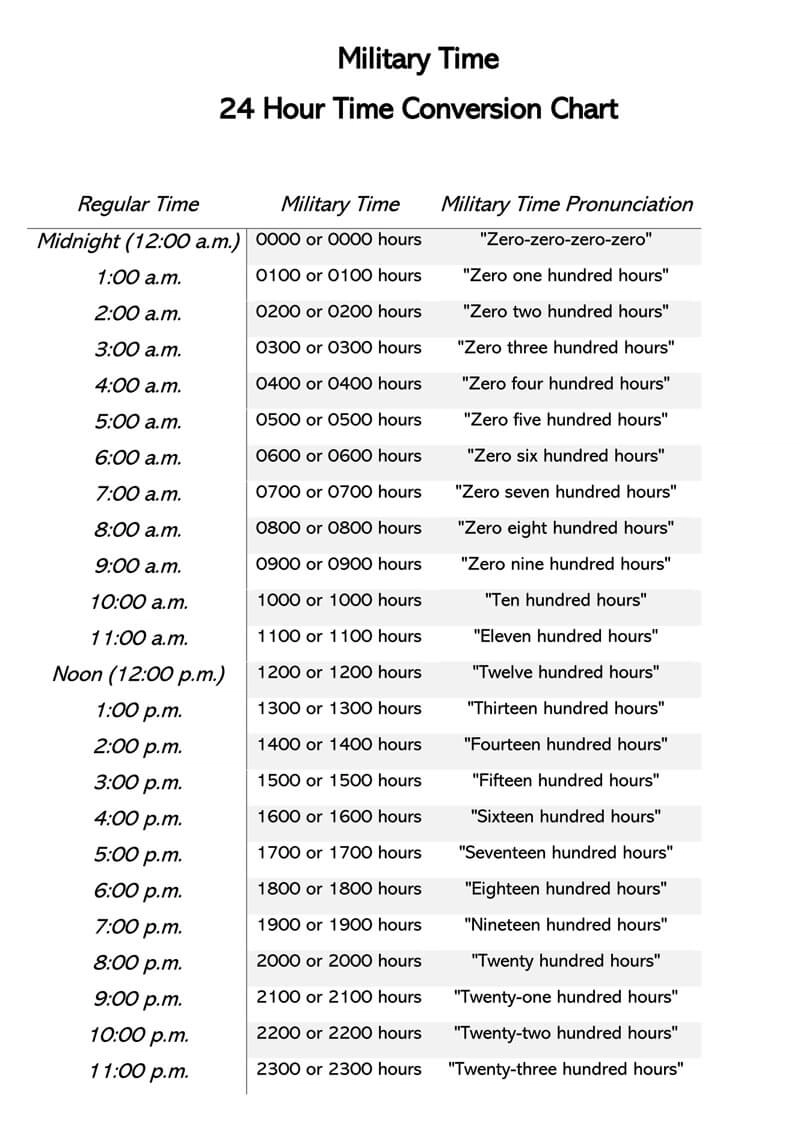
Military time is the 24-hour clock system, and if you’ve ever wondered how does military time work, the concept is simpler than the four digits suggest. Instead of restarting at 1 after noon the way a standard clock does, it just keeps counting up to 23, with 0000 marking midnight and 2359 marking one minute before the next midnight. There’s no AM or PM because there doesn’t need to be.
The system didn’t start with the U.S. military. The Navy was the first American branch to adopt the 24-hour clock in 1920. That’s decades before most people picture when they hear “military time.”
The Army didn’t officially catch up until July 1, 1942, right as the United States entered World War II. The Air Force adopted it in 1947, the same year it became its own branch. So when you hear “military time,” you’re actually hearing three separate adoption stories layered into one habit.
It’s not just a military thing anymore either. Hospitals use it on patient charts, pilots use it in flight plans, and police departments use it on incident reports. Once ambiguity is dangerous, the 24-hour clock tends to show up.
How Do You Read Military Time?
Reading military time comes down to matching the four digits to a time-of-day range. The first two digits are the hour, the last two are the minutes, and there’s no colon in between. Once you know how to tell military time in one range, the rest follow the same pattern.
- 0000 to 0059: this is 12:00 to 12:59 AM, the midnight hour.
- 0100 to 1159: keep the same hour and minutes, add AM.
- 1200 to 1259: keep the same hour and minutes, add PM, this is the noon hour.
- 1300 to 2359: subtract 12 from the hour, keep the minutes, add PM.
Take 1745. Subtract 12 and you get 5, so that’s 5:45 PM. Take 0230 and it’s already in the AM range, so it’s simply 2:30 AM.
In my experience writing about basic training routines, drill instructors teach recruits how to count military time faster than any chart: picture the clock face continuing past noon, so 1 PM becomes hour 13, 2 PM becomes hour 14, and so on through 11 PM, which is 2300. Here’s the part most people miss. Minutes never change in the conversion, only the hour shifts.
How Do You Write Military Time?
Writing military time just reverses the reading process. Take a standard 12-hour time, decide whether it’s AM or PM, then apply one of four simple adjustments. That’s really all there is to it.
- AM times except midnight: keep the hour and minutes, pad the hour to two digits. 5:10 AM becomes 0510.
- 12:xx AM, the midnight hour: write the hour as 00. 12:25 AM becomes 0025.
- PM times from 1 to 11: add 12 to the hour. 3:25 PM becomes 1525.
- 12:xx PM, the noon hour: the hour stays 12. 12:00 PM becomes 1200.
A lot of people get tripped up right at noon and midnight, since those are the two hours where the normal add-12 rule doesn’t apply the way you’d expect. But here’s the thing. Once you remember that 00 always means the midnight hour and 12 always means the noon hour, how to understand military time at those edges stops being a puzzle.
Try it with an odd one: 12:01 AM. It’s one minute after midnight, so the hour is 00, not 12, giving you 0001. That single-digit trap is one of the most common mistakes in this entire system.
How Do You Say Military Time Out Loud?
Saying military time out loud follows its own small set of rules, separate from how you’d write it. For hours with a leading zero, you say “zero” or “oh” before the number. For every other hour, you just say the number as it appears.
So 0630 is “zero six thirty,” and 1415 is “fourteen fifteen.” When the time lands on the exact hour, you usually add “hundred” instead of the minutes: 1500 becomes “fifteen hundred,” and 0100 becomes “zero one hundred.” Some branches drop the word “hours” at the end entirely and just say the numbers.
When you say military time on a radio call, the goal is always the same: numbers first, zero before single digits, hundred for exact hours. Midnight itself gets special treatment too, spoken as “zero hundred” or simply “midnight.” Get comfortable with that pattern and the pronunciation stops feeling like a foreign language.
Military Time Conversion Chart
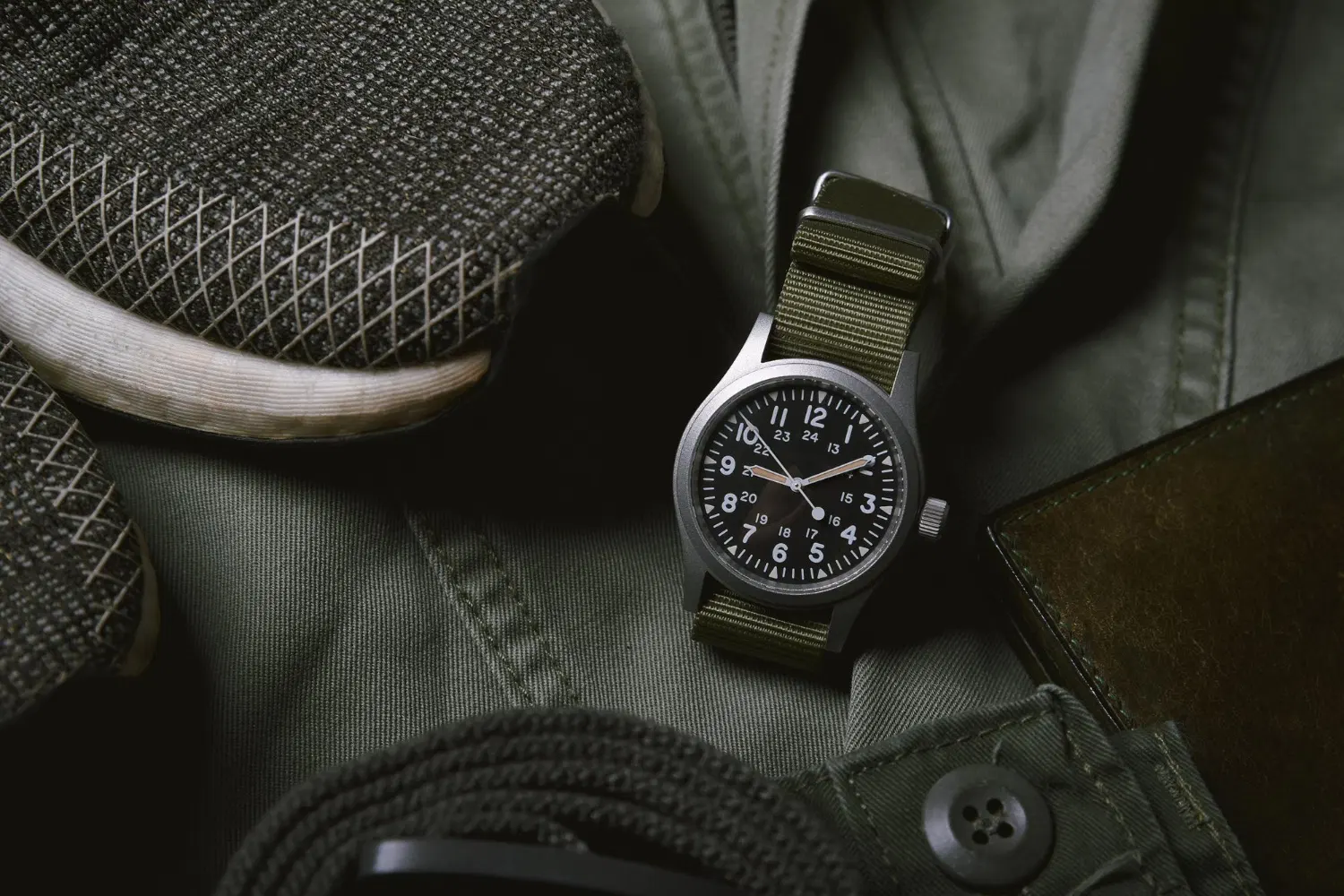
Sometimes converting military time isn’t about math at all; it’s a chart you can scan in two seconds. Below is the full 24-hour breakdown next to its 12-hour equivalent.
| Military Time | 12-Hour Time | How You’d Say It |
|---|---|---|
| 0000 | 12:00 AM | Zero hundred (midnight) |
| 0100 | 1:00 AM | Zero one hundred |
| 0200 | 2:00 AM | Zero two hundred |
| 0300 | 3:00 AM | Zero three hundred |
| 0400 | 4:00 AM | Zero four hundred |
| 0500 | 5:00 AM | Zero five hundred |
| 0600 | 6:00 AM | Zero six hundred |
| 0700 | 7:00 AM | Zero seven hundred |
| 0800 | 8:00 AM | Zero eight hundred |
| 0900 | 9:00 AM | Zero nine hundred |
| 1000 | 10:00 AM | Ten hundred |
| 1100 | 11:00 AM | Eleven hundred |
| 1200 | 12:00 PM | Twelve hundred (noon) |
| 1300 | 1:00 PM | Thirteen hundred |
| 1400 | 2:00 PM | Fourteen hundred |
| 1500 | 3:00 PM | Fifteen hundred |
| 1600 | 4:00 PM | Sixteen hundred |
| 1700 | 5:00 PM | Seventeen hundred |
| 1800 | 6:00 PM | Eighteen hundred |
| 1900 | 7:00 PM | Nineteen hundred |
| 2000 | 8:00 PM | Twenty hundred |
| 2100 | 9:00 PM | Twenty-one hundred |
| 2200 | 10:00 PM | Twenty-two hundred |
| 2300 | 11:00 PM | Twenty-three hundred |
Bookmark this chart for your first few weeks if you need to, but don’t expect to lean on it forever. Most people stop reaching for a reference within a couple weeks of using the 24-hour clock daily.
A few spots deserve extra attention. Noon is 1200, not 0000, and midnight can show up as either 0000 at the start of a day or 2400 at the very end of one. Those two exceptions cause more confusion than the other twenty-two hours combined.
What Do the Military Time Zone Letters and Zulu Time Mean?
This is the part that explains how military time works once you leave a single time zone. Every time zone on the planet gets assigned a letter, and Z, pronounced “Zulu,” stands for Coordinated Universal Time.
The military time zone letters run from A to M heading east from Greenwich, skipping J, and from N to Y heading west. A pilot in Germany, a ship in the Pacific, and a command post in Virginia can all reference the same Zulu time and know exactly which moment everyone means. Local time still gets used day to day, but Zulu is the shared reference point for anything that spans regions.
“Precise timekeeping is essential for navigation, targeting, and secure military communications.”
Encyclopedia of Military Science, as referenced by Military.com
You’ll also see time written as a date-time group, a string like “141830Z” that packs the day, hour, minute, and zone letter into one block for message traffic. It looks dense at first, but it’s built for speed once you know the four pieces. Radio operators and staff officers use it constantly because it never needs decoding across borders.
Common Mistakes When Reading Military Time
Even after you know the rules, a few specific spots keep tripping people up. Here’s where it gets interesting: almost every mistake happens in the same three or four places, not spread randomly across the clock.
- Reading 0001 through 0059 as PM instead of AM. Anything before 0100 is always AM, no exceptions.
- Forgetting the noon and midnight swap, and treating 1200 like it should be 0000.
- Dropping the leading zero when writing single-digit hours, turning 0500 into an ambiguous “500.”
- Mixing 12-hour and 24-hour formats in the same document, which defeats the entire point of switching.
That last mix-up matters more than people assume, especially in formal messages. Some units avoid writing 0000 for midnight entirely, using 2359 or 0001 instead, since the official date-time group format treats the day boundary as a common source of errors. Small as it sounds, one wrong digit at midnight can shift an entire report to the wrong day.
The fix for all of this is repetition, not memorization tricks. Write out a few real times from your own day using the 24-hour format for a week, and the mistakes above stop happening almost automatically.
Why Military Time Matters for New Recruits and Families
For anyone stepping into boot camp, ROTC, or any structured military program, the clock changes on day one. Wake times, formation times, and duty rosters all run on the 24-hour format, so how to learn military time stops being optional trivia and becomes part of daily life.
After years writing about enlistment and training timelines, I’ve noticed the recruits who struggle most aren’t bad at math, they just never practiced the format before arriving. A week of writing your own schedule in 24-hour time before you leave for training closes that gap fast.
It also means the schedules, packing guides, and orientation material you’ll run into before you leave will already be written this way. Many military school preparation resources list times in the 24-hour format, so getting comfortable now saves you a step later. Small preparation like this adds up once you’re actually there.
What is military time, explained simply?
Military time is just the 24-hour clock, where the day runs from 0000 at midnight to 2359 one minute before the next midnight. There’s no AM or PM because each hour of the day only appears once. Instead of restarting the count at 1 after noon, it just keeps climbing: 1 PM becomes 1300, 2 PM becomes 1400, and so on. Once you see that single continuous count, the whole system stops looking complicated.
Is learning military time hard for new recruits?
Not really, though it can feel that way for the first few days. Most recruits pick up the reading and writing rules within a week simply from being surrounded by schedules that use it. Learning military time gets easier once you stop translating in your head and start recognizing the four-digit patterns on sight. Practicing with your own daily schedule before arrival speeds up that process considerably.
What’s the easiest way to tell military time?
The easiest shortcut is memorizing four anchor points instead of the full chart: 0000 is midnight, 1200 is noon, 1300 is 1 PM, and 2359 is one minute before midnight. Everything else is just counting up or down from those anchors. Most people find that faster than trying to memorize all twenty-four hours individually. Give it a few days of practice and the anchors alone will carry you through almost any time you see.
How do you convert to military time, step by step?
Start by identifying whether your original time is AM or PM. If it’s AM and not midnight, keep the hour and minutes exactly as they are, just add a leading zero if needed. If it’s PM and not noon, add 12 to the hour and keep the minutes the same. Midnight becomes 0000 and noon stays 1200, and once those two exceptions are memorized, converting becomes a two-second calculation.
Why does the military avoid writing 0000 for midnight?
Writing 0000 for midnight can create confusion about which day an event actually happened on, since midnight sits right at the boundary between two dates. To avoid that ambiguity, many units write 2359 for the very last minute of a day or 0001 for the first minute of the next one. This keeps every timestamp clearly attached to a single, unambiguous date. It’s a small formatting choice, but in logs and official reports, it prevents real confusion about sequencing events.
Getting Comfortable With the 24-Hour Clock
Military time isn’t actually complicated, it’s just unfamiliar the first time you see it written out. The rules are consistent, and the only real exceptions sit at noon and midnight.
Let me explain. Write down your own schedule in 24-hour format for a few days, and use the conversion chart above when you get stuck. Within a week or two, the four digits will read as naturally as a normal clock face ever did.
So why does this matter? It’s one of dozens of small habits that make military life run on schedule, and getting it right early removes one more thing to think about later.
Once it clicks, you’ll never look at a normal clock quite the same way again.
Sources
- Wikipedia. “24-hour clock.” Wikimedia Foundation, 2026.
- Wikipedia. “Military time zone.” Wikimedia Foundation, 2026.
- Wikipedia. “Date-time group.” Wikimedia Foundation, 2026.
- SlashGear. “When (And Why) Did Armies Start Using 24-Hour Military Time?” 2025.
- Theisen, Tiffini. “What Is Military Time?” Military.com, 2022.

William Johnson writes about U.S. military training and enlistment for Servicemembers Opportunity Colleges. His work covers topics such as boot camp, ROTC, the ASVAB test, military pay, and what to expect during basic training, with a focus on giving recruits and their families clear, practical information about military life.