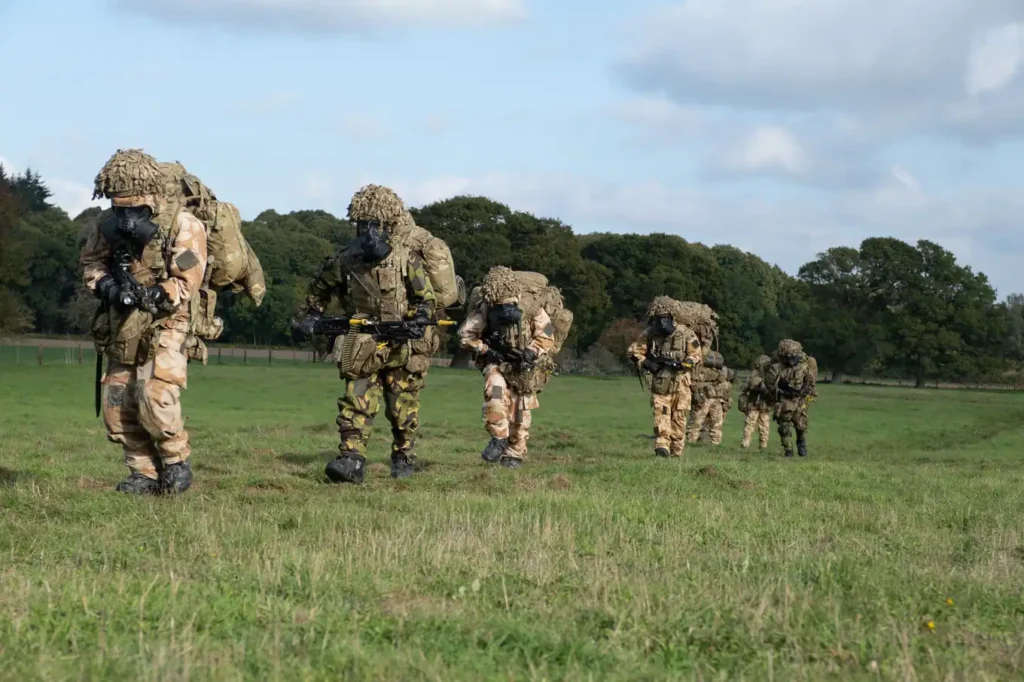


Navy OCS is the Navy’s 13-week officer course in Newport, Rhode Island, and its graduates are commissioned as Ensigns. The age limit depends on the job: the cutoff at commissioning is 29 for Surface Warfare, 32 for pilots, 35 for Intelligence, 37 for Supply and Public Affairs, and 42 for SEAL, EOD, Cyber and JAG. At 25 every one of the 15 OCS programs is open; at 32, 11 are; at 37, only 7.
Those figures come from the 14 current Program Authorizations covering 15 active-duty OCS designators, read on October 17, 2026. So the honest answer to most Navy OCS questions starts with another question: which designator?
Navy OCS at a glance:
| Item | Short answer |
|---|---|
| Where | Officer Training Command Newport, Naval Station Newport, RI |
| Length | 13 weeks, 4 phases |
| Basic eligibility | Bachelor’s degree; U.S. citizen by commissioning |
| Age limit at commissioning | 29–42, depends on designator |
| Qualifying test | OAR (pilot/NFO: full ASTB-E) |
| Pay during OCS | E-5 for most civilians |
| Classes | Graduate roughly every three weeks |
| Result | Commission as Ensign (O-1) |
What Is Navy OCS, and How Is It Different From ODS?
Navy Officer Candidate School is a course run by Officer Training Command Newport at Naval Station Newport, Rhode Island. Candidates arrive as civilians or enlisted sailors and leave as commissioned officers. OTC Newport describes OCS as one of four officer training schools under its command.
Where is Navy OCS? At Officer Training Command Newport in Rhode Island, which is also where Officer Development School (ODS) takes place.
The difference is who walks in the door. Navy Recruiting Command calls ODS “a five-week course in Newport, Rhode Island” for people who already have professional skills, such as physicians, attorneys, clergy and engineers. Its OCS page adds the key line: “These Officers are already commissioned before attending ODS.”
OCS works the other way around. Candidates train first and are commissioned only at the end.
OCS vs ODS: Navy officer courses compared
| OCS | ODS | |
|---|---|---|
| Length | 13 weeks | 5 weeks |
| Who attends | Candidates without a commission (civilians, enlisted) | Professionals such as physicians, attorneys, clergy, engineers |
| Commission status | Commissioned at graduation | Already commissioned before attending |
| Location | Newport, Rhode Island | Newport, Rhode Island |
The Naval Academy and NROTC are the other two main routes to a Navy commission. They run on their own timelines and rules, so nothing below applies to them.
Navy OCS Age Limit: Why There Is No Single Number
The Navy OCS age limit is set designator by designator, and the cutoffs run from 29 to 42 at commissioning. Each Program Authorization (PA) states its own age limit. Of the 79 PAs on the MyNavyHR index, 14 Program Authorizations cover 15 active-duty OCS designators.
| Designator | PA (date) | Minimum age | Maximum age at commissioning | Age waiver |
|---|---|---|---|---|
| Surface Warfare (SWO) 1160 | 100 (Jun 2025) | 18 | Under 29 | 29–32 (CNRC) |
| Nuclear (NUPOC) 1170/1160 | 100A (Mar 2025) | 19 | Under 29 | Up to 31 (OPNAV N133) |
| Pilot 1390 / NFO 1370 | 106 (Mar 2025) | 18 | Not passed 32nd birthday | Yes, age is the only waiver (CNRC) |
| Intelligence 1830 | 108A (Jul 2025) | 18 | Under 35 | None |
| Civil Engineer Corps 5100 | 104 (Mar 2025) | 19 | Under 36 | Up to 42 |
| Supply Corps 3100 | 102 (Jul 2025) | 18 | Under 37 (prior service: before 42nd birthday) | Check the PA |
| Public Affairs 1650 | 103 (Oct 2024) | 19 | Not passed 37th birthday | Check the PA |
| SEAL 1180 | 100D (Sep 2020) | 19 | Not passed 42nd birthday | Check the PA |
| EOD 1190 | 100E (Jul 2025) | 19 | Not passed 42nd birthday | Check the PA |
| Oceanography 1800 | 108B (Feb 2025) | 18 | Under 42 (SWO-Oceanography option: not passed 29th) | Check the PA |
| Cryptologic Warfare 1810 | 108C (Feb 2025) | 18 | Under 42 (SWO-Cryptologic option: not passed 35th) | Check the PA |
| CSWO 1820 | 108D (Jul 2026) | 18 | 42 | Check the PA |
| Maritime Cyber 1880 | 108E (Feb 2025) | 18 | No older than 42 | Check the PA |
| JAG 2500 (via OCS) | 111B (Nov 2025) | 21 | 42 (must reach 20 years of commissioned service by 62) | To 42 |
Source: MyNavyHR Officer Program Authorizations, accessed October 17, 2026.
Here’s the part most people miss. The age that counts is the age at commissioning, not the age on the application. The SWO PA says a candidate must have “not reached 29th birthday at the expected commissioning date,” and the pilot/NFO PA says “not passed 32nd birthday.”
That changes the math for anyone near a cutoff. A package that goes in before a birthday can still fail the age rule if the commissioning date lands after it.
Here is how many of the 15 designators stay open by age at commissioning:
- Age 25: all 15
- Age 29: 13
- Age 32: 11
- Age 35: 10
- Age 37: 7
- Age 42: none
Seven designators share the top ceiling of 42, and four stop at 32 or below. The median ceiling is 37.
How these numbers were compiled: all 14 PA PDFs on the Navy’s Program Authorizations index, dated September 2020 to July 2026, were read in full on October 17, 2026; PA 106 covers both pilot and NFO. Ages come from paragraph 4, “Qualifications,” and from each PA’s Waivers paragraph. The counts above show how many designators have a ceiling above a given age.
PAs get revised. The version a recruiter has on the day of the application is the one that decides.
What Are the Navy OCS Requirements for Each Designator?
The Navy OCS requirements start with a degree, and every OCS PA asks for one. JAG requires a Juris Doctor from an ABA-accredited school, and the Civil Engineer Corps requires an ABET engineering or NAAB architecture degree. After that, GPA and test minimums differ by designator.
| Designator | Minimum GPA | OAR minimum | Waiver band | Immediate select (ISEL) |
|---|---|---|---|---|
| SWO | 2.75 | 42 | OAR 39–42; GPA 2.5–2.75 | GPA 3.3, OAR 50, age 18–25, TIS ≤ 6 years |
| Supply Corps | 2.75 plus 1 calculus (C) or 2 math courses (B average) | 42 | OAR 40–42; GPA 2.50–2.75 | GPA 3.3, OAR 49 |
| Civil Engineer Corps | 2.7 (waiver 2.5–2.7) | 45 | OAR to 40 | Age 19–36, no waivers |
| Oceanography | 2.8 | 45 | Not stated | Not stated |
| Cryptologic Warfare | 3.0 (waiver to 2.7) | 45 | OAR to 40 | GPA 3.3, OAR 50, TIS ≤ 5 |
| Intelligence | 2.8 | 50 | No waivers | GPA 3.3, OAR 55, TIS ≤ 5 |
| CSWO | 3.0 | 50 | OAR 40–49; GPA 2.5–2.99 | GPA 3.3, OAR 55 |
| Maritime Cyber | 3.0 (waiver above 2.7) | 50 | OAR 40–50 | Not stated |
| Public Affairs | 2.8 | Base minimum not stated | OAR 37–39 only with GPA 3.0 or higher | Not stated |
| EOD | 2.0 | No OAR route | Not stated | Not stated |
Source: MyNavyHR Program Authorizations 100, 102, 103, 104, 100E and 108A–E. TIS = time in service.
Eight designators publish an OAR minimum, and the range is 42 to 50. Immediate Selection lets a candidate bypass the OCS PROREC board under OPNAVINST 1120.13, and the ISEL OAR bar runs from 49 to 55. The 2.75 GPA that circulates online is accurate only for SWO and Supply.
And that’s just one part of it. Several designators skip the OAR entirely:
- NUPOC asks for 1 year of calculus and 1 year of calculus-based physics with a grade of C or better, plus an interview and acceptance by Naval Reactors.
- SEAL candidates go through the Physical Screening Test (PST) and a SEAL Officer Selection Panel.
- EOD applicants are interviewed by an EOD officer.
- Pilot and NFO applicants take the full ASTB-E, covered in the next section.
Citizenship is tied to commissioning. Navy Recruiting Command states: “Must be a U.S. Citizen at time of Commissioning as a Navy Officer.” Federal law says an original regular appointment requires that the person “is a citizen of the United States,” per 10 U.S.C. §532.
That statute does allow a waiver in §532(f), but only for national security and only below the grade of major or lieutenant commander. It isn’t a general path for non-citizen candidates.
Some designators add prior-service and security rules:
- SWO: 8 or more years of prior service makes a candidate ineligible, with a waiver possible from 8 to 10 years.
- Intelligence: enlisted applicants need 144 months of service or less, an SF-86 from the last 2 years, and dual citizenship is reviewed case by case.
- Pilot and NFO: SCI eligibility is required before primary flight training, and civilians who were previously disenrolled from military flight training are ineligible.
Medical and background standards sit in the same Program Authorization requirements that OTC Newport’s FAQ links to. The recruiter applies them to each package.
What OAR Score Do You Need, and Is the ASVAB Involved?
The OAR (Officer Aptitude Rating) is the test that matters for most OCS designators. It has 3 subtests: Math Skills, Reading Comprehension and Mechanical Comprehension. Scores run from 20 to 80 in one-point steps, and NMOTC says the OAR predicts academic performance at OCS.
According to NMOTC’s ASTB-E overview, “Most examinees obtain scores between 40 and 60.” Non-aviation applicants can take only the OAR portion, which runs 1 to 2 hours in APEX. The full ASTB-E takes from 2 hours to 3 hours 15 minutes.
The test is free, allows no calculator, comes in English only, and is offered at more than 250 locations. Here are the rules that catch people out:
- Three attempts, total. The limit covers the current version of the OAR and/or ASTB-E, and after three attempts a candidate is ineligible.
- Thirty full calendar days after the first full test before a retest. That wait can’t be waived.
- A full-battery retest means the whole battery. Scores from different attempts can’t be mixed.
- The latest score counts. The most recent attempt becomes the score of record, even if it’s lower.
- It’s computer-adaptive. No skipping, no going back, a penalty for unfinished items, and NMOTC advises against random guessing at the end.
So why does this matter? Because a weaker retest wipes out a better score, a retest only makes sense after real preparation. A candidate a few points under a designator’s minimum has two tries left at most.
Pilot and NFO applicants take the full ASTB-E. PA 106 (March 10, 2025) sets minimums of AQR 4 / PFAR 5 for pilots and AQR 4 / FOFAR 5 for NFOs. Those minimums are accepted only when the market or an exceptional case justifies it.
Immediate select for aviation is 7/7/7 for pilots and 6/6/6 for NFOs, with a GPA of 3.0. AQR, PFAR and FOFAR are stanines on a 1 to 9 scale. A stanine of 5 equals the 40th to 60th percentile, and a 7 equals the 77th to 89th.
Then there’s the ASVAB. The Program Authorizations set test minimums only for the OAR and ASTB-E, so the claim that OCS requires the ASVAB isn’t supported by them. The ASVAB and its AFQT score belong to the enlisted side of the process.
How Does the Application and Selection Board Work?
Every Navy OCS application goes through Navy Recruiting Command, which manages all officer accession applications. Civilians contact a recruiter. Fleet applicants follow the Navy’s Commissioning Programs guidelines instead.
The application path, step by step:
- Contact a recruiter (civilians) or start through the Commissioning Programs (fleet).
- Choose a designator and read its Program Authorization, the document OTC Newport’s FAQ links as the source of requirements.
- Take the OAR, or the full ASTB-E for pilot and NFO.
- Build the package with the recruiter.
- Go before the PROREC board, or qualify for Immediate Selection and bypass it.
- Get a class date in Newport.
The PROREC board selects for most designators. Timing matters for waivers, because BUPERS-3 does not accept waiver requests less than two weeks before a PROREC board.
A few designators run differently. EOD has an annual officer accession board that convenes in September. Civil Engineer Corps applicants who aren’t selected may not reapply at the next board unless something significant has changed.
Board dates for the other designators aren’t published on OTC Newport’s pages, so the recruiter is the source. Quotas aren’t public either. The PAs say only “Quota: as prescribed by DCNO N1.”
After selection comes a class assignment. Classes are numbered NN-YY, the NN-th class of fiscal year YY, and graduations fall 19.8 to 21 days apart, so roughly one every three weeks. Classes 15-21 and 15-22 graduated 364 days apart, which points to a fixed calendar, but the actual class date still comes from the recruiter.
How Long Is OCS? The 13 Weeks, Phase by Phase
How long is Navy OCS? Thirteen weeks. Navy Recruiting Command describes training “over the course of 13 weeks in Newport, Rhode Island,” and OTC Newport calls it a “13-week program.”
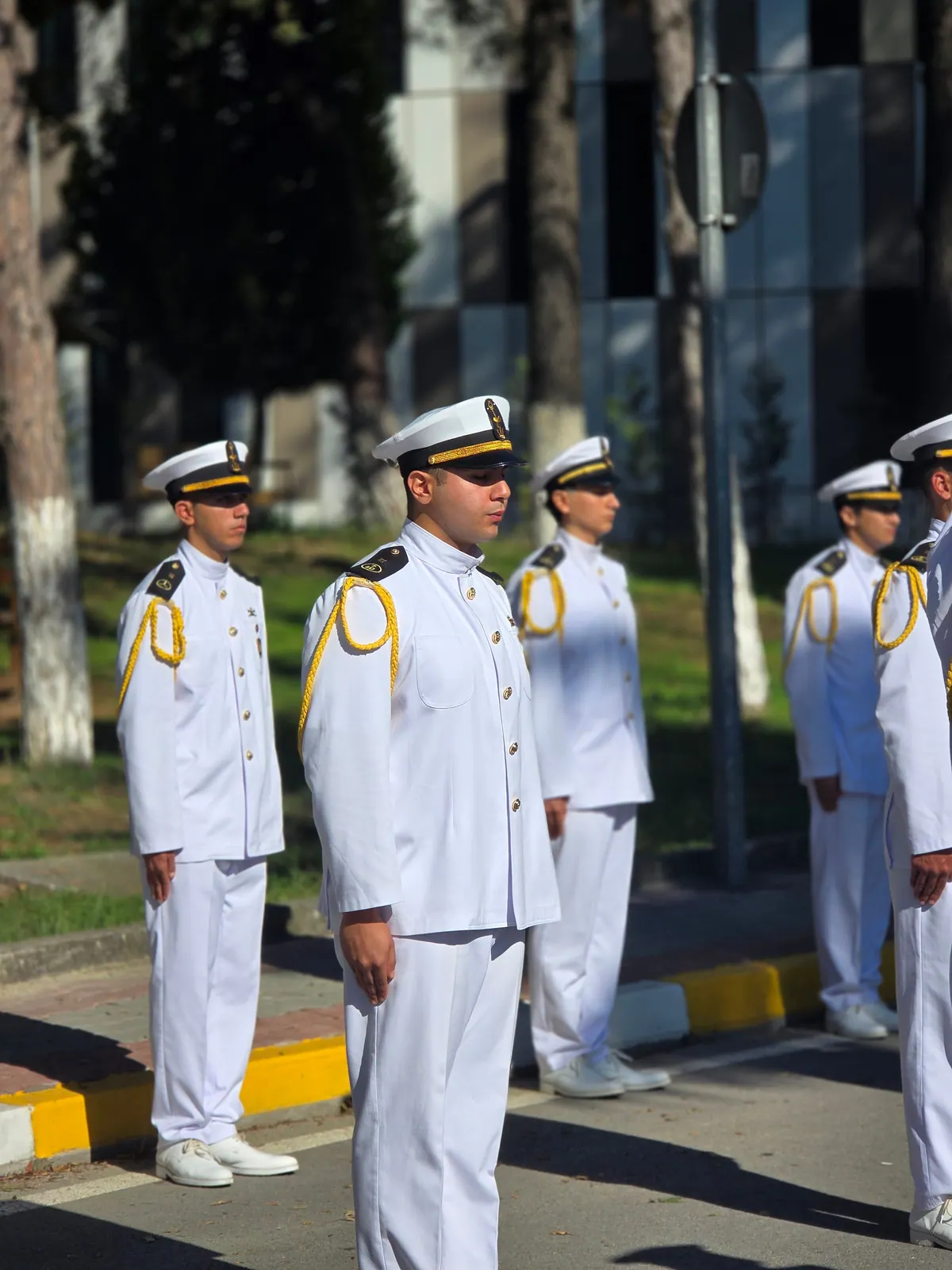
The official OCS phase breakdown splits the course into four phases. Here is Navy OCS week by week, with the milestones the official pages actually list:
| Phase | Weeks | What happens |
|---|---|---|
| Phase 1: Indoctrination | Weeks 1–3 | Check-in on a Saturday, 0800–1600. Week 1: body composition analysis and initial PFA. Week 2: Third Class swim qualification. |
| Phase 2: Junior Officer Candidate | Weeks 4–6 | No week-specific milestones on the official pages |
| Phase 3: Senior Officer Candidate | Weeks 7–9 | No week-specific milestones on the official pages |
| Phase 4: Candidate Officer | Weeks 10–13 | Care packages authorized after Week 10. Liberty weekends in the final phase. Graduation. |
Source: navy.com (phases), OTC Newport FAQ and Physical Fitness Standards (milestones). Some older documents still say 12 weeks; the current length is 13.
OTC Newport’s Academic and Military Training page lists what fills those weeks: Division Officer Fundamentals, Engineering and Weapons, Naval History, Cyber Warfare, Navigation (with ship-handling simulators), Leadership and Ethics, plus daily room and locker inspections, drill, Damage Control and Battle Stations. The same page warns that consistent failure to demonstrate mastery “may result in disenrollment.”
Liberty comes late. OTC Newport’s FAQ says all meals are at Ney Hall except during liberty weekends in the final training phase, so candidates don’t get liberty weekends before then.
Mail from home has a timeline too. Care packages are authorized only after Week 10.
For packing, OTC Newport’s OCS section has an official “Packing List and Issued Items” page. That page is the one to follow, since it’s maintained by the command that runs the course.
What Are the Physical Requirements at OCS?
The Navy OCS physical requirements start with a body composition check and a fitness test at the start of OCS. OTC Newport’s OCS Physical Fitness Standards set a maximum estimated body fat of 26% for men and 36% for women. OTC Newport says arrivals outside those standards don’t start training and are removed.
What gets tested:
- Body composition: height and weight, then the body fat limit above.
- Physical Fitness Assessment (PFA): plank, push-ups (2 minutes) and a 1.5-mile run.
- Third Class swim qualification: deep-water jump, 50-yard swim, 5-minute prone float and coverall flotation.
Failing any PFA at OCS means removal from the class and possible disenrollment. The swim works differently: remedial training continues until the candidate passes, and passing is required before graduation.
Arriving at the minimum is a risky plan. OTC Newport says the initial PFA standards are only the minimum needed for safety, not the minimum fitness requirements for OCS.
The training itself includes runs of about 3 miles twice a week and HIIT strength work on three other days. To graduate, a candidate must pass the Navy PFA to standard and hold the Third Class swim qualification.
Prior service candidates have one extra rule. Every PRT at OCS is the 1.5-mile run, with no alternate cardio or swim option.
Is There an Acceptance Rate, and What Happens If You Fail?
There is no published Navy OCS acceptance rate. The Navy doesn’t publish an OCS selection rate or attrition rate, and neither the PAs, OTC Newport’s pages nor DVIDS give counts of candidates in versus graduates out.
What is published are some graduating class sizes. Class 03-25 graduated 91 candidates in November 2024, Class 04-25 graduated 107 in December 2024, and Class 07-26 graduated 110 in February 2026.
Those numbers can’t produce a rate, because the starting class sizes aren’t public. Any OCS acceptance or dropout percentage seen online should be read with that in mind.
The only published attrition figure nearby belongs to a different stage. NMOTC’s FAQ says 15–20% of naval flight students attrite from aviation training each year. That is aviation training after OCS, not OCS itself.
Falling short in a phase doesn’t automatically end things. Navy Recruiting Command lists four possible outcomes, from “Receive additional instruction or remediation” to disenrollment:
“Repeat portions of training by joining a later OCS class” or “Be disenrolled from the program if minimum standards cannot be met.” (Navy Recruiting Command, Officer Candidate School)
What happens if a candidate doesn’t make it:
- Remediation: extra instruction before any roll-back.
- Repeat: join a later OCS class and redo part of the training.
- Disenrollment: the candidate enters the “Student Pool” for separation processing, typically 2–4 weeks, and can’t leave the same day.
- Fleet (prior service) candidates who drop “may lose their rate and be reassigned based on Navy needs,” per OTC Newport’s FAQ.
What Comes After OCS: Graduation, Pay and Service Obligation
Navy OCS graduation ceremonies are typically held at 1000 on Fridays in Kay Hall and last about 60 minutes. Graduation is the oath and the commission as an Ensign (O-1).

Pay during OCS depends on where a candidate starts. Civilians and enlisted E-4 and below are advanced to E-5 on reporting, while E-5 and above keep their pay grade. Civil Engineer Corps candidates at E-5 and below go to E-6, and JAG civilians enter as E-6.
Pay: during OCS vs after commissioning (2026 base pay)
| Status | Pay grade | Monthly base pay | Over 13 weeks |
|---|---|---|---|
| Most civilians, E-4 and below | E-5 | $3,342.90 | About $9,994 |
| CEC (E-5 and below), JAG civilians | E-6 | $3,401.10 | About $10,168 |
| After commissioning | O-1 (Ensign) | $4,150.20 | n/a |
Source: DFAS 2026 basic pay tables; E-5 rate for 2 years of service or less. Base pay only, without BAH, BAS or taxes.
The jump at commissioning is $807.30 a month over E-5 base pay, or 24.1%.
The service obligation also varies by designator. The framework is 8 years in total under 10 U.S.C. §651, part of which can be served in the reserve, but the active-duty part varies.
Active-duty obligation by designator
| Designator | Active-duty obligation |
|---|---|
| Supply, Public Affairs, CEC, Intelligence, Oceanography, Cryptologic Warfare, JAG | 4 years from commissioning |
| SWO | 4 years or two DIVO tours, whichever is longer (average 5.25 years) |
| NUPOC | 5 years (9 with the COBO/E-7 option) |
| EOD | 4 years from appointment plus 5 years from first operational command, served concurrently |
| SEAL | 4 years from SQT |
| Maritime Cyber | 8 years active duty from appointment |
| CSWO | No separate active-duty figure stated (8 years total) |
| Pilot | 8 years after winging |
| NFO | 6 years after designation |
Source: Service Obligation sections of the Program Authorizations listed above.
Read the pilot line carefully. The real commitment is OCS, plus flight training, plus 8 years after wings, roughly twice the Intelligence obligation.
Disenrollment from flight training follows its own rules, under MILPERSMAN 1540-010.
Frequently Asked Questions
Is Navy OCS harder than boot camp?
They’re different courses, so one scale doesn’t fit both. Enlisted Navy boot camp runs 9 weeks and trains new sailors.
OCS adds academics and leadership evaluation on top of the physical side. A direct comparison of difficulty isn’t something the official sources offer.
Do you get weekends off during Navy OCS?
Not in the early phases. Liberty weekends come only in the final phase of training.
OTC Newport’s FAQ ties them to that last phase. Meals are at Ney Hall.
What rank are you after Navy OCS?
Graduates are commissioned as Ensigns, pay grade O-1. The oath is part of the graduation ceremony.
The commission comes at graduation, not before. Candidates are not officers while they’re still in training.
What should be on a Navy OCS packing list?
The source to use is OTC Newport’s official “Packing List and Issued Items” page. It sits in the OCS section of the command’s website.
Check-in falls on a Saturday, so plan travel around that. The check-in window runs from 0800 to 1600.
Can enlisted sailors go to Navy OCS?
Yes. Enlisted applicants go through the Navy’s Commissioning Programs rather than a civilian recruiter.
Sailors who are E-5 or above keep their pay grade during OCS. The same Program Authorization rules on age, GPA and test scores still apply.
Where This Leaves You
The right move depends on the starting point. Four common situations:
- Turning 34 and wanting to fly: pilot and NFO are out by age. The age table above shows which designators are still open at that point.
- Enlisted with a degree: the Commissioning Programs are the route, and the pay grade carries over.
- High OAR, low GPA: compare the waiver bands in the requirements table. Some designators trade GPA against OAR, and some allow no waivers.
- Physician or attorney: ODS, not OCS, is built for already-qualified professionals. Law students can check the JAG line covering the OCS route.
Either way, the current Program Authorization for the chosen designator and the recruiter who holds it make the final call. This site is independent and not affiliated with the Navy.
Sources
- MyNavyHR, Officer Program Authorizations (index and PA PDFs, accessed Oct 17, 2026)
- NMOTC, ASTB-E Overview and FAQ
- Navy Recruiting Command, Officer Candidate School
- Navy Recruiting Command, Become a Commissioned Officer
- Officer Training Command Newport, OCS Physical Fitness Standards and FAQ
- DFAS, 2026 Basic Pay tables