
The military alphabet assigns a code word to every letter, from Alpha to Zulu, so radio traffic stays clear even under noise and stress. This guide covers where the military alphabet came from, the full A-Z list, and how recruits actually use it during basic training. It also covers common slang built from the alphabet and where you’ll hear it outside the service.
Ask any veteran to spell their last name over the phone and watch what happens. Instead of “S as in Sam,” they’ll say “Sierra.” That habit comes from months of drilling on the military alphabet, and it doesn’t wear off.
The military alphabet, also called the military phonetic alphabet, replaces each of the 26 letters with a distinct code word chosen for clarity over radio. Recruits learn it in the first weeks of training, right alongside rank structure and drill commands. This guide walks through the history, the full A-Z list, and why it still matters decades after it was standardized.
In This Article
- What Is the Military Alphabet, Exactly?
- Where the Military Alphabet Came From
- The Military Alphabet Words: Full A-Z List
- How Recruits Learn and Use the Military Alphabet in Basic Training
- Military Alphabet Slang You’ll Actually Hear
- Where Else the Military Alphabet Shows Up
- What This Means for Your Time in Service
What Is the Military Alphabet, Exactly?
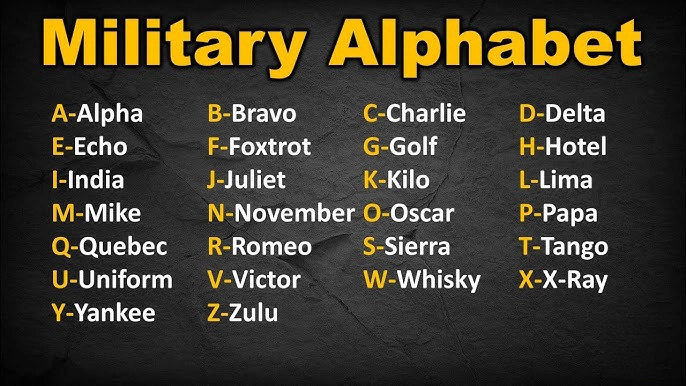
The military alphabet is a set of 26 words, one per letter, used to spell things out clearly over radio or phone. Alpha stands for A, Bravo stands for B, and so on through Zulu for Z. The official name is the military phonetic alphabet, though most people just call it the military alphabet.
Here’s the part most people miss. This isn’t “phonetic” in the linguistics sense at all. Military phonetics, as a formal system, is about giving every letter a word that’s nearly impossible to confuse with another, even through static or a thick accent.
That distinction matters because letters like “B,” “D,” “P,” and “T” sound almost identical over a weak signal. Swap in “Bravo,” “Delta,” “Papa,” and “Tango,” and the confusion disappears. The NATO phonetic alphabet was purpose-built to solve exactly that problem.
Every branch teaches the same 26 words today. There’s no separate “Army version” versus “Navy version” anymore, even though that used to be true decades ago.
Recruits are expected to have it memorized cold within the first couple of weeks. Instructors test it constantly, in formation, on the range, and over the radio.
Some services still hand out laminated reference cards during in-processing. It’s a small detail, but it says a lot about how seriously the military treats this system.
Numbers get folded into the same framework. On a radio, the digit “9” becomes “niner” and “5” becomes “fife,” so they can’t be confused with similar-sounding words under poor conditions. That combination of letters and numbers is what recruits eventually learn to rattle off without thinking twice.
Where the Military Alphabet Came From
The story starts well before World War II. In 1927, the International Telecommunication Union put together the first internationally recognized spelling alphabet, using place names like Amsterdam and Baltimore.
The U.S. military didn’t adopt that system directly. In 1941, it introduced the Joint Army/Navy Phonetic Alphabet, known as “Able Baker” after its first two words. That version stuck through the Second World War and into the early Cold War.
But here’s the thing. After the war, aviation and military users were running on different systems, and that caused real confusion during joint operations. Mismatched phonetic alphabets between allied air forces pushed NATO to lead a formal review in the mid-1950s.
The International Civil Aviation Organization finalized the alphabet used today effective March 1, 1956, after testing pronunciation across 31 countries. NATO adopted it that same year, and the International Telecommunication Union followed in 1959. Only four words from the WWII-era alphabet survived the switch: Charlie, Mike, Victor, and X-ray.
Some sources list the adoption year as 1957. That’s a common mix-up floating around online. The change actually took effect in 1956, with the ITU making it universal three years later.
There’s a civil aviation chapter in this story too. In 1951, the International Civil Aviation Organization adopted a first version for civil aviation, using words like “Coca” and “Metro” instead of “Charlie” and “Mike.” Pilots complained almost immediately, and testing eventually replaced five of those words with the ones still in use today.
A linguist named Jean-Paul Vinay led much of that testing work between 1948 and 1949, checking how each candidate word held up across English, French, and Spanish speakers. That research is a big part of why the alphabet still works so well internationally, decades after it was finalized.
Seeing the full switch laid out side by side makes the “only four words survived” claim easy to check yourself, and it also shows exactly how different the wartime alphabet sounded compared to today’s version, plus how the alphabet still in use on a lot of U.S. police radios compares to both.
| Letter | NATO (1956–present) | WWII "Able Baker" (1941–1956) | APCO Police (traditional) |
|---|---|---|---|
| A | Alfa | Able | Adam |
| B | Bravo | Baker | Boy |
| C | Charlie | Charlie | Charles |
| D | Delta | Dog | David |
| E | Echo | Easy | Edward |
| F | Foxtrot | Fox | Frank |
| G | Golf | George | George |
| H | Hotel | How | Henry |
| I | India | Item | Ida |
| J | Juliett | Jig | John |
| K | Kilo | King | King |
| L | Lima | Love | Lincoln |
| M | Mike | Mike | Mary |
| N | November | Nan | Nora |
| O | Oscar | Oboe | Ocean |
| P | Papa | Peter | Paul |
| Q | Quebec | Queen | Queen |
| R | Romeo | Roger | Robert |
| S | Sierra | Sugar | Sam |
| T | Tango | Tare | Tom |
| U | Uniform | Uncle | Union |
| V | Victor | Victor | Victor |
| W | Whiskey | William | William |
| X | X-ray | X-ray | X-ray |
| Y | Yankee | Yoke | Young |
| Z | Zulu | Zebra | Zebra |
Line the columns up and the four survivors jump out immediately: Charlie, Mike, Victor, and X-ray sit unchanged across all three eras. Everything else, Able became Alfa, Zebra became Zulu, got replaced once testing showed a clearer option existed. The APCO column is why you’ll still hear “Adam” and “Boy” on some police scanners even though the military moved on decades ago; a fair number of departments never fully switched to the NATO standard.
The Military Alphabet Words: Full A-Z List
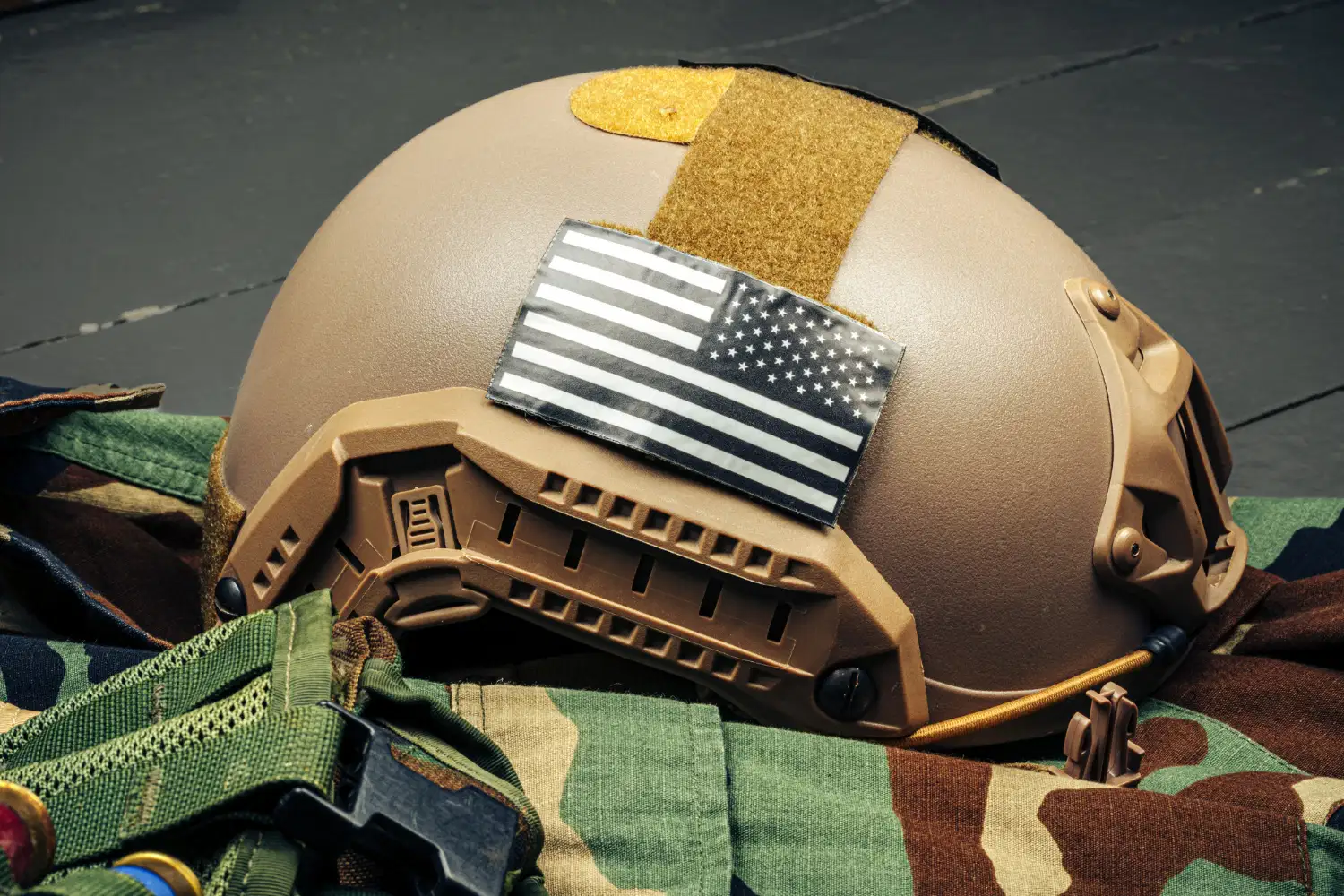
Below is the complete military alphabet list, the same 26 code words used by every U.S. service branch and every NATO country today.
Each word was chosen because it’s hard to mistake for another word, even in a noisy vehicle or over a scratchy radio channel. These military alphabet words also hold up across languages, since the alphabet was tested with English, French, and Spanish speakers during development.
| Letter | Code Word | Pronunciation |
|---|---|---|
| A | Alfa | AL-FAH |
| B | Bravo | BRAH-VOH |
| C | Charlie | CHAR-LEE |
| D | Delta | DELL-TAH |
| E | Echo | ECK-OH |
| F | Foxtrot | FOKS-TROT |
| G | Golf | GOLF |
| H | Hotel | HOH-TELL |
| I | India | IN-DEE-AH |
| J | Juliett | JEW-LEE-ETT |
| K | Kilo | KEY-LOH |
| L | Lima | LEE-MAH |
| M | Mike | MIKE |
| N | November | NO-VEM-BER |
| O | Oscar | OSS-CAH |
| P | Papa | PAH-PAH |
| Q | Quebec | KEH-BECK |
| R | Romeo | ROW-ME-OH |
| S | Sierra | SEE-AIR-RAH |
| T | Tango | TANG-GO |
| U | Uniform | YOU-NEE-FORM |
| V | Victor | VIK-TAH |
| W | Whiskey | WISS-KEY |
| X | X-ray | ECKS-RAY |
| Y | Yankee | YANG-KEY |
| Z | Zulu | ZOO-LOO |
The spellings “Alfa” and “Juliett” are the official ICAO and NATO forms, so the word reads correctly to French and Spanish speakers; most U.S. military writing still uses “Alpha” and “Juliet.” Pronunciations follow the ICAO standard, with capital letters marking each spoken syllable.
Military Numbers and How to Say Them
Numbers are spoken one digit at a time on the radio, and a few digits are deliberately mispronounced so they can’t be confused under static.
| Number | Spoken As | Pronunciation |
|---|---|---|
| 0 | Zero | ZE-RO |
| 1 | One | WUN |
| 2 | Two | TOO |
| 3 | Three | TREE |
| 4 | Four | FOW-ER |
| 5 | Five | FIFE |
| 6 | Six | SIX |
| 7 | Seven | SEV-EN |
| 8 | Eight | AIT |
| 9 | Nine | NIN-ER |
A few of the words look unusual at first glance, like “X-ray” written differently than expected, or “Juliett” with an extra “t.” Those spellings aren’t typos. They’re intentional, designed to survive translation and static alike.
Once it’s memorized, most people never need a written copy again.
Most people pick it up faster than expected by using it in short bursts. Spelling out a grocery list or a street address with the code words a few times a day gets the words stuck in memory within a week or two. Repetition beats cramming every time.
How Recruits Learn and Use the Military Alphabet in Basic Training
New recruits start drilling the alphabet within days of arrival, and instructors expect them to know it cold. It shows up on written tests, in radio checks, and during land navigation exercises.
Think about it this way. A recruit who fumbles a single code word isn’t just embarrassing themselves. Miscommunicating a grid coordinate during a training exercise, or later in the field, can cost real time and, worse, real safety.
That’s why the phonetic alphabet gets folded into so many other skills. Land navigation, radio procedure, even filling out paperwork correctly all lean on the same 26 words. Letters and numbers together become second nature by the end of basic training.
- Learn the 26 words cold, no hesitation, no civilian substitutes like “B as in boy.”
- Practice reading grid coordinates and serial numbers aloud using the code words and phonetic numbers.
- Run radio checks with a battle buddy until the words come out automatically, even under stress.
Official training materials describe the phonetic alphabet as the standard method for transmitting isolated letters, spelling difficult words, and confirming information clearly under difficult conditions.
U.S. Marine Corps Training Command, Radio Communications
In my years covering military training pipelines, the alphabet is one of the first things recruits mention when I ask what surprised them about boot camp. It becomes reflexive fast.
If you’re weighing military training against other education paths, it helps to look at military education resources before making a decision.
The alphabet also connects to more than just radio work. Communications-focused military occupational specialties build entire training tracks around it, but even combat arms and support roles use it daily for reports, logistics, and coordination. Recruits who show up already knowing it tend to move through the early weeks of training with one less thing to stress over.
Military Alphabet Slang You’ll Actually Hear
The military alphabet didn’t stay confined to spelling. Plenty of everyday military slang comes straight from those 26 code words.
“Bravo Zulu,” shortened to “BZ,” is a signal flag code from the Allied naval signal books (ATP 1, later ACP 175) used by NATO navies, where it means “well done.” “Oscar Mike” is used constantly during operations to report status without wasting airtime. Here’s a quick reference for the phrases you’ll actually hear:
| Phrase | Letters Stand For | Meaning |
|---|---|---|
| Bravo Zulu (BZ) | B, Z | Well done; from Allied naval signal books (ATP 1/ACP 175) |
| Oscar Mike | O, M | On the move; used to report status without tying up radio traffic |
| Lima Charlie | L, C | Loud and clear; confirms a transmission came through cleanly |
| Charlie Mike | C, M | Continue mission; formal usage differs slightly from casual use |
| Charlie Foxtrot | C, F | A situation that has fallen apart (a cleaned-up version of a cruder phrase) |
And it gets more complicated. Some of these phrases carry different meanings depending on branch or era. “Charlie Mike” in a formal operations order carries more procedural weight than it does in casual conversation, where it’s often just shorthand for “keep going.”
Where Else the Military Alphabet Shows Up
So why does this matter? Because military and civilian professions rely on the same phonetic alphabet almost everywhere clear spelling counts, from the barracks to the airport tower.
Pilots and air traffic controllers use it for every callsign and clearance. It’s the reason “Delta” gets swapped for “Dixie” at some airports, just to avoid confusing it with Delta Air Lines traffic.
Emergency dispatchers, banks confirming account details, and customer service reps reading back confirmation codes all lean on the same words. Even amateur radio operators around the world learned the same standard once the ITU formally adopted it in 1959.
- Aviation and air traffic control
- Maritime and Coast Guard operations
- Emergency dispatch and law enforcement
- Banking and call center verification
- Amateur radio
Law enforcement is a slight exception worth mentioning, and it’s the one already visible in the comparison table earlier in this guide. Many police departments still use the older APCO alphabet, with words like “Adam” and “Boy” instead of “Alpha” and “Bravo,” even though APCO itself adopted the ICAO standard back in 1974. The logic is identical, even though the actual code words differ from the military version.
The core words rarely change across fields, and that consistency is exactly what makes the system work across borders and professions.
What This Means for Your Time in Service
Learning the military alphabet isn’t optional, and it isn’t just trivia. It’s one of the first real skills recruits build, and it sticks around for an entire career.
Whether you end up in a communications role or something completely unrelated, you’ll use these 26 words more than almost anything else you learn in week one. Grid coordinates, radio checks, even spelling your own name over a bad connection all run through it.
In my experience talking with recruits and their families, the alphabet is usually the first “military thing” that actually feels real. It’s small, it’s concrete, and it’s something you can practice before you ever ship out.
Start memorizing now if basic training is coming up soon. It costs nothing, and it’s one less thing to learn under pressure once you’re there.
Families can get in on it too. Practicing the alphabet together before a recruit leaves for training turns into an easy way to stay connected to what they’re learning, and it gives everyone a shared reference point once letters and phone calls start referencing it.
What Is the Military Alphabet?
The military alphabet is a set of 26 code words, one for each letter, used to spell things out clearly over radio or phone. Alpha represents A, Bravo represents B, and the pattern continues through Zulu for Z. It’s officially called the military phonetic alphabet, and it’s the same system used by NATO forces worldwide. Every U.S. service branch teaches the identical version during initial training.
Why Does the Military Use “Bravo Zulu” and “Oscar Mike”?
Phrases like “Bravo Zulu” and “Oscar Mike” grew out of the military alphabet as shorthand for common ideas. “Bravo Zulu,” or BZ, is a NATO naval signal from the Allied signal books (ATP 1/ACP 175) meaning well done. “Oscar Mike” simply stands for “on the move,” letting troops report status quickly without tying up radio traffic. Over decades of use, phrases like these became informal military slang that outlasted their original technical purpose.
Sources
- Wikipedia. “NATO Phonetic Alphabet.” Wikipedia, 2026.
- U.S. Marine Corps Training Command. “Radio Communications.” Marine Corps Training Command.
- The Week. “How Was NATO’s Phonetic Alphabet Chosen?” The Week, 2022.
- Wikipedia. “Allied Military Phonetic Spelling Alphabets.” Wikipedia, 2025.
- NATO. “The NATO Phonetic Alphabet.” NATO.int, 2026.
- Wikipedia. “APCO Radiotelephony Spelling Alphabet.” Wikipedia, 2026.

William Johnson writes about U.S. military training and enlistment for Servicemembers Opportunity Colleges. His work covers topics such as boot camp, ROTC, the ASVAB test, military pay, and what to expect during basic training, with a focus on giving recruits and their families clear, practical information about military life.