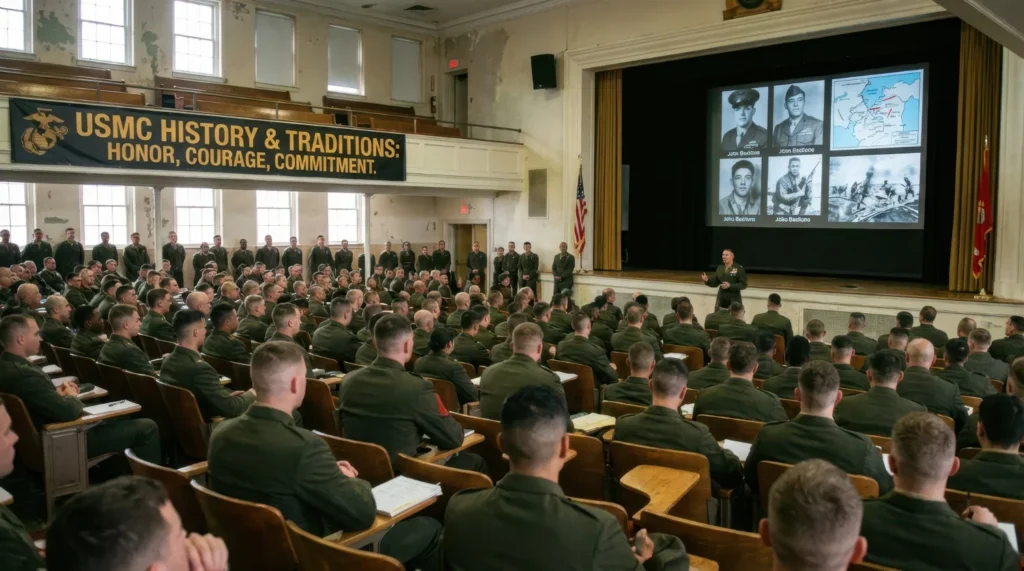


ROTC is a college-based path to an officer commission that lets students earn a civilian degree while training with the Army, Navy, or Air Force. This guide covers how the program is structured, what scholarships actually cover, physical and academic requirements, and how ROTC compares to attending a service academy.
ROTC stands for Reserve Officers’ Training Corps, a college program that trains students to become commissioned officers in the U.S. Army, Navy, Marine Corps, Air Force or Space Force while they earn a degree. Cadets take military science classes and summer training alongside regular coursework, and contracted cadets serve as officers after graduation. Looking for the high school program? See our JROTC guide.
ROTC is one of the most misunderstood pathways into military service. It sits between enlisting and attending a service academy, offering college students a structured route to earn an officer’s commission while completing a civilian degree. Understanding how ROTC actually works, what it pays for, and what it demands helps you decide whether it fits your goals.
In This Article
ROTC Meaning and Basic Structure
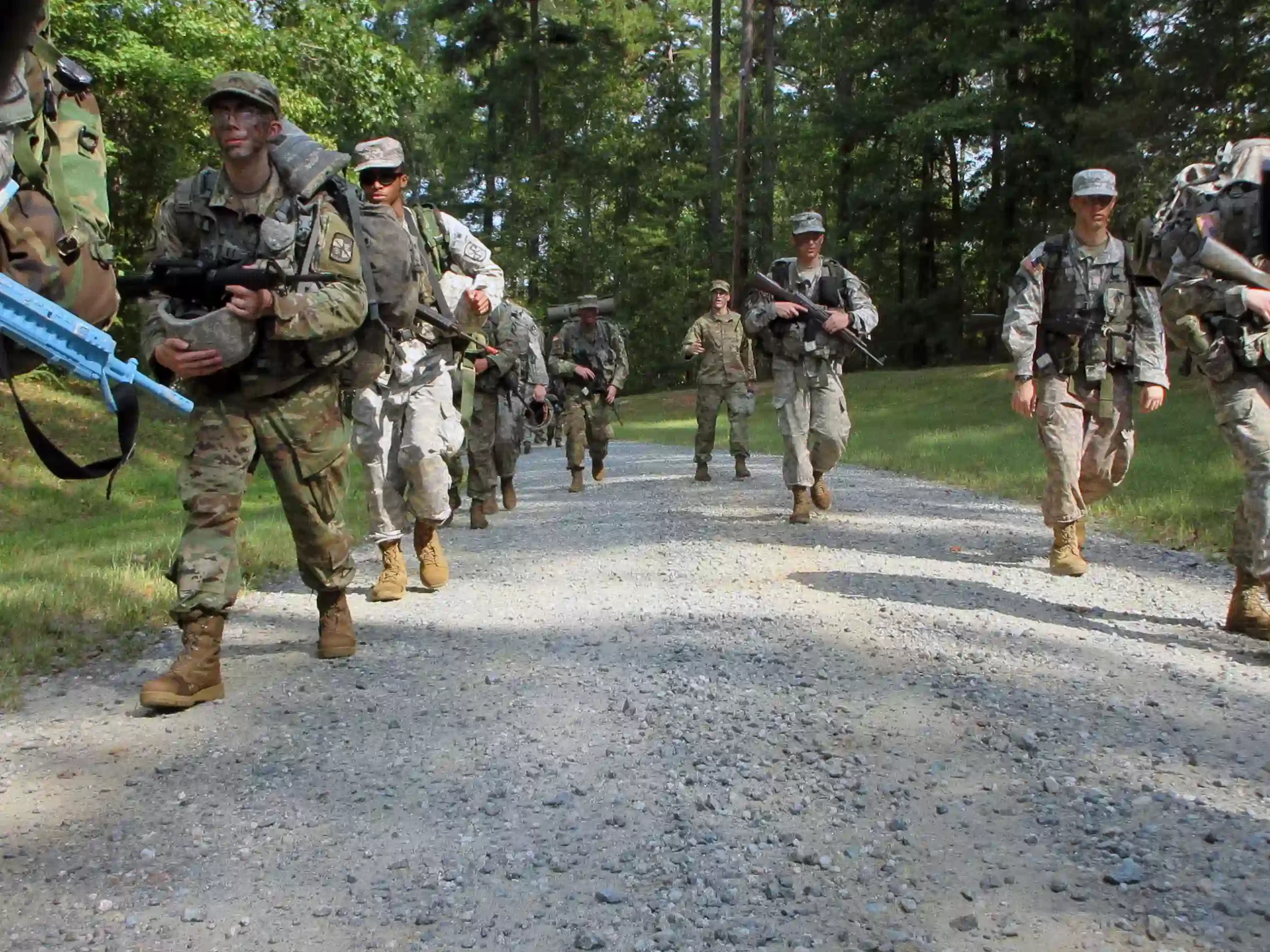
ROTC is a college-based officer training program run by the U.S. Army, Navy (which includes Marines), and Air Force. Participants — called cadets or midshipmen — take military science courses alongside their regular college curriculum and attend leadership training exercises throughout the academic year. Upon graduation and completion of the program, participants receive a commission as a second lieutenant or ensign in their respective branch.
The program does not require students to attend a military college or service academy. ROTC programs operate at hundreds of civilian universities across the country, which means students can pursue any academic major while simultaneously training for an officer career.
The Three ROTC Programs
Army ROTC is the largest of the three programs, operating at over 1,000 colleges and universities nationwide through a host school and consortium model. Navy ROTC covers both Navy and Marine Corps officer tracks and is present at approximately 160 institutions. Air Force ROTC operates at roughly 145 host campuses with additional cross-enrollment arrangements with nearby schools.
Each program has its own structure, physical standards, and scholarship terms, though all three follow the same core logic: military training in exchange for a commission upon graduation.
ROTC Requirements: What You Need to Qualify
ROTC requirements vary by branch, but several standards apply universally. Participants must be U.S. citizens, meet physical fitness standards set by their branch, maintain a minimum GPA (typically 2.0 to 2.5 depending on the program), and complete the required military science coursework each semester.
For Army ROTC, the basic physical fitness standards align with Army BCT entrance requirements. Navy ROTC candidates must pass the Navy Physical Readiness Test. Air Force ROTC uses the Air Force Fitness Assessment.
Most programs also require a medical examination processed through DoDMERB — the Department of Defense Medical Examination Review Board. Cadets who fail medical standards face disqualification even after starting the program, so getting a pre-application medical review is advisable.
Academic and Commitment Requirements
ROTC is a four-year program at most schools, though many campuses offer a two-year option for students who decide to join after their freshman year. The commitment to serve on active duty or in the reserves activates upon commissioning, not upon enrollment. Scholarship recipients who leave the program early may be required to repay scholarship funds or complete a period of enlisted service.
The standard active duty service obligation after commissioning ranges from four to eight years depending on the branch and scholarship type. This is a real commitment that students should evaluate seriously before signing.
Does ROTC Pay for College?
Whether ROTC pays for college depends on the scholarship level and the branch. ROTC does not automatically pay for college — scholarship awards must be applied for and are competitive.
Army ROTC scholarships cover full tuition, educational fees, and a monthly stipend. Contracted cadets receive a $420 monthly stipend during the academic year. A book allowance of $1,200 per year is also included. Scholarship winners can choose to apply the award to full tuition and fees or to room and board.
Navy ROTC National Scholarships cover full tuition and fees, a $750-per-year textbook stipend, uniforms, and a $250 to $400 monthly subsistence allowance. Air Force ROTC offers Type 1 scholarships covering full tuition and fees, with Type 2 and Type 7 scholarships covering different amounts depending on the institution.
| Program | Tuition Coverage | Monthly Stipend | Book Allowance |
|---|---|---|---|
| Army ROTC | Full (scholarship) | $420/month | $1,200/year |
| Navy ROTC | Full (scholarship) | $250–$400/month | $750/year |
| Air Force ROTC | Full or partial | $300–$500/month | $900/year |
Students who do not receive a scholarship can still participate in ROTC without financial support and pursue a commission upon graduation. Some states offer additional ROTC grants through their National Guard programs.
ROTC vs. Service Academy: Key Differences
Many students considering a military officer career compare ROTC with the federal service academies — West Point, Annapolis, the Air Force Academy, and others. The paths are meaningfully different in structure, selectivity, and day-to-day experience.
Service academies are highly selective four-year institutions where military training and academic study are fully integrated. Attendance is free but requires a congressional nomination for most candidates. The environment is fully military from day one, with little of the civilian campus freedom that ROTC students experience.
ROTC offers significantly more flexibility. Students live in regular college housing, choose from a wide range of majors, and integrate into civilian campus life. The military training component is intensive but structured around a normal academic schedule. For students who want a college experience alongside officer training, ROTC is typically the better fit.
The Military College of South Carolina — also known as The Citadel — represents a hybrid model: a state senior military college with a full Corps of Cadets structure, ROTC commissioning options, and a culture closer to a service academy than a typical university.
Career Outcomes and Branch Differences
One practical consideration students often overlook is how ROTC commissioning translates into career options across branches. Army ROTC graduates select their branch (infantry, intelligence, logistics, and so on) through a competitive process. Higher performance in ROTC correlates with better branch selection outcomes.
Navy ROTC Marine Option students commission into the Marine Corps, while the Navy Option leads to surface warfare, submarine, aviation, or other designators. Air Force ROTC graduates compete for rated roles (pilot, combat systems officer, RPA pilot, air battle manager) or non-rated roles, and some commission into the Space Force.
The education benefits available after service — including those applicable to graduate school — are substantial. Reviewing how the GI Bill housing allowance works before commissioning helps officers plan their post-service education path without leaving money on the table.
Is ROTC Right for You?
ROTC works best for students who want to serve as officers but also want a traditional college experience, the freedom to choose their own school and major, and a structured transition into military life rather than immersion from day one. It is a serious commitment that begins when you sign an ROTC contract and extends years past graduation.
If a fully military environment appeals to you more than a split civilian-military track, the service academy path or one of the routes in our enlisted to officer commissioning guide may be a stronger fit. But for students who want to earn a degree, develop leadership skills, and commission into the officer corps without attending a service academy, ROTC remains one of the most direct and financially accessible paths available.

William Johnson writes about U.S. military training and enlistment for Servicemembers Opportunity Colleges. His work covers topics such as boot camp, ROTC, the ASVAB test, military pay, and what to expect during basic training, with a focus on giving recruits and their families clear, practical information about military life.